
具体描述
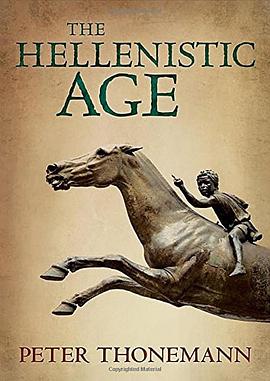
“Most books on the Hellenistic world begin by lamenting the state of our evidence for the period. This is nonsense. On almost any criterion, we know far more about Hellenistic history than we do about the Archaic or Classical Greek world” (p. 9-10). This statement serves to summarise the enthusiastic and lively tone of P. Thonemann’s The Hellenistic Age. Thonemann, an Associate Professor of Ancient History at Wadham College, Oxford, has authored and edited a multitude of academic books and articles on the history, epigraphy, numismatics, and archaeology of Hellenistic and Roman Asia Minor, so that the current book is rooted in his expertise in this area. The vast geographical, chronological, and cultural span of the Hellenistic world, combined with the lack of one single epicentre, such as Rome or Athens, as well as the lack of a single unifying ancient historical narrative create unique challenges for the historian. This book, however, presents an accessible, unconventional and enjoyable introduction to the Hellenistic world. It strikes a welcome balance, using both broad historical narrative and also more detailed case studies of thematic issues such as kingship, intellectual developments, the peripheries of the Hellenistic world, and the Hellenistic city.
When I first encountered The Hellenistic Age, I had wondered about how this book would compare to F.W. Walbank’s The Hellenistic World, which is very much a standard brief introduction to Hellenistic history. 1 The comparison revealed that these books do slightly different things.While Walbank’s book could be updated in some areas, it nonetheless provides a more holistic approach to the history of this period than Thonemann’s, which is more selective and thematic. In terms of a brief and systematic introduction to Hellenistic history, Walbank’s work may still be more appropriate. Where Thonemann’s book excels, however, is in its accessibility and in the range of material that has been used throughout, and thus serves as a better introduction for anyone intending to begin studying the Hellenistic World.
Thonenmann’s short book is divided into six chapters. The first of these, The Idea of the Hellenistic, presents an overview of how Hellenistic might be defined temporally, spatially, and culturally, as well as presenting some of the sources for exploring the period: ancient authors (Diodorus Siculus, Josephus, Livy, Plutarch, and Polybius), inscriptions, papyri, coins, and architectural remains. Some key modern scholars are then introduced: Bickerman, Droysen, Ma, Momigliano, Robert (indirectly, through a nice introduction to the travels of Clearchus at the beginning of the book) and Tarn. Scholars such as Green, Rostovtzeff, and Walbank are perhaps notably absent from this section.
Chapter Two does an admirable job of presenting a concise overview of Hellenistic history "from Alexander to Augustus", as the title indicates. This is by no means a comprehensive study of Hellenistic history (nor could it be, in such a short book). Instead, it offers descriptions of the three major Hellenistic Dynasties (the Ptolemies, the Seleucids and the Antigonids), as well as drawing in the Attalids, the Achaean League and Hellenistic Sicily later in the chapter. The key people and events of Hellenistic history from the life of Alexander to the death of Cleopatra VII are referenced in this chapter. I was particularly impressed with the section entitled Symplokē, 220-188 BC, which begins on p. 35. Here, Thonemann has encapsulated the emergence and increasing engagement of the Romans in peninsular Greece and Asia Minor in a particularly lively and enjoyable narrative. This section ends touchingly with Cavafy’s wonderful poem, The Battle of Magnesia. The chapter itself finishes with a short discussion of the Mithridatic wars and the eventual victory of Octavian at Actium.
Perhaps part of the reason for the clean and flowing historical narrative of Chapter 2 is that Thonemann does not go into any depth on key thematic issues at this stage, but rather presents an energetic historical account. Chapters 3, 4, and 5 are reserved for exploring thematic issues in more depth. Chapter 3, "Demetrius the Besieger and Hellenistic Kingship", presents Demetrius, surely one of ancient history’s most colourful characters, as a case study for understanding Hellenistic kingship. The chapter outlines the storied career of Demetrius, which is contextualized within a wider thematic discussion about the emergence of Hellenistic kingship, the hallmarks of this institution, and the complex topic of Hellenistic ruler cult.
Chapter 4, "Eratosthenes and the System of the World", describes intellectual and technological innovation during the Hellenistic period. This was one of the most enjoyable chapters in this book. It presents literary and scientific developments as interconnected strands of investigation. As the title indicates, Eratosthenes and his famed calculation of the earth’s circumference occupy an important place in this chapter. An exploration of Hellenistic intellectual developments would not be complete without the inclusion of Archimedes, the Temple of the Muses in Alexandria, and the library of Pergamum, all of which are discussed in varying levels of detail. A welcome addition to this chapter is a section on the Antikythera mechanism, and perhaps more significant from a historical perspective, a brief discussion of the development of water-powered grain mills. Thonemann provocatively suggests [p. 81] that the rate of innovation characteristic of Hellenistic times could not have occurred in independent Greek city-states lacking the organization, resources, and intellectual freedom of Ptolemaic Alexandria.
Chapter 5, "Encounters", turns to the peripheries of the Hellenistic World. Beginning with an inscription associated with the Indian king Ashoka, in which the Hellenistic kingdoms are named, this chapter is structured around the cardinal points of the compass. Thonemann discusses the east with reference to Aï Khanoum, the south with reference to Greek activities in the Red Sea and Persian Gulf regions, the north with reference to Olbia and Scythians, and the west with reference to the Villa of the Papyri. The underlying theme is the complex interplay and exchange between Greco- Macedonian and native societies.
The final chapter of the book presents us with a case study of a small city, "Priene", and examines its place within the wider Hellenistic world. Thonemann draws upon archaeological, historical, epigraphic and numismatic remains (as well as an account from a 19th century liquorice magnate!) to present a contextualized picture of a city throughout its lifecycle from early Hellenistic times until its decline during the Roman imperial period. This chapter was thoroughly enjoyable to read: Thonemann’s multi-faceted approach is one that should engage newcomers to the Hellenistic world as well as specialist historians, epigraphers, and archaeologists.
The Hellenistic Age is written in such an enthusiastic and engaging style that a broad range of readers with little, or even no, familiarity with the topic should find it both informative and enjoyable. Returning to the range of sources consulted, this work serves to reflect the diversity of the toolkit available to the modern scholar of the Hellenistic world. Thonemann’s use of sources such as ancient literary texts, papyri, coins, inscriptions, and archaeological remains effectively communicates to the reader how various types of data can potentially be mobilised in the context of a larger interpretation. This book would have benefitted from more detailed bibliographical suggestions; the Further Reading section will surely be helpful for readers with no background on the topic, but is perhaps a little too general even for undergraduate readers.
That minor criticism aside, this is a thoroughly enjoyable short book and serves as an excellent introduction to the Hellenistic age. I will be assigning this on undergraduate summer reading lists in order to stimulate students’ interest in Hellenistic history, and I would recommend it to anyone seeking to gain a basic familiarity with this period, which Thonemann casts as a time of political redefinition, cultural interaction, and technological innovation, not unlike the present.
作者简介
目录信息
读后感
用户评价
这本《希腊化时代》的作者,以一种我前所未见的视角,将那个波澜壮阔的时期呈现在我眼前。我原本以为它会是一本枯燥的学术著作,充斥着年表、王室谱系和战役的枯燥细节,但事实证明我的担忧是多余的。相反,作者巧妙地将历史事件与人物命运编织在一起,仿佛在讲述一曲宏大的史诗。我尤其喜欢他对亚历山大大帝之后,那些继承他遗志的将领们,以及他们在各自王国中留下的印记的描绘。那些诸如塞琉古、托勒密、安提柯等名字,在作者的笔下不再是遥远的符号,而是有血有肉、充满野心与挣扎的个体。我跟着作者的文字,穿越广袤的帝国疆域,感受着希腊文化与东方文明的碰撞与融合,从埃及的亚历山大港到叙利亚的安条克,再到小亚细亚的帕加马,我仿佛亲眼见证了那些伟大的城市是如何崛起,又如何孕育出独特的文明。书中对艺术、哲学、科学发展的描述也恰到好处,没有过度深入到学术的细节,而是点到为止,勾勒出那个时代思想的光辉。我感受到了那个时代巨大的能量和创造力,也体会到了帝国扩张与衰落的必然性。总而言之,这是一本引人入胜的书,它让我对“希腊化时代”这个词有了全新的认识,不再是课本上冰冷的概念,而是鲜活的历史画卷。
我一直对古典时期充满好奇,而《希腊化时代》这本书,则让我窥见了那个时期更加广阔和多元的景象。作者的叙述风格非常独特,他并非拘泥于传统的史学范式,而是以一种更具人文关怀的视角,去探索那个时代的复杂性。我被书中对亚历山大帝国瓦解后的各个王国之间的互动和竞争所吸引,那些看似独立的政治实体,实则在文化、经济和军事上有着千丝万缕的联系。书中对希腊化时期人们生活状态的描绘,也让我产生了强烈的共鸣。我看到了那个时代人们的乐观与悲观,他们的创造与毁灭,他们的追求与失落。作者并没有回避历史的残酷性,但同时也强调了那个时代所孕育出的勃勃生机和不屈精神。我尤为欣赏书中对那些被主流历史叙事所忽略的地区的关注,例如那些在帝国边缘地带逐渐形成的独特文化,以及它们如何在希腊化浪潮中得以发展和传承。这本书让我深刻认识到,历史是一个不断演变和融合的过程,任何一个时代都不能被简单地定义。
《希腊化时代》这本书,与其说是一部历史著作,不如说是一幅描绘时代变迁的宏大画卷。作者以一种极其巧妙的叙事方式,将那个复杂而充满活力的时期呈现在读者面前。我被书中对亚历山大大帝之后的继承者们之间的明争暗斗所吸引,那些王国的兴衰起落,仿佛就在眼前上演。书中不仅仅关注了那些显赫的君主和将领,还对那个时代涌现出的各种社会群体和文化思潮进行了深入的探讨。我感受到了希腊文明如何在新的土地上生根发芽,与当地文化发生碰撞,并最终形成一种全新的、更具包容性的文化形态。书中对艺术、科学、哲学的发展的描绘也让我印象深刻,那些伟大的发现和创新的思想,都为这个时代增添了耀眼的光辉。我仿佛看到了当时的人们是如何在动荡中寻求秩序,在冲突中寻求理解,在变化中寻求认同。这本书让我对历史的理解不再停留在表面的事件,而是能够触及到更深层次的社会结构和文化基因。
读完《希腊化时代》,我脑海中挥之不去的,是一种复杂而深刻的时代感。作者并未刻意去构建一个线性叙事,而是像一位经验丰富的策展人,将散落在历史长河中的珍贵展品一一呈现。我仿佛置身于那个充满变革与动荡的时代,从亚历山大大帝的骤然离世,到其帝国的分崩离析,再到继承者们为了争夺权力而掀起的无休止的战争,这一切都被作者以一种令人惊叹的清晰度和生动性描绘出来。我尤其被他对那些边缘地区和被遗忘人物的关注所吸引。书中不仅仅局限于那些宏大的政治和军事事件,还深入探讨了普通人在这个时代洪流中的生活,以及那些不起眼的角落里发生的文化交流和思想碰撞。例如,他对希腊化时期犹太人社群的描述,以及罗马人如何在这个由希腊文化所塑造的世界中逐渐崭露头角的分析,都为我提供了全新的视角。我能感受到,作者并非简单地堆砌史料,而是通过对史料的深刻理解和独到解读,展现了一个充满活力、矛盾和创造力的时代。这本书让我意识到,历史并非由少数伟人书写,而是由无数个体的选择和命运共同铸就。
不得不说,《希腊化时代》这本书带给我一种前所未有的沉浸式阅读体验。作者的笔触细腻且富有感染力,他并非简单地罗列史实,而是将自己对那个时代的深刻理解,化作生动的叙述,带领读者一同踏上这段波澜壮阔的旅程。我一开始对这个时期了解不多,只知道与亚历山大大帝有关,但这本书彻底颠覆了我的认知。我被书中对帝国分裂的描写所震撼,那些曾经统一的疆域,如今被野心勃勃的将领们瓜分,他们各自建立起自己的王国,上演着权力斗争与文化融合的精彩大戏。书中对希腊化时期城市生活的描绘更是让我心驰神往,我仿佛能看到亚历山大港的繁华,感受到帕加马的艺术气息,甚至能听到那些哲学思辨在广场上激荡。作者在讲述政治军事斗争的同时,并没有忽略文化、艺术、宗教等方面的发展,他巧妙地将这些元素融入叙事中,让读者能够全方位地理解那个时代的精神面貌。我尤其欣赏作者在处理复杂历史进程时展现出的非凡洞察力,他能够抓住关键的转折点,并对事件的深远影响做出富有见地的分析。