
具体描述
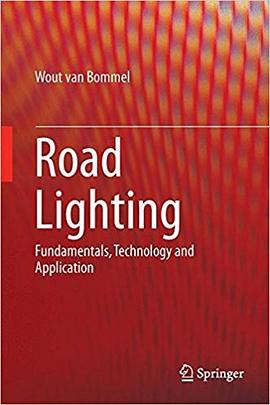
This book outlines the underlying principles on which modern road lighting is based, and provides the reader with knowledge of how these principles should be applied in practice.
This book offers a completely fresh approach to the subject, reflecting how the technology of road lighting has progressed to keep up with the changes in lamp technology, especially in solid state light sources, and the increasing awareness of energy use and environmental issues. The book is divided into three parts.
Part One describes lighting of open roads, with chapters discussing visual performance and comfort (including the effects of mesopic vision and age), and international standards and recommendations for road lighting. Lighting equipment is introduced; specifically lamps and luminaires in terms of their practical properties and features, but also the road surface and its characteristics. A chapter on Lighting Design makes the link between theory and practice, providing the reader with the knowledge needed for effective lighting design, including aspects relating to sustainability. The final chapter of Part One deals with lighting calculation conventions and measurements.
Part Two is devoted to light pollution. The negative consequences of light pollution are described and tactics to restrict light pollution explained. Lighting criteria are defined that can be used by the lighting designer to guarantee installations stay within acceptable limits. International standards and recommendations on the restriction of light pollution are discussed.
Part Three is devoted to tunnel lighting, with chapters discussing visual performance in tunnel environments, lighting criteria, standards and recommendations, and concluding with a chapter on tunnel lighting equipment and design.
This book is a valuable resource for road lighting designers and engineers, students of lighting design and engineering, town planners, traffic engineers, environmental specialists, and lamp and luminaire developers and manufacturers.
作者简介
Prof. Wout van Bommel MSc worked for more than 35 years with Philips Lighting in different lighting application functions. He has carried out research into many different lighting subjects. His research work has been the basis for concepts now used in international standards for lighting.
From 2003-2007, he was President of the International Lighting Commission, CIE. From 1988-2008, he was the Dutch representative of the European Lighting Normalisation Committee CEN TC 169. He is currently a board member of the Dutch "Light & Health Research Foundation," SOLG.
In 2004, Wout van Bommel was appointed Consulting Professor at the Fudan University of Shanghai, and in 2008, External Examiner of the Master Course "Light and Lighting" at the University College of London (UCL, Bartlett Institute).
He has published more than 150 papers in national and international lighting journals in different languages. All over the world he has presented papers, has taught at universities and schools, and has given invited lectures at conferences.
After his retirement from Philips Lighting, he began advising lighting designers, researchers, companies, municipalities, and governmental bodies, as an independent Lighting Consultant.
He is currently Section Editor for the section titled "Lighting" for the Encyclopedia of Color Science and Technology.
目录信息
读后感
用户评价
这本书的语言风格非常独特,它混合了严谨的学术论证与一种近乎于散文诗般的对光的赞美。在介绍光效理论的章节中,作者的措辞精准到每一个技术名词都无可挑剔,逻辑推演滴水不漏,展现出深厚的专业功底。然而,当他过渡到探讨光与人情感联系的部分时,文字的韵律感和感染力却又陡然增强。例如,在描述黎明时分特定色温光线对人体生物钟的积极影响时,那种描述方式,仿佛能让人在阅读时感受到光线的温度和变化。这种在极端专业性和人文关怀之间的无缝切换,使得阅读过程充满了惊喜。我发现自己不再是被动地接收信息,而是主动地与作者进行思想上的对话。全书的注释和参考文献列表也做得非常考究,几乎每一项重要的观点后面都有明确的出处,这为有志于深入研究的读者提供了极大的便利。总而言之,这是一部集学术严谨性、工程实用性与人文艺术性于一体的杰作,它不仅教会了我“如何设计灯光”,更让我明白了“为什么要去设计光”。它成功地将一门技术学科提升到了艺术和科学的交汇点,是一本值得反复品味的鸿篇巨著。
这本书的深度和广度,让我对照明设计这个行业有了全新的认识,感觉之前学到的知识都显得有些零散和碎片化了。尤其让我震撼的是,作者在“历史演变与未来趋势”这个章节中,对不同光源技术更迭背后的社会经济动因进行了深刻剖析。它不仅仅是在罗列LED、OLED或者新型固态照明技术的参数,更是在探讨技术路线选择背后的政治博弈、产业资本的流向以及全球能源战略的考量。这种“大历史观”的叙事方式,让原本冰冷的技术叙事变得充满了人文色彩和时代张力。我记得有一段分析城市夜景照明与文化遗产保护的辩证关系时,作者提出的观点非常精辟:照明的终极目标,是在技术可行性与文化尊重之间找到那个微妙的平衡点。这种哲学层面的探讨,很少在技术书籍中看到,它让阅读体验从简单的信息获取,升华为一种知识和智慧的碰撞。此外,书中对“光污染”问题的讨论也非常坦诚和深入,它没有回避现存技术的缺陷,反而提供了多种创新的缓解和治理方案,其严谨的科学态度令人信服。读完这个部分,我感觉自己不再只是一个技术执行者,更像是一个能够对城市光环境负责任的思考者。
这本书的封面设计得非常现代和专业,光影处理得当,让人一眼就能感受到其内容的深度和广度。我特别喜欢封面上那种低调而又不失科技感的色彩搭配,感觉它不仅仅是一本教科书,更像是一本行业内的权威指南。翻开内页,排版清晰,图文并茂,即便是初次接触这个领域的读者,也能很快找到阅读的节奏。作者在引言部分就明确了本书的宏大目标,即搭建一个从基础理论到前沿应用的完整知识体系,这让人对后续的阅读充满期待。在深入阅读前几章时,我发现作者在概念的引入上非常耐心,用了很多现实生活中的例子来解释复杂的物理原理,比如光通量、色温这些看似枯燥的参数,在作者的笔下变得生动有趣。这种循序渐进的讲解方式,极大地降低了学习门槛,使得那些原本可能望而生畏的工程师和学生也能轻松入门。特别是关于光学设计的部分,插图的精细度和示意图的直观性,简直无可挑剔,让我这个非专业背景的人也能大致领悟到照明配光曲线背后的奥秘。可以说,光是这本书的装帧和前几章的阅读体验,就已经值回票价了。它成功地为读者构建了一个坚实且引人入胜的学习开端,让人迫不及待地想知道它在具体技术和实际应用上还能带来多少惊喜。
这本书在“案例研究”部分的呈现方式,简直是教科书级别的示范。它挑选的案例并非那种高高在上的、难以复制的“世界级地标”,而是非常贴近日常工程实践的场景,比如高速公路匝道、老旧社区的二次改造、以及特定功能区域(如体育场馆、工业装配线)的专业照明要求。最关键的是,作者展示的不是最终效果图,而是从“问题识别”到“方案论证”、“模拟计算”再到“实际部署效果对比”的完整链条。特别是关于防眩光计算和流明维持率预测的章节,书中提供的表格和软件操作流程截图极其详细,即便是对特定软件不熟悉的读者,也能通过文字描述理解其背后的计算逻辑。我个人从中获得的最大启发是,设计永远是妥协的艺术,书中清晰地展示了如何在预算限制、维护便利性、以及性能要求之间进行权衡取舍。这种务实精神,极大地提高了本书对一线工程师的指导价值。很多其他书籍只会告诉你“应该怎么做”,但这本书却细致地告诉你“在现实条件下,如何有逻辑地、可辩护地去选择最优解”。这使得这本书的实用性价值远超其理论价值,真正做到了学以致用。
我花了整整一个周末的时间,沉浸在这本书对照明系统控制策略的论述之中,简直可以说是废寝忘食。这本书在探讨智能照明和物联网集成方面的内容,展现出了极其前瞻性的视野和扎实的工程思维。它并没有停留在简单的“开关灯”层面,而是深入剖析了基于传感器反馈、数据分析和自适应调光的复杂算法。比如,书中关于“能源效率优化模型”的推导过程,逻辑链条之严密、数学表达之精准,让我这位在工业自动化领域摸爬滚打了十多年的老兵都感到由衷的敬佩。作者似乎对最新的标准和规范了如指掌,将欧洲、北美以及亚洲地区的关键技术标准穿插在案例分析中,形成了一种全球化的视角。我特别欣赏它对“人因工程”的重视,不仅仅关注技术指标,更探讨光环境如何影响行人的安全感、驾驶员的疲劳度乃至城市的商业活力。这种跨学科的融合,使得本书超越了一般的工程手册,上升到了城市规划和公共政策讨论的高度。阅读过程中,我不得不频繁地使用荧光笔和便利贴,因为太多的洞见需要记录和日后回味。它迫使我跳出自己固有的思维定式,开始用更系统、更宏观的视角去审视每一个照明决策背后的多重影响。对于希望在智慧城市建设中占据制高点的专业人士来说,这本书无疑是一部必须反复研读的“内功心法”。