
具体描述
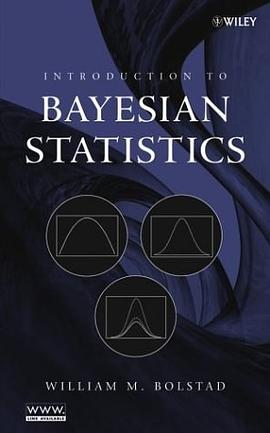
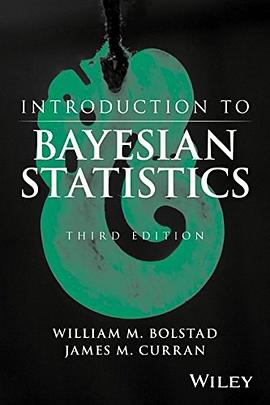
There is a strong upsurge in the use of Bayesian methods in applied statistical analysis, yet most introductory statistics texts only present frequentist methods. Bayesian statistics has many important advantages that students should learn about if they are going into fields where statistics will be used. In this third Edition, four newly-added chapters address topics that reflect the rapid advances in the field of Bayesian statistics. The authors continue to provide a Bayesian treatment of introductory statistical topics, such as scientific data gathering, discrete random variables, robust Bayesian methods, and Bayesian approaches to inference for discrete random variables, binomial proportions, Poisson, and normal means, and simple linear regression. In addition, more advanced topics in the field are presented in four new chapters: Bayesian inference for a normal with unknown mean and variance; Bayesian inference for a Multivariate Normal mean vector; Bayesian inference for the Multiple Linear Regression Model; and Computational Bayesian Statistics including Markov Chain Monte Carlo. The inclusion of these topics will facilitate readers' ability to advance from a minimal understanding of Statistics to the ability to tackle topics in more applied, advanced level books. Minitab macros and R functions are available on the book's related website to assist with chapter exercises. Introduction to Bayesian Statistics, Third Edition also features:
Topics including the Joint Likelihood function and inference using independent Jeffreys priors and join conjugate prior The cutting-edge topic of computational Bayesian Statistics in a new chapter, with a unique focus on Markov Chain Monte Carlo methods Exercises throughout the book that have been updated to reflect new applications and the latest software applications Detailed appendices that guide readers through the use of R and Minitab software for Bayesian analysis and Monte Carlo simulations, with all related macros available on the book's website
Introduction to Bayesian Statistics, Third Edition is a textbook for upper-undergraduate or first-year graduate level courses on introductory statistics course with a Bayesian emphasis. It can also be used as a reference work for statisticians who require a working knowledge of Bayesian statistics.
作者简介
From the Back Cover
"...this edition is useful and effective in teaching Bayesian inference at both elementary and intermediate levels. It is a well-written book on elementary Bayesian inference, and the material is easily accessible. It is both concise and timely, and provides a good collection of overviews and reviews of important tools used in Bayesian statistical methods." There is a strong upsurge in the use of Bayesian methods in applied statistical analysis, yet most introductory statistics texts only present frequentist methods. Bayesian statistics has many important advantages that students should learn about if they are going into fields where statistics will be used. In this third Edition, four newly-added chapters address topics that reflect the rapid advances in the field of Bayesian statistics. The authors continue to provide a Bayesian treatment of introductory statistical topics, such as scientific data gathering, discrete random variables, robust Bayesian methods, and Bayesian approaches to inference for discrete random variables, binomial proportions, Poisson, and normal means, and simple linear regression. In addition, more advanced topics in the field are presented in four new chapters: Bayesian inference for a normal with unknown mean and variance; Bayesian inference for a Multivariate Normal mean vector; Bayesian inference for the Multiple Linear Regression Model; and Computational Bayesian Statistics including Markov Chain Monte Carlo. The inclusion of these topics will facilitate readers' ability to advance from a minimal understanding of Statistics to the ability to tackle topics in more applied, advanced level books. Minitab macros and R functions are available on the book's related website to assist with chapter exercises. Introduction to Bayesian Statistics, Third Edition also features: Topics including the Joint Likelihood function and inference using independent Jeffreys priors and join conjugate prior The cutting-edge topic of computational Bayesian Statistics in a new chapter, with a unique focus on Markov Chain Monte Carlo methods Exercises throughout the book that have been updated to reflect new applications and the latest software applications Detailed appendices that guide readers through the use of R and Minitab software for Bayesian analysis and Monte Carlo simulations, with all related macros available on the book's website Introduction to Bayesian Statistics, Third Edition is a textbook for upper-undergraduate or first-year graduate level courses on introductory statistics course with a Bayesian emphasis. It can also be used as a reference work for statisticians who require a working knowledge of Bayesian statistics.
Read more
About the Author
WILLIAM M. BOLSTAD, PhD, is a retired Senior Lecturer in the Department of Statistics at The University of Waikato, New Zealand. Dr. Bolstad's research interests include Bayesian statistics, MCMC methods, recursive estimation techniques, multiprocess dynamic time series models, and forecasting. He is author of Understanding Computational Bayesian Statistics, also published by Wiley. JAMES M. CURRAN is a Professor of Statistics in the Department of Statistics at the University of Auckland, New Zealand. Professor Curran’s research interests include the statistical interpretation of forensic evidence, statistical computing, experimental design, and Bayesian statistics. He is the author of two other books including Introduction to Data Analysis with R for Forensic Scientists, published by Taylor and Francis through its CRC brand.
Read more
目录信息
读后感
用户评价
从一个更宏观的角度来看,这本书成功地将贝叶斯方法论的哲学基础与其实际操作技巧完美地融合在一起。它不仅仅是教会你如何“计算”贝叶斯估计,更深刻地探讨了“为什么”要选择贝叶斯框架。作者对主观概率和客观概率之间微妙关系的阐述,对先验信息在决策制定中的作用的探讨,都极大地拓宽了我的思维边界。读完此书,我感觉自己不仅仅是掌握了一套新的统计工具,更像是获得了一种看待世界和处理不确定性的全新世界观。它鼓励读者拥抱不确定性,并将其视为信息的一部分,而非需要被消除的噪音。对于任何希望深入理解现代数据科学和推断性统计学核心思想的人来说,这本书提供了一个坚实、全面且富有洞察力的起点。
我必须指出,这本书在案例分析方面的选择极其出色,充分体现了其应用导向的特质。很多统计教材的案例往往局限于教科书式的、略显陈旧的例子,但这本书似乎更关注当代科学研究的前沿问题。无论是生物信息学中的基因调控网络推断,还是金融领域中的风险价值评估,那些复杂的、真实世界的数据集被巧妙地整合到教学流程中。更重要的是,作者不仅展示了如何应用模型,更深入探讨了模型选择和模型诊断的重要性。他们会引导读者思考:“这个模型真的适合我们正在研究的问题吗?”以及“我们如何知道MCMC采样出来的结果是可信的?”这种批判性思维的培养,远比单纯掌握公式推导来得宝贵。它教会我,统计学不是一个封闭的工具箱,而是一个需要持续质疑和改进的动态过程。
这本书的封面设计简洁而富有力量感,那种深邃的蓝色调仿佛能将人带入一个充满数学美感的知识海洋。初次翻开时,我立刻被其清晰的章节划分和循序渐进的讲解方式所吸引。作者在构建理论框架时,似乎非常注重读者的接受过程,每一个新的概念都不是凭空出现的,而是紧密地建立在前一个知识点之上。举例来说,对于概率分布的引入,它不像某些教科书那样直接堆砌复杂的数学公式,而是通过一系列贴近现实生活的小故事或情景模拟,让读者在不知不觉中理解了贝叶斯思想的精髓所在——即如何根据新信息更新我们原有的信念。这种教学方法极大地降低了初学者的畏难情绪,让人感觉学习统计学并非遥不可及的学术任务,而更像是一场有趣的逻辑推理游戏。尤其是对于那些对传统频率学派统计学感到困惑的人来说,这本书提供了一个全新的、更具直觉性的视角来审视数据和不确定性。
这本书的论述风格可谓是独树一帜,它兼具了严谨的学术深度和令人愉悦的叙事流畅性。我特别欣赏作者在处理复杂数学推导时所展现出的耐心和细腻。他们没有简单地跳过那些关键的证明步骤,而是像一位经验丰富的导师那样,耐心地拆解每一个数学操作背后的直觉含义。例如,在讲解马尔可夫链蒙特卡洛(MCMC)方法时,书中没有直接给出复杂的收敛性定理,而是通过生动的比喻,比如“迷路的小探险家寻找宝藏”的场景,将复杂的采样过程可视化。这使得即便是对计算统计不太熟悉的读者,也能抓住其核心思想——即如何有效地探索高维参数空间。这种对教学艺术的极致追求,使得这本书不仅仅是一本参考手册,更像是一本可以陪伴学习者成长的良师益友。读完特定章节后,常常会有一种豁然开朗的感觉,仿佛心中的迷雾被轻轻拨开,留下了清晰的认知路径。
这本书的排版和装帧质量也值得称赞,这是阅读体验中不容忽视的一部分。清晰的字体选择、恰到好处的行间距,使得长时间的阅读也不会产生强烈的视觉疲劳。图表的制作更是精良,那些用来阐释后验分布、模型对比或收敛诊断的图形,不仅信息量大,而且设计美观、一目了然。我很少遇到一本数学类书籍能在保持专业性的同时,还能如此注重视觉的友好性。特别是那些推导过程中的数学符号,它们被放置在页面的黄金分割点上,避免了拥挤和混乱,保证了阅读的节奏感。这种对细节的关注,无疑反映了作者和出版方对读者体验的尊重,使得学习曲线变得更加平滑和愉悦。