
具体描述
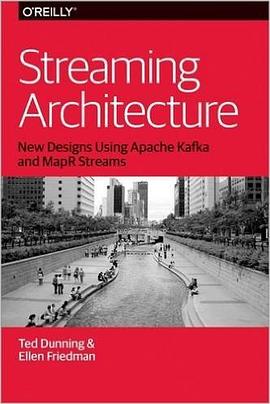
More and more data-driven companies are looking to adopt stream processing and streaming analytics. With this concise ebook, you’ll learn best practices for designing a reliable architecture that supports this emerging big-data paradigm.Authors Ted Dunning and Ellen Friedman (Real World Hadoop) help you explore some of the best technologies to handle stream processing and analytics, with a focus on the upstream queuing or message-passing layer. To illustrate the effectiveness of these technologies, this book also includes specific use cases.Ideal for developers and non-technical people alike, this book describes:Key elements in good design for streaming analytics, focusing on the essential characteristics of the messaging layerNew messaging technologies, including Apache Kafka and MapR Streams, with links to sample codeTechnology choices for streaming analytics: Apache Spark Streaming, Apache Flink, Apache Storm, and Apache ApexHow stream-based architectures are helpful to support microservicesSpecific use cases such as fraud detection and geo-distributed data streamsTed Dunning is Chief Applications Architect at MapR Technologies, and active in the open source community. He currently serves as VP for Incubator at the Apache Foundation, as a champion and mentor for a large number of projects, and as committer and PMC member of the Apache ZooKeeper and Drill projects. Ted is on Twitter as @ted_dunning.Ellen Friedman, a committer for the Apache Drill and Apache Mahout projects, is a solutions consultant and well-known speaker and author, currently writing mainly about big data topics. With a PhD in Biochemistry, she has years of experience as a research scientist and has written about a variety of technical topics. Ellen is on Twitter as @Ellen_Friedman.
作者简介
目录信息
读后感
More and more data-driven companies are looking to adopt stream processing and streaming analytics. With this concise ebook, you’ll learn best practices for designing a reliable architecture that supports this emerging big-data paradigm.Authors Ted Dunning...
More and more data-driven companies are looking to adopt stream processing and streaming analytics. With this concise ebook, you’ll learn best practices for designing a reliable architecture that supports this emerging big-data paradigm.Authors Ted Dunning...
More and more data-driven companies are looking to adopt stream processing and streaming analytics. With this concise ebook, you’ll learn best practices for designing a reliable architecture that supports this emerging big-data paradigm.Authors Ted Dunning...
More and more data-driven companies are looking to adopt stream processing and streaming analytics. With this concise ebook, you’ll learn best practices for designing a reliable architecture that supports this emerging big-data paradigm.Authors Ted Dunning...
More and more data-driven companies are looking to adopt stream processing and streaming analytics. With this concise ebook, you’ll learn best practices for designing a reliable architecture that supports this emerging big-data paradigm.Authors Ted Dunning...
用户评价
阅读这本书的过程,就像是跟随一位经验丰富、耐心细致的导师进行为期数周的“强化训练营”。每一个章节的结束,都会有一个非常精炼的总结,帮助读者巩固刚刚学到的知识点,而不是让信息点散落在文字的海洋中。更重要的是,作者在提供解决方案的同时,也十分注重探讨不同技术栈之间的互操作性和集成性,这对于我们这些在复杂异构环境中工作的团队来说,提供了极大的操作指导意义。书中关于构建模块化、可扩展数据处理单元的探讨,让我开始重新审视我们现有系统的耦合度问题。它提供了一套可复制的思维模式,而不是一套僵硬的模板,这使得即使我的技术栈与书中完全一致,也能从中找到适应自己环境的调整思路,真正体现了技术书籍的生命力和普适性。
这本书的封面设计非常抓人眼球,采用了一种非常现代、带有科技感的蓝色调和线条构图,一下子就让人联想到数据流动的速度感和复杂性。我刚拿到手的时候,就被它封面上那种“未来感”所吸引。内页的排版也处理得相当不错,字体选择清晰易读,代码块的格式化也做得非常专业,即便是面对这样一本技术深度很高的书,阅读体验也保持在了很高的水准。光是看着目录结构,就能感受到作者在组织内容上的用心,从基础概念的铺陈到高级应用场景的探讨,逻辑衔接得非常自然,让人有一种“这本书能带我走得很远”的信心。它不仅仅是一本工具手册,更像是一张指引我们理解现代数据基础设施演进路径的蓝图。我特别欣赏作者在保持技术严谨性的同时,依然能够让读者感受到内容组织上的流畅和人性化设计,这在同类技术书籍中是很难得的。
这本书的配图质量高得令人印象深刻。很多技术书籍的图表往往是粗糙的截图或者概念模糊的流程图,但这本书中的所有架构图都经过了精心设计,线条清晰,标识明确,即使是那些描述多层级复杂交互的图表,也能做到一目了然。我发现自己很多时候不需要回溯文本,光是看着那些清晰的UML图和数据流向图,就能大致理解作者想要表达的核心设计思想。这种对视觉辅助材料的重视,极大地加速了我的理解进程,尤其是在理解异步消息传递和状态管理这类难以用纯文字描述的概念时,图示的作用是无可替代的。总而言之,这本书在内容深度、结构组织和呈现质量上都达到了一个非常高的水准,它不只是一本参考书,更是一本值得反复研读的案头工具。
这本书的语言风格非常务实,带着一种资深工程师特有的那种不打诂、直击痛点的精准度。它没有过多的寒暄和套话,开篇即进入核心的“为什么”和“如何做”。我尤其喜欢作者在讲解复杂概念时,会适当地穿插一些现实世界中的案例分析,这些“小故事”虽然简短,但信息密度极高,能够瞬间帮助读者将抽象的理论与生产环境中的实际痛点联系起来。例如,在讨论数据持久化策略时,作者并没有简单地推荐A或B方案,而是细致地对比了两种方案在不同负载模型下的IOPS表现和恢复时间目标(RTO),这种细致入微的权衡分析,远比教科书上的理论阐述来得更有价值。它不是在“教”你写代码,而是在“教”你如何进行有质量的技术决策,这种深度对话的感觉是很多技术书籍所缺乏的。
初翻这本书,最让我感到惊喜的是它对“架构思维”的强调,而不是仅仅停留在API的罗列和代码片段的堆砌上。作者似乎花了大量的篇幅来阐述为什么要选择某种设计范式,以及这些设计在实际大规模部署中会遇到哪些陷阱。这种自上而下的讲解方式,对于我这种既需要动手实践,又需要向管理层阐述技术选型合理性的工程师来说,简直是福音。书中对于分布式系统一致性、延迟优化这些核心难题的探讨,深度远超出了我预期的水准。它不回避复杂性,而是坦诚地剖析了在海量数据洪流面前,传统批处理思维是如何逐渐被取代,以及新的事件驱动模型带来的全新挑战。读完前几章,我感觉自己对整个实时数据管道的认知框架得到了一个彻底的重塑,从一个“实现者”的视角,提升到了一个“架构师”的高度去审视问题。
cloud
又了解了一个MapR框架,kafka的用的估计比较多
cloud
又了解了一个MapR框架,kafka的用的估计比较多
cloud