
具体描述
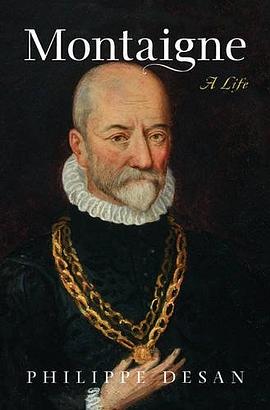
One of the most important writers and thinkers of the Renaissance, Michel de Montaigne (1533-92) helped invent a literary genre that seemed more modern than anything that had come before. But did he do it, as he suggests in his Essays, by retreating to his chateau, turning his back on the world, and stoically detaching himself from his violent times? In this definitive biography, Philippe Desan, one of the world's leading authorities on Montaigne, overturns this longstanding myth by showing that Montaigne was constantly concerned with realizing his political ambitions--and that the literary and philosophical character of the Essays largely depends on them. The most comprehensive and authoritative biography of Montaigne yet written, this sweeping narrative offers a fascinating new picture of his life and work. As Desan shows, Montaigne always considered himself a political figure and he conceived of each edition of the Essays as an indispensable prerequisite to the next stage of his public career. He lived through eight civil wars, successfully lobbied to be raised to the nobility, and served as mayor of Bordeaux, special ambassador, and negotiator between Henry III and Henry of Navarre. It was only toward the very end of Montaigne's life, after his political failure, that he took refuge in literature. But, even then, it was his political experience that enabled him to find the right tone for his genre. In this essential biography, we discover a new Montaigne--caught up in the events of his time, making no separation between private and public life, and guided by strategy first in his words and silences. Neither candid nor transparent, but also not yielding to the cynicism of his age, this Montaigne lends a new depth to the Montaigne of literary legend.
作者简介
Philippe Desan is the Howard L. Willett Professor in Renaissance Literature and History of Culture at the University of Chicago and the author of many books.
目录信息
Prologue xi
Introduction xvii
Questions of Method and the Politics of a Book xix
Part One--Ambitions
1 The Eyquems' Social Ascension 3
A Family Matter 7
"Nobilibus parentibus" 13
Living Nobly 20
"We Latinized Ourselves" 28
The Balance Sheet of a Humanist Education 37
2 A First Career as a Magistrate (1556-1570) 48
Parlementary Habitus 55
From the Cour des Aides in Périgueux to the Parlement in Bordeaux 67
Michel de Montaigne, Royal Councillor 84
The Religious Question 101
3 La Boétie and Montaigne: Discourse on Servitude and Essay of Allegiance 112
The Letter about La Boétie's Death 117
La Boétie's Political Treatises: The Memorandum and the Discourse 123
Voluntary Servitude and Allegiance 133
The Politics of a Friendship 143
4 "Witness My Cannibals": The Encounter with the Indians of the New World 155
Tupinambas and Tabajaras 159
From Rouen to Bordeaux 167
"Their Warfare Is Wholly Noble and Generous" 175
A "Simulacrum of the Truth" 179
5 The Making of a Gentleman (1570-1580) 183
The Break with the Parlement 185
Montaigne as Editor of La Boétie's Works 199
Dedicatees Influential at the Court 207
An Inconvenient Publication 217
An Influential Neighbor: The Marquis of Trans 222
Honorific Rewards and Clientelism 232
Montaigne at Work 246
6 The Essais of 1580: Moral, Political, and Military Discourses 254
"A Discourse on My Life and Actions" 256
The First Reader of the Essais 269
"Of the Battle of Gods" 277
An Apology for Sebond or a Justification of Montaigne? 285
A Skeleton in the Closet 299
A Royal Audience and a Military Siege 307
Part Two--Practices
7 The Call of Rome, or How Montaigne Never Became an Ambassador (1580-1581) 319
On Territory "Subject to the Emperor" 321
The Ambassador's Trade 326
A Montaigne in Spain 351
Montaigne in Rome 357
Paul de Foix and the Suspicion of Heresy 371
Roman Citizen 377
The Essais "Castigated and Brought into Harmony with the Opinions of the Monkish Doctors" 386
The Sociability of the Baths 392
The Travel Journal and the Secretary 401
8 "Messieurs of Bordeaux Elected Me Mayor of Their City" (1581-1585) 408
The Mayor's Book 412
Bordeaux and Its Administration 422
The Public Welfare 436
A Contested Reelection 444
Manager of the City and "Tender Negotiator" 455
An "Administration . . . without a Mark or a Trace"? 473
9 "Benignity of the Great" and "Public Ruin" (1585-1588) 482
"Through an Extraordinarily Ticklish Part of the Country" 487
Secret Mission 501
"I Buy Printers in Guienne, Elsewhere They Buy Me" 508
Imprisoned in the Bastille 523
"A Girl in Picardy" 530
Observer at the Estates General of Blois 539
"Actum est de Gallia" 545
10 The Marginalization of Montaigne (1588-1592) 549
A Tranquil Life 551
"The Only Book in the World of Its Kind" 566
From History to the Essay: Commynes and Tacitus 580
Socrates or Political Suicide 589
Montaigne's Death 603
Part Three--Post Mortem
11 Montaigne's Political Posterity 613
Political Appropriations 614
Censure and Morality 621
Epilogue 631
Abbreviations 635
Notes 637
Bibliography 723
Translations Cited 765
Index 767
· · · · · · (收起)
读后感
用户评价
这本书的阅读体验,就像是在一个巨大的、古老的图书馆里迷路。书架高耸入云,每一本书都带着岁月的包浆,你随意抽出一本,里面记载的知识和观点可能与你手上的这本格格不入,但它们又共同构建了一个宏大的知识宇宙。作者这位“图书管理员”,似乎并不在意书籍的分类,他只是按着自己心头涌现的兴趣,信手拈来。我印象最深的是他对某个特定主题的反复咀嚼,他会从不同的角度、不同的心境下,一遍遍地去琢磨同一个命题,每一次的回溯都带来了新的感悟,仿佛剥洋葱一样,每层都有不同的滋味。这种重复性的挖掘,展现出一种对知识的深度执着,与我们这个时代追求效率和广度的阅读风气形成了鲜明的对比。它教导我们,真正的理解需要时间的发酵,需要耐心地在同一个地方深挖,直到触及岩层。这种慢下来的阅读方式,为被信息碎片化轰炸的现代人,提供了一片难得的宁静绿洲。
这本书的开篇就如同走入一片迷雾,作者的笔触细腻而又充满了哲思,它并非那种直截了当的故事,而是更像一场关于“自我”的漫长对话。我被一种沉静的、近乎冥想的氛围所吸引,仿佛置身于一个古老而又充满智慧的房间,空气中弥漫着纸张和旧木头的味道。作者似乎并不急于引导我走向某个明确的结论,而是邀请我一同漫步于思想的迷宫之中,观察那些不经意间流淌出的片段:对友谊的珍视、对死亡的坦然,乃至对日常琐事的细致描摹。这种写作方式要求读者具备极大的耐心,它考验的不是你理解情节的能力,而是你感受细微差别的心灵。每翻过一页,都有那么一瞬间,你会感觉自己与作者的灵魂产生了共振,那种共振不是因为观点完全一致,而是因为领会到了那种探索真理的诚恳与勇气。那种感觉,就像是独自一人在深夜里对着星空低语,寻求宇宙间最本质的解答,既孤独又充实。它让你开始审视自己生活中的每一个小选择,那些你习以为常却从未深究的习惯,都在作者的目光下,被重新打磨和审视。
这本书的结构简直像极了一座巴洛克式的建筑,繁复、华丽,却又处处体现着严谨的几何美感。我得承认,初读时确实有些气馁,那些章节的跳跃性太大,前一刻还在谈论骑术的精妙,下一秒可能就转入了对孩子教育的深刻反思。这种看似随心所欲的叙事,实则暗藏着一种内在的逻辑,它摹仿的正是人类思维的自然流淌——没有固定的线性发展,而是联想与碎片化的集合。读到酣处,我仿佛化身为一位身处沙龙的贵族,与一位博学多识的智者进行着一场永无止境的辩论。他用典故、用历史的轶事来佐证自己的观点,观点本身并不重要,重要的是他那探究世界运行机制的万丈热情。这本书的魅力在于它的“不确定性”,它拒绝提供标准答案,而是不断抛出新的问题,逼迫着我们这些读者必须自己动手,去搭建属于自己的认知框架。它像一面棱镜,折射出光怪陆离的现实,而我们每个人从中看到的影像,都将独一无二。
从语言的韵律上来说,这本书拥有一种古典的庄重感,但其思想内核却异常的现代和尖锐。作者的文字时而如涓涓细流,描绘出乡村生活的宁静与细微之处的乐趣,时而又如疾风骤雨,对世俗的虚伪和人性的弱点进行毫不留情的批判。这种风格的切换极其自然,毫无斧凿痕迹。我尤其欣赏他对“判断”的审慎态度,他似乎在刻意回避使用绝对化的词语,总是用“或许”、“可能”、“在我看来”来为自己的论断留出余地。这体现了一种极高的知识谦逊,认识到即便拥有再深刻的洞察力,也无法穷尽世界的复杂性。整本书读下来,我感受到一种强大的精神上的“赋能”——它没有给我现成的解决方案,但它提供了一套更健康、更具韧性的思维工具,来应对生活抛给我的任何难题。它不是一本工具书,而更像是一份关于如何保持独立思考和精神自由的“操作指南”,一本需要终身研读的经典。
这绝对不是一本可以“速读”的书,如果抱着寻找连贯故事线的期待翻开它,你必然会失望而归。这本书给我的感受更像是在阅读一位极其坦诚的老朋友的日记,只不过这位朋友的内心世界比我们想象的要广阔得多。他毫无保留地展示了自己的弱点、恐惧和那些不那么光彩的念头,这种“袒露”的勇气令人震撼。他记录下自己犯下的错误,记录下对他人言行的揣测,甚至是那些一闪而过的、带着偏见的想法,然后冷静地分析它们产生的土壤。这使得阅读过程充满了张力——我们既是旁观者,也是被审视的对象。每当读到一处他自我剖析的段落,我都会不由自主地停下来,反思自己是否有勇气面对自己内心最隐秘的角落。这种近乎“赤裸”的真诚,是这本书最宝贵的财富,它超越了时代和文化,触及了作为“人”这一物种的共同困境与光辉。它让人明白,真正的智慧,也许恰恰在于承认自己的有限性。