具体描述
The Barnes & Noble Review
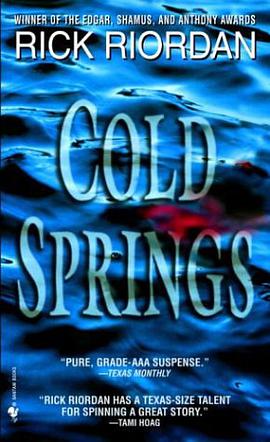
It's been said that there are only three truly indigenous American art forms: the Western, the musical comedy, and the private eye story. The first two have passed through several cycles of rising and falling popularity, but the P.I. thriller has endured -- even flourished -- with remarkable consistency. Since its inception in the 1920s, the form -- together with its defining figure, the autonomous, wise-cracking private detective -- has assumed the status of 20th-century archetype and has continued to attract a steady stream of gifted new interpreters. Recent notable examples include Robert Crais, Walter Mosley, and Dennis Lehane. We can now add to that list Texas-born novelist Rick Riordan, whose excellent third mystery, The Last King of Texas, has just hit the shelves.
Riordan has been on a fast-track since the beginning of his career. His first two novels, Big Red Tequila and The Widower's Two-Step, were both paperback originals. Between them, they won virtually every major award the field offers, including the Shamus, the Anthony, and the Edgar. The Last King of Texas marks Riordan's overdue hardcover debut. Like the first two books, this one features Tres Navarre, a San Antonio private investigator with a Ph.D. in English.
As the novel opens, Tres is considering a position that utilizes all of his professional qualifications. Aaron Brandon, a professor of English at the San Antonio branch of the University of Texas, has just been murdered. The motive behind that murder remains unknown and may have been either personal or political. Following a job interview that is violently disrupted by the arrival of a letter bomb, Tres agrees to replace Brandon and assume his interrupted courseload while San Antonio homicide detectives continue to pursue his murderer.
The initial investigation into the victim's background reveals that, six years before, his own father -- a shady Texas entrepreneur named Jeremiah Brandon -- had also been murdered, shot down in a local bar by Zeta Sanchez, his employee and personal protégé. When police learn that Sanchez, who disappeared immediately after the shooting, has recently returned to town, the new investigation suddenly develops a focus. Eyewitness testimony, along with the subsequent discovery of incriminating physical evidence, once again points to Sanchez, who is arrested following a shootout in which a San Antonio deputy sheriff is seriously wounded.
This apparent solution to the Brandon murder is swift and convenient, but not -- from Tres Navarre's viewpoint -- altogether convincing. Disturbed by a number of discrepancies that the local district attorney seems determined to ignore, Tres pursues his own independent investigation, which takes him into the often sordid history of the Brandon family. Together with a fellow private detective, a beautiful, hard-edged homicide cop, and a violent, streetwise "pawnshop king" named Ralph Arguello, Tres comes gradually to a different -- and very surprising -- conclusion. Along the way, his researches illuminate the troubled past of Ines Brandon, Aaron's widow; the related history of Zeta Sanchez and his own abbreviated marriage; the bloody rituals of the San Antonio youth gangs; and the hidden connection between the Brandon family business -- repairing amusement rides for the Southwestern carnival circuit -- and the South Texas heroin trade.
There's nothing essentially new in any of this, but that's perfectly O.K. Riordan understands the conventions of his chosen form and works comfortably within them. His protagonist, Tres Navarre, is -- despite his admittedly unusual alternate profession -- an obvious lineal descendent of Philip Marlowe: brash, tough, loyal, and driven by an intensely personal ethical code. The narrative itself is swift, violent, and vivid, filled with gracenotes and effortlessly infused with the ambiance of the American Southwest. Most importantly, Riordan has given us a novel that realistically reflects the effects of violence on ordinary people: the men, women, and children who endure -- and sometimes even survive -- their traumatic encounters with a corrupt, increasingly inhuman society.
Familiar or not, The Last King of Texas is an engrossing, high-energy performance and a welcome addition to a crowded field. Riordan, clearly, is a writer to watch, and his narrator/hero, Tres Navarre, is a character who is well worth revisiting, who honors -- and extends -- the peculiarly American tradition from which he springs. (Bill Sheehan)
作者简介
Amazon.com
For his first two novels featuring PI Tres Navarre, Rick Riordan garnered the Anthony, Shamus, and Edgar Awards--a trio that few seasoned Mystery careerists can claim. In this third, equally entertaining installment, Riordan casts Navarre according to the other piece of his quirky skill set: his Ph.D. in English literature from UC Berkeley.
While the worst-case scenario envisioned by most professors at the University of Texas at San Antonio probably involves lost essays or a failed tenure bid, recently the medievalists at UTSA have wound up deader than their favorite language. At first, the deaths seemed like accidents. Dr. Theodore Haimer was forced to take an early retirement when his remarks about "the damn coddled Mexicans at UTSA" found their way into the Express-News. Shortly thereafter, the old man was discovered deceased, his head in a bowl of Apple Jacks, the result of an apparent heart attack. His successor, the young Dr. Aaron Brandon, continued to receive the vituperation and death threats that had followed his predecessor to the grave. Then, halfway into the semester, Brandon was also found dead--murdered. Now, Tres Nevarre is the only man crazy enough to fill the vacant chair of Chaucer studies and murder avoidance at the amiable institution. His first day on the job is the clincher: an exploding package leaves him both scarred and excited for the only academic job he's ever found that rivals Indiana Jones's.
Riordan's style blends the hipness of Elmore Leonard with the sardonic humor of Janet Evanovich. And like Evanovich, Riordan draws on the colorful character of his locale--in his case the twangy chili con carnage of San Antonio academic life--to pepper his narrative with a mixture of medieval literature, Tex-Mex dialogue, and Sherlock Holmesian puzzles. While there aren't many more awards for Riordan to conquer, The Last King of Texas will certainly win him some more loyal fans. --Patrick O'Kelley
From Publishers Weekly
In a terrific sequel to The Widower's Two-Step, which won the 1999 Edgar for Best Original Paperback, the third Tres Navarre mystery finds the academic-turned-PI reluctant to accept a chair in medieval studies at the University of Texas at San Antonio, a chair whose last two tenants have met with violent deaths. But when a bomb goes off in the dean's office nearly killing him and two others, he instantly accepts the assignment. Tres quickly finds out that the second victim's father, Jeremiah Brandon, a ruthless amusement-park ride manufacturer known as the "King of the Carnivals," was also murdered years before. The prime suspect then was Jeremiah's former employee, gang member Zeta Sanchez, who believed that the predatory Jeremiah was sleeping with his wife, but Sanchez was never apprehended. Suddenly it is reported that, after years on the run (and in a Mexican jail), he has been spotted in the region. Tagging along with the San Antonio police, Tres finds himself in the middle of a violent shoot-out during which Sanchez is arrested; now he is also the number one suspect in the murder of Jeremiah's son. Not surprisingly, Sanchez vigorously protests his innocence. All this happens in just the first 40 pages of this fast-paced and highly entertaining novel, as Tres finds himself drawn into the complex vortex of the Brandon family's ugly past. With the help of beautiful yet tough homicide detective Ana DeLeon (a potential romantic interest) and other, less than savory, friends from the wrong side of the law, the wisecracking Tres untangles an intricate web of murderous family rivalries, missing persons and heroin traffic--all the while evoking with bright color the interplay of San Antonio's Latino and Anglo cultures and the joys of Tex-Mex cuisine.
目录信息
读后感
用户评价
如果要用一个词来形容这本书给我的感受,那就是“史诗感”。但这并非指它有着惊天动地的战争场面,而是指它成功地捕捉并传达了一种漫长、沉重,却又充满不屈精神的地域文化氛围。阅读过程中,我仿佛能感受到时间以一种缓慢而坚定的步伐在流淌,一代人的努力与失败,如何如同岩石上的刻痕一样,被刻入这片土地的灵魂深处。作者对“遗产”和“传承”这两个主题的探讨尤为深刻。他展示了先辈们的梦想、错误以及未竟的事业,是如何不经意间塑造了后代的命运和性格。这本书与其说是在讲述一个故事,不如说是在为一片土地和生活在那片土地上的人们立传。它充满了对土地的敬畏,对历史的尊重,以及对人性复杂性的深刻洞察。读完后,我感觉自己对那个遥远而陌生的地域产生了一种莫名的亲近感,仿佛我也参与了他们那漫长而艰辛的生存历程。这绝对是一部值得反复阅读、并向身边所有热爱深度文学的朋友推荐的佳作,它带来的不仅仅是阅读的快感,更是一次精神上的洗礼。
我得说,这本书的文字功力,简直是教科书级别的炫技,但又完全不让人觉得矫揉造作。它的句式变化极其丰富,一会儿是用短促、有力的句子来营造紧张的对峙场面,读起来让人心跳加速,仿佛自己也置身于拔枪相向的瞬间;一会儿又会突然切换成一段极其华丽、充满古典韵味的排比句,用来描绘某种宏大的自然景观或是角色的内心挣扎。这种风格上的巨大反差和驾驭能力,着实让人惊叹。我常常在阅读时,会不自觉地停下来,回味某一段特定的描述,分析作者是如何巧妙地运用比喻和拟人手法,让那些本应是静止的物体都充满了生命力。比如,书中对“风”的描绘,它不再仅仅是天气现象,而是成了推动情节发展,甚至象征着命运无常的一种强大力量。而且,作者似乎很擅长运用“留白”的艺术,他不会把所有的事情都说透,而是留下足够的空间让读者自己去脑补和填补角色的动机与情感的深度。这种开放式的处理,让这本书的耐读性大大增加,每次重读,我都会发现一些之前忽略掉的、隐藏在字里行间的微妙暗示。
真正让我对这本书产生敬佩之情的,是它对人物复杂性的深度挖掘。这本书里没有绝对的“好人”和“坏蛋”,每个人物都像是被切开了的洋葱,层层叠叠,充满了矛盾和灰色地带。那个看似坚不可摧的家族领袖,在私底下却隐藏着深不见底的脆弱和遗憾;而那些被边缘化的小人物,他们的卑微和挣扎中,却闪耀着不屈服的尊严和人性的光辉。我特别喜欢作者处理道德困境的方式。他把角色逼入那种非黑即白的绝境,但最终,角色的选择往往是痛苦的、两难的,甚至是不得已的牺牲。这种写实主义的手法,让阅读过程变成了一次深刻的伦理思考之旅。我时常会代入角色的位置,扪心自问,在那种极端压力下,我是否能做出比他们更好的抉择?答案往往是令人沮丧的。这种代入感和情感上的共鸣,远超出了普通小说的范畴,它更像是一部关于人类精神韧性的社会学观察报告,只不过包裹在引人入胜的故事外衣之下。
这本书,说实话,刚拿到手的时候,我本来没抱太大期望的。封面设计得挺朴实,甚至有点老气横秋,让我有点担心内容会不会是那种枯燥的历史文献堆砌。我通常偏爱那种情节紧凑、人物刻画鲜明的现代小说,所以这种带有地域色彩和历史厚重感的作品,对我来说算是个挑战。然而,翻开第一页后,我立刻被作者那行云流水的叙事节奏给抓住了。它并没有急于抛出什么惊天动地的阴谋或爱情悲剧,而是像一位技艺精湛的匠人,慢条斯理地打磨着每一个场景的质感。比如,书中对德州早期定居点那种干燥、广袤、充满原始生命力的描绘,简直让人感觉能闻到空气中弥漫的尘土和干草的味道。作者对细节的把控极其到位,无论是那种粗犷的西部口音对白,还是当地人处理日常事务的独特方式,都显得无比真实可信。这种沉浸式的体验,让我不得不放慢阅读速度,细细品味那种特有的“德州味”。它不像那种好莱坞式的快速消费品,它更像一杯需要时间去品鉴的陈年威士忌,后劲十足,回味无穷。我尤其欣赏作者处理时间线的方式,它不是线性的推进,而是像一张巨大的、交织着过去和现在的网,让人在阅读中不断地进行时空穿梭的思考。
从结构上看,这本书简直像是一部精心编排的交响乐。它不是简单的线性叙事,而是采用了多重视角的切换,就像是镜头在不同人物的眼睛之间快速游走,每个视角都提供了一个不完整的拼图碎片。一开始读的时候,我有点跟不上这种跳跃性,总觉得信息量太大,叙事线索太多,生怕自己会遗漏什么关键信息。但随着阅读的深入,我逐渐理解了作者的用意——他想构建一个全景式的世界,而不是聚焦于单一英雄的旅程。不同人物的经历和观点相互碰撞、相互印证,最终汇聚成对那个特定历史时期更全面、更细致的理解。这种宏大的叙事架构,处理不好就容易显得杂乱无章,但作者却做到了张弛有度,主线清晰可见,支线丰富但不喧宾夺主。更令人称道的是,他似乎总能在最恰当的时机,将两条看似毫无关联的线索巧妙地交织在一起,产生一种“原来如此”的震撼感。这种结构上的精妙设计,让我在合上书本后,仍忍不住在脑海中梳理那些人物关系和事件的因果链条,久久不能平息。