
具体描述
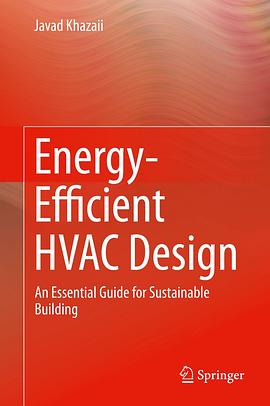
This book provides readers with essential knowledge enabling the successful design of today's new energy efficient HVAC systems. The author introduces important concepts such as Knowledge Categorization, Performance Based Design Standards, and Quantification of Uncertainty in Energy Modeling for Buildings. Pivotal topics that all HVAC and architectural engineers must master in order to navigate the green building renaissance are given focused attention, including the role of renewables, air quality, automatic controls, and thermal comfort. Relevant ASHRAE standards, as well as sustainability scoring systems such as BREEAM, HQE, LEED and CASBEE are explained in depth. Armed with the material contained in this practical reference, students and practitioners alike will become more effective and prepared for engineering success.
Provides practical guidance when energy savings are a main design focus
Balances tried-and-true engineering concepts with cutting-edge techniques
Includes in depth information on performance-based design standards and how to achieve them
作者简介
Javad Khazaii is currently Associate Mechanical Engineer for Newcomb & Boyd Engineering Consultants Group, as well as Adjunct Faculty in the Engineering Department of Southern Polytechnic State University in Atlanta, Georgia. Dr. Khazaii has co-authored scientific articles and conference proceedings for the ASME and IBPSA, and he was one of the original contributors to the State of Qatar (Energy) Sustainability Assessment System (QSAS). His team was awarded first place in the International Building Performance Simulation Association's annual group competition.
目录信息
1 A Challenging Task ................................................................................. 3
Part II Collaboration
2 Integrated Design .................................................................................... 9
2.1 Conventional Design and Construction Strategies and Players ....... 9
2.2 Integrated Design ............................................................................. 11
2.3 Energy Conscious-Integrated Design Approach .............................. 13
2.4 Other Tools ....................................................................................... 14
Reference .................................................................................................. 15
3 Categorizing Knowledge ........................................................................ 17
3.1 Knowledge Management ................................................................. 17
3.2 Community of Practice .................................................................... 18
3.3 Creating Proper Categorized Knowledge
for Building Industry Community of Practice ................................. 21
References ................................................................................................. 29
Part III Frameworks and Standards
4 Frequently Used Codes and Standards ................................................. 33
References ................................................................................................. 36
5 Performance-Based Standards .............................................................. 39
Reference .................................................................................................. 46
6 Indoor Air Quality .................................................................................. 47
6.1 Main Sources of Problem ................................................................. 47
6.2 Moisture Control .............................................................................. 48
6.3 Contamination Control................................................................... 50
References ................................................................................................. 51
7 Protective Design Practice ...................................................................... 53
7.1 Main Concerns ............................................................................... 53
7.2 Engaging in a Contract Agreement ................................................ 54
7.3 Negligence ..................................................................................... 56
7.4 Standard of Care ............................................................................ 56
7.5 Summary ........................................................................................ 57
Part IV Systems and Controls
8 HVAC Systems ......................................................................................... 61
8.1 Early Years ..................................................................................... 61
8.2 New Era and Attention Towards Energy Effi ciency ...................... 62
8.3 A Brief Review of the Most Applicable HVAC Systems .............. 63
8.4 Chilled Water Systems (Chillers) ................................................... 63
8.5 Heating Systems (Boilers) ............................................................. 64
8.6 Direct Expansion (DX) Unitary Systems ....................................... 66
8.7 Variable Volume Package Rooftop Unit ........................................ 67
8.8 Self-Contained Water-Cooled Air Conditioner .............................. 67
8.9 Packaged Terminal Air Conditioner .............................................. 68
8.10 Water Source Heat Pump ............................................................... 69
8.11 Ground Source Heat Pumps ........................................................... 69
8.12 Airside Systems ............................................................................. 70
8.12.1 Traditional Airside HVAC Systems ................................. 70
8.12.2 Constant Air Volume System with Bypass Variable
Air Volume Terminal Units with Reheat .......................... 71
8.12.3 Variable Air Volume System with Variable Volume
Terminal Units with Reheat ............................................. 72
8.12.4 Variable Air Volume System with Parallel Fan
Powered Units .................................................................. 73
8.12.5 Variable Air Volume System with Series
Fan-Powered Units ........................................................... 74
8.12.6 Changeover Bypass VVT ................................................. 75
8.12.7 Fan Coil Units .................................................................. 76
8.13 Advance Energy-Effi cient Airside HVAC Systems ....................... 77
8.13.1 Under-Floor Air Distribution CV .................................... 77
8.13.2 Under-Floor Air Distribution Parallel
Fan-Powered VAV ............................................................ 79
8.13.3 Under-Floor Air Distribution Series
Fan-Powered VAV ............................................................ 80
8.13.4 UFAD VAV w/ Baseboard Heating .................................. 81
8.13.5 Displacement Ventilation CV .......................................... 82
8.13.6 Displacement Ventilation VAV ........................................ 83
8.13.7 Displacement Ventilation w/ Passive Chilled Beams ....... 84
8.13.8 Active Chilled Beams ...................................................... 85
8.13.9 Hybrid Ventilation ............................................................ 86
8.14 HVAC System Selection ................................................................ 89
References ................................................................................................. 90
9 Building Automatic Controls ................................................................. 91
9.1 Importance of Building Automatic Controls ................................. 91
9.2 A Brief Overview of Communication Systems ............................. 91
9.3 Control Algorithms ........................................................................ 93
9.4 Direct Digital Control .................................................................... 94
9.5 Sequence of Operation ................................................................... 96
9.6 Advanced Control Strategies for Energy Saving ........................... 103
9.6.1 Demand Ventilation Control ............................................ 103
9.6.2 Optimum System Start or Stop ........................................ 103
9.6.3 Fan-Pressure Optimization for VAV Systems .................. 104
9.6.4 Unoccupied Ventilation (Night Purge) ............................. 104
9.6.5 Chilled Water Temperature Reset .................................... 104
Reference .................................................................................................. 104
Part V Energy Modeling, Sustainability Scoring Systems
and Renewable Energy
10 Energy Modeling ..................................................................................... 107
10.1 Basics of Load Calculations and Energy Modeling ....................... 107
References ................................................................................................. 111
11 Sustainability and Energy Conservation Scoring Systems ................. 113
11.1 BREEAM ....................................................................................... 116
11.2 HQE® ............................................................................................. 117
11.3 LEED ............................................................................................. 117
11.4 CASBEE ........................................................................................ 118
11.5 Other Sustainability Scoring Tools ................................................ 119
References ................................................................................................. 120
12 Renewable Energy and Sum-Zero Energy Buildings .......................... 121
12.1 Renewable Energy Types ............................................................... 122
12.1.1 Geothermal Energy .......................................................... 122
12.2 Solar Power Technologies .............................................................. 124
12.2.1 Photovoltaic (PV) Technology ......................................... 124
12.2.2 Concentrating Solar Power Systems ................................ 126
12.3 Wind Power .................................................................................... 129
12.4 Biomass, Biofuel, and Bio-Power .................................................. 129
12.4.1 Biomass ............................................................................ 129
12.4.2 Biofuels ............................................................................ 130
12.4.3 Bio-Power......................................................................... 131
12.5 Hydropower ................................................................................. 131
12.6 Ocean Energy ............................................................................... 131
12.7 Sum-Zero Energy Buildings ........................................................ 133
Part VI Uncertainty and Risk Management
13 Uncertainty and Risk Management ...................................................... 139
13.1 Probabilistic Versus Deterministic Simulation ............................ 139
13.2 Implementing Uncertainty and Sensitivity Analysis
in Energy Modeling ..................................................................... 141
13.3 Uncertainty and Sensitivity Analysis Defi nitions ........................ 142
13.4 Uncertainty Quantifi cation Techniques ........................................ 142
13.5 External Methods ......................................................................... 142
13.5.1 Local Methods ................................................................ 143
13.5.2 Global Methods (Sampling-Based Methods) ................. 143
13.6 Internal Methods .......................................................................... 145
13.7 Uncertainty Result Presentation ................................................... 146
13.8 Types of Probability Distribution ................................................. 146
13.8.1 Discrete Distribution ...................................................... 146
13.8.2 Even Distribution ........................................................... 146
13.8.3 Normal Distribution ....................................................... 147
13.8.4 Log Normal Distribution ................................................ 148
13.8.5 Triangular Distribution ................................................... 148
13.8.6 Uniform Distribution ...................................................... 149
13.9 Uncertainty in Energy Modeling.................................................. 149
13.10 Risk Management and Decision Making ..................................... 151
References ................................................................................................. 158
Index ................................................................................................................. 159
· · · · · · (收起)
读后感
用户评价
这本书《气候变化下的城市规划挑战》给我的感觉是,它更侧重于宏观层面的系统性思维。与那些专注于某个技术细节的专著不同,它将建筑环境置于更广阔的城市生态系统中去考量。作者的文笔犀利而富有洞察力,尤其擅长揭示城市基础设施在应对极端气候事件时的脆弱性。书中对“韧性城市”概念的探讨尤为精彩,它不仅仅是关于抗灾能力,更关乎城市系统如何快速自我修复和适应长期气候趋势。我特别喜欢作者对城市热岛效应的剖析,它不仅仅停留在现象描述,而是深入挖掘了导致热岛效应的城市形态、材料选择以及植被覆盖率不足等深层原因。书中还穿插了许多关于政策制定和治理模式的讨论,比如如何通过分区规划激励绿色基础设施的建设,以及如何平衡经济发展与环境保护之间的张力。读完这部分内容,我深刻体会到,解决气候挑战,最终还是要回归到如何科学、公平地组织我们的居住空间和公共资源上来。
刚翻开《绿色建筑的未来》这本书,就被它对可持续发展理念的深刻阐述所吸引。作者似乎对当前全球能源危机有着切肤之痛,全书洋溢着一种紧迫感和对技术革新的殷切期盼。书中花了大量的篇幅来探讨如何从建筑的整体生命周期角度去审视能耗问题,而不是仅仅局限于某个单一系统。比如,它详细分析了被动式设计策略的潜力,比如建筑朝向优化、自然采光最大化以及高效率围护结构的应用。书中配有大量的图表和案例研究,让我得以一窥那些世界领先的绿色建筑是如何在不牺牲居住舒适度的前提下,将能耗降至最低的。特别让我印象深刻的是关于“零能耗建筑”的章节,作者并没有将其描绘成遥不可及的乌托邦,而是通过详实的数据和可行的技术路径,展示了其实现的可能性。此外,书中对新型环保建材的介绍也十分详尽,从低碳水泥到回收材料的再利用,都体现了作者对材料科学和环境影响之间复杂关系的深刻理解。这本书读起来,感觉像是在接受一次由顶尖环境工程师亲自授课的深度研讨会,视野被极大地拓宽了。
《先进材料在可再生能源领域的应用》这本书,简直是一本面向材料科学爱好者的宝典。它的深度和专业性令人望而生畏,但同时也充满了令人兴奋的前沿发现。作者的叙述风格严谨、逻辑缜密,仿佛在带领读者进行一场微观世界的探险。书中重点介绍了新一代光伏电池的材料创新,特别是钙钛矿太阳能电池的最新突破,以及它们在提高转化效率和降低制造成本方面取得的进展。对于储能技术的热衷者来说,关于固态电池和液流电池的章节无疑是精华所在,作者对不同电化学体系的优缺点进行了近乎苛刻的对比分析,让你对“下一代储能技术”的竞争格局有一个清晰的认识。此外,书中还探讨了热电材料(可以将温差直接转化为电能的材料)的最新研究进展,虽然这些技术目前可能尚未完全商业化,但它们所预示的能源获取方式的多元化,着实令人振奋。这本书需要一定的专业背景才能完全消化,但即便是门外汉,也能从中感受到材料科学正在以惊人的速度重塑我们的能源未来。
读完《数字孪生与智能基础设施的融合》,我感觉自己仿佛进入了一个由数据驱动的、高度智能化的未来世界。这本书的重点完全放在了信息技术如何赋能物理世界的效率提升上。作者对“数字孪生”的概念进行了非常深入的建模和应用层面的探讨,它不仅仅是一个三维模型,而是实时与物理实体交互、预测未来状态的动态系统。书中对智能电网的案例分析尤为出色,通过模拟不同负载和天气条件下的能源流向,系统能够自我优化分配策略,极大地减少了传输损耗和不稳定性。此外,作者对物联网传感器网络在基础设施健康监测中的应用进行了详尽的描述,比如如何利用振动和应力数据提前预警桥梁或管道的潜在故障。这本书的语言风格偏向于技术报告和商业战略的结合,充满了对“效率提升百分之多少”、“降低运营成本多少”这类量化指标的关注。它展示了一种全新的管理范式:通过高精度的信息反馈,实现对复杂系统的全局、实时的掌控,让人对未来智慧城市的运营效率充满期待。
我最近阅读的《水资源管理与生态平衡》这本书,提供了一个非常清新且重要的视角——将水资源的循环视为衡量生态系统健康的关键指标。作者的笔触非常细腻,充满了对自然过程的敬畏之情。书中详细阐述了全球水循环在人类活动干扰下是如何被打破的,并着重分析了农业灌溉、工业废水处理以及城市雨洪管理这三大领域中的典型失衡案例。我尤其欣赏作者对“蓝绿基础设施”的推崇,这与常见的灰暗的工程学思路截然不同。通过大量的实景图片和生态恢复案例,作者展示了如何通过恢复湿地、建设渗透性路面和推广屋顶花园,让城市的水系统重新变得有生命力。书中关于虚拟水和全球供应链的文章,更是让人警醒:我们日常消费的商品背后,隐藏着巨大的跨境水资源消耗和环境成本。这本书读起来,更像是一部关于生态伦理和资源责任的宣言,它提醒我们,任何关于资源效率的讨论,都不能脱离对地球承载力的尊重。
作者想法不错,旨在提纲挈领说系统,外加说modelling,uncertainty等。开头确实不错,简意赅介绍常见HVAC系统,并直指能耗部分。但后来就越来越不想看,并且看不懂了,感觉作者有点沉浸自己世界中
作者想法不错,旨在提纲挈领说系统,外加说modelling,uncertainty等。开头确实不错,简意赅介绍常见HVAC系统,并直指能耗部分。但后来就越来越不想看,并且看不懂了,感觉作者有点沉浸自己世界中
作者想法不错,旨在提纲挈领说系统,外加说modelling,uncertainty等。开头确实不错,简意赅介绍常见HVAC系统,并直指能耗部分。但后来就越来越不想看,并且看不懂了,感觉作者有点沉浸自己世界中
作者想法不错,旨在提纲挈领说系统,外加说modelling,uncertainty等。开头确实不错,简意赅介绍常见HVAC系统,并直指能耗部分。但后来就越来越不想看,并且看不懂了,感觉作者有点沉浸自己世界中
作者想法不错,旨在提纲挈领说系统,外加说modelling,uncertainty等。开头确实不错,简意赅介绍常见HVAC系统,并直指能耗部分。但后来就越来越不想看,并且看不懂了,感觉作者有点沉浸自己世界中