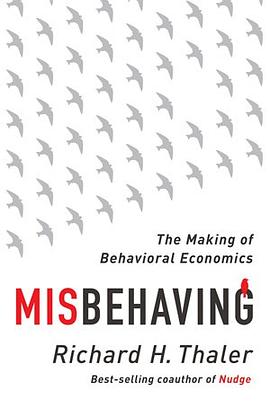

具体描述
Get ready to change the way you think about economics.
Richard H. Thaler has spent his career studying the radical notion that the central agents in the economy are humans—predictable, error-prone individuals. Misbehaving is his arresting, frequently hilarious account of the struggle to bring an academic discipline back down to earth—and change the way we think about economics, ourselves, and our world.
Traditional economics assumes rational actors. Early in his research, Thaler realized these Spock-like automatons were nothing like real people. Whether buying a clock radio, selling basketball tickets, or applying for a mortgage, we all succumb to biases and make decisions that deviate from the standards of rationality assumed by economists. In other words, we misbehave. More importantly, our misbehavior has serious consequences. Dismissed at first by economists as an amusing sideshow, the study of human miscalculations and their effects on markets now drives efforts to make better decisions in our lives, our businesses, and our governments.
Coupling recent discoveries in human psychology with a practical understanding of incentives and market behavior, Thaler enlightens readers about how to make smarter decisions in an increasingly mystifying world. He reveals how behavioral economic analysis opens up new ways to look at everything from household finance to assigning faculty offices in a new building, to TV game shows, the NFL draft, and businesses like Uber.
Laced with antic stories of Thaler’s spirited battles with the bastions of traditional economic thinking, Misbehaving is a singular look into profound human foibles. When economics meets psychology, the implications for individuals, managers, and policy makers are both profound and entertaining.
作者简介
Richard H. Thaler is the coauthor of the best-selling book Nudge with Cass R. Sunstein, and the author of Quasi Rational Economics and The Winner’s Curse. He is a professor of behavioral science and economics at the University of Chicago Booth School of Business and, in 2015, the president of the American Economic Association.
目录信息
读后感
理查德.泰勒在学术圈是个很牛逼的人,也是诺贝尔经济学奖最有实力的角逐者,不过很可惜,他涉及的研究内容,被卡尼曼以及希勒捧奖去了。 他主要是研究行为经济学,行为经济学与传统经济学的不同点,后者是将人作为经济人的假设,经济人的特点是自私而理性的。问题来了,人是不...
这是一本有趣又有可操作性的书。里面的一些理论用好了,甚至能够提升你的投资格局和业绩。以下这段文字,是投基君围绕如何在实践中应用两位诺贝尔奖得主提出的效用曲线,提升投资业绩的真实分享。欢迎感兴趣的小伙伴关注微信公众号“投基手册”,投基君会持续输出投资方面的干...
传统经济学的框架,总是喜欢将复杂而繁琐的经济行为抽象成简单而直观的经济模型。抽象化的模型无疑是具有里程碑意义的,它有效地将经济现象中的种种干扰因素成功剥离,并且在数理运算的基础上构筑起逻辑缜密的分析框架。无论是揭示宏观经济运行规律的IS-LM模型,还是探讨微观企...
用户评价
《Misbehaving》这本书,就像是一场精心编排的音乐会,每一个音符都恰到好处,共同奏响了一曲动人的乐章。作者在构建这本书时,展现出了非凡的才华,他能够将看似杂乱无章的素材,巧妙地组织起来,形成一个清晰而有力的整体。我尤其喜欢书中对于不同案例的分析,它们之间相互呼应,层层递进,最终构建起一个令人信服的论证体系。阅读这本书,我仿佛在经历一场智识上的探险,每一次翻页都充满了未知与惊喜。作者的语言精准而富有力量,能够准确地传达他复杂的思想,同时又保持了极高的可读性。我常常在阅读时,被作者的洞察力所震撼,他能够发现常人难以察觉的联系,并将其清晰地呈现出来。这本书不仅仅是对某个特定领域的探讨,它更像是一种普适性的思维框架,能够应用于生活的方方面面。我将这本书视为一本“思想的灯塔”,它照亮了我前进的方向,也让我对未来的探索充满了信心。
我最近入手了一本名为《Misbehaving》的书,这本书就像一股突如其来的暖风,轻轻拂过我一直以来固守的心灵角落。它不是那种需要费力去啃读的学术著作,也不是那种情节跌宕起伏的虚构故事,而更像是一位睿智的老友,用一种温和而坚定 D 的方式,引导我去看待那些被我们忽略的、甚至是刻意回避的“不合时宜”的现象。读这本书的过程,让我常常陷入沉思,那些我们从小就被教导要遵守的“乖巧”准则,在作者的笔下,仿佛被重新注入了生命。它们不再是僵硬的枷锁,而是有了更深层的意义,甚至是一种必要的“叛逆”。作者巧妙地运用了各种生动有趣的事例,将抽象的理论变得触手可及,让我不禁拍案叫绝。仿佛每一次“不乖”的行为背后,都隐藏着一个令人着迷的逻辑。这本书让我学会了欣赏那些不完美,拥抱那些差异,更重要的是,它鼓励我勇敢地质疑,大胆地去尝试,去发掘属于自己的那份“Misbehaving”的力量。
《Misbehaving》这本书,就像是一个精心设计的迷宫,我沉醉其中,乐此不疲地探索着其中的每一个转角。它并非线性叙事,而是像一条条独立的河流,最终汇聚成一片广阔的海洋。我尤其欣赏作者在处理不同主题时的叙事技巧,时而严谨,时而跳跃,但始终保持着一种引人入胜的节奏。读这本书,我仿佛置身于一个思想的实验室,各种奇妙的实验正在进行,而我既是观察者,也是参与者。作者提出的观点,常常让我感到既熟悉又陌生,仿佛我曾经有过类似的感受,但从未用如此清晰的语言表达出来。这本书的魅力在于它的开放性,它不提供标准答案,而是抛出问题,激发思考。每一次阅读,都能发现新的维度,都能获得新的启示。它就像一面镜子,映照出我内心深处的某些想法,让我有机会去审视和理解。我会被书中某个巧妙的比喻所打动,也会被某个出人意料的结论所折服。总而言之,这本书是一场智力上的盛宴,我享受其中,也受益匪浅。
拿到《Misbehaving》这本书,我本以为会是一本充满挑战性的读物,但出乎意料的是,它以一种极为友好的姿态展现在我面前。书中没有艰涩难懂的术语,没有令人望而生畏的理论框架,取而代之的是一种亲切的讲述方式,仿佛作者正坐在我对面,娓娓道来。我喜欢它叙述故事的流畅性,以及在看似不经意间融入的深刻见解。这本书让我重新思考了很多关于“正常”与“异常”的定义,它挑战了我过去的一些固有观念,让我开始质疑那些被认为是理所当然的“规范”。作者的文字充满了智慧,也带着一丝幽默感,使得阅读过程轻松而愉悦。我时常会因为书中某个段落而会心一笑,然后又陷入长久的思考。这本书不仅仅是知识的传递,更是一种思维方式的启迪。它让我明白,有时候,那些“不乖”的行为,恰恰是进步的种子,是创新的源泉。我将这本书视为一本“人生指南”,它教会我如何更坦然地面对不确定,如何更勇敢地去拥抱可能性。
这本《Misbehaving》的书名简直像一股清流,在书架上一下子就抓住了我的眼球。我一直对那些挑战常规、不落俗套的作品情有独钟,而这个名字似乎预示着一种打破束缚、探索未知边界的阅读体验。我常常在想,在我们的生活中,有多少“规矩”是理所当然,又有多少是人为设定的障碍?那些被贴上“不乖”标签的事物,往往隐藏着最深刻的洞察和最意想不到的创新。这本书,光凭书名,就勾起了我强烈的好奇心,让我忍不住想知道,作者是如何解读“Misbehaving”这个概念的?它会是关于社会规则的颠覆,还是个人意志的解放?亦或是科学领域那些打破传统认知的奇思妙想?我期待它能提供一个全新的视角,让我重新审视那些我习以为常的世界,发现其中的“不安分”之处所蕴含的巨大能量。这本书在我心中已经播下了探究的种子,我迫不及待地想翻开它,跟随作者一起,踏上一段充满惊喜与启发的旅程。
非常有趣的一本书,把自传和学问结合在一起让本书可读性很高
本来以为“行为经济学”平淡无奇,但是里面的例子,越仔细想,就越觉得有意思。感觉里面有不少东西,有机会仔细消化一下。4.5星,不算最好,但比一般的书好看很多了
Thaler还真的拿奖了。恭喜他。再往下走,还真是有点期待Genoeconomics引发的哲学讨论
very readable book, not a lot of new stuff , but the stories are certainly fun and juicy :D
非常有趣的一本书,把自传和学问结合在一起让本书可读性很高