
具体描述
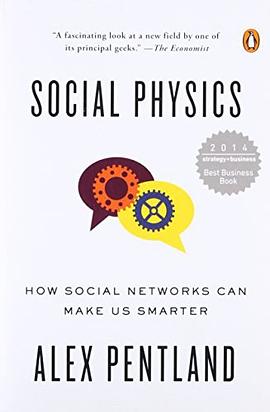
From one of the world’s leading data scientists, a landmark tour of the new science of idea flow, offering revolutionary insights into the mysteries of collective intelligence and social influence
If the Big Data revolution has a presiding genius, it is MIT’s Alex “Sandy” Pentland. Over years of groundbreaking experiments, he has distilled remarkable discoveries significant enough to become the bedrock of a whole new scientific field: social physics. Humans have more in common with bees than we like to admit: We’re social creatures first and foremost. Our most important habits of action—and most basic notions of common sense—are wired into us through our coordination in social groups. Social physics is about idea flow, the way human social networks spread ideas and transform those ideas into behaviors.
Thanks to the millions of digital bread crumbs people leave behind via smartphones, GPS devices, and the Internet, the amount of new information we have about human activity is truly profound. Until now, sociologists have depended on limited data sets and surveys that tell us how people say they think and behave, rather than what they actually do. As a result, we’ve been stuck with the same stale social structures—classes, markets—and a focus on individual actors, data snapshots, and steady states. Pentland shows that, in fact, humans respond much more powerfully to social incentives that involve rewarding others and strengthening the ties that bind than incentives that involve only their own economic self-interest.
Pentland and his teams have found that they can study patterns of information exchange in a social network without any knowledge of the actual content of the information and predict with stunning accuracy how productive and effective that network is, whether it’s a business or an entire city. We can maximize a group’s collective intelligence to improve performance and use social incentives to create new organizations and guide them through disruptive change in a way that maximizes the good. At every level of interaction, from small groups to large cities, social networks can be tuned to increase exploration and engagement, thus vastly improving idea flow.
Social Physics will change the way we think about how we learn and how our social groups work—and can be made to work better, at every level of society. Pentland leads readers to the edge of the most important revolution in the study of social behavior in a generation, an entirely new way to look at life itself.
作者简介
●全球大数据权威、可穿戴设备之父、MIT人类动力学实验室主任。
●在近30年执教生涯中,彭特兰培养出了50余位博士,其中一半成长为该研究领域的领军人物,1/4成为创业公司的创始人,1/4成为业界相关领域的中坚力量。彭特兰的实验室孵化出了30家以上的高科技企业。
●在全球计算科学领域,彭特兰是被引述次数最多的科学家之一。2011年,《福布斯》评选他为全球大数据权威,《新闻周刊》称他是“改变20世纪的100位美国人”之一。2012年,他关于大数据应用的文章获得《哈佛商业评论》的麦肯锡奖。2008年和2013年,他的研究成果更是两度摘得《麻省理工科技评论》“年度十大突破性科学技术”桂冠。
目录信息
读后感
彭特兰带领的媒介实验室通过大数据的搜集和分析证实了社会网络理论中的原有的很多假设。例如,社会网络的大小与想法的多样性有正相关关系;社会网络的互动密度与效率显著相关。 作者创造性地使用了“想法流”这一概念。通过监测想法流的流动方向、流动密度来考察信息间的互动,...
此书读了许久,受益颇多,彭特兰是可穿戴设备之父、全球大数据权威、MIT人类动力学实验室主任,正如他本人所说“我生活在未来”,本书站在一个更高的角度,思考人类社会的发展问题。 为了避免忘记,我将心得草草记录于手机笔记并分享在这里,欢迎批评探讨。 一、当下的困境 随...
好多人都抢着看 是爱情小说 刘岚由此生发感慨 指导我说 董淑燕 以后你也写爱情小说吧 爱情小说畅销 千万不要写那种大家都看不懂的 不过可以偶尔蹦出一句来 让他们崇拜崇拜 这话听着好像说的人已经出了N本书了 不过化学老师还有一个提议说写文章要写萨达姆没有被抓 ...
用户评价
读完后,我脑海中浮现的不是连贯的故事线,而是一幅幅色彩浓烈、对比强烈的画面组。作者的文风极具表现力,简直像一位高产的印象派画家,用文字在纸面上泼洒着情感的颜料。那种对城市景观和人群动态的捕捉,充满了原始的生命力和令人不安的美感。书中对于社会阶层之间那道无形却坚固的壁垒的刻画,简直是毫不留情,冷峻得像是冰冷的钢铁。人物的对话设计尤其出彩,充满了张力,每一句简短的交流背后都隐藏着未说出口的试探和博弈,那种话音刚落,空气中残留的紧张感,我仿佛都能通过文字嗅到。然而,对于某些核心的冲突点,作者似乎又采取了退缩的态度,用大片的留白来代替直接的爆发,这使得整体的戏剧张力在某些关键时刻显得有些不足,留下了一种意犹未尽的遗憾。但瑕不掩瑜,这种克制反而凸显了其更深层次的艺术追求,它不是在讲述一个故事,而是在展示一种特定生活状态下的精神图景,一种漂浮在现代文明边缘的疏离感,非常独特。
这本书的结构设计无疑是作者最具野心的一面,它更像是一座由无数逻辑碎片拼凑而成的迷宫,而非传统的线性叙事。一开始,读者会感觉自己像个迷路的孩子,找不到任何明确的指引,各种理论术语和看似无关紧要的轶事被随机抛洒出来,让人摸不着头脑。但随着阅读的深入,你会开始意识到这些碎片并非随机,它们之间存在着一种隐秘的、更高级的联系,如同多条河流最终汇入同一片海洋。这种解构与重构的过程,极大地挑战了我的阅读习惯,我不得不频繁地翻阅前面的章节,试图将散落的线索重新串联起来,这过程既耗费心神,也带来了巨大的智力上的愉悦感。这种挑战读者的尝试是值得肯定的,它迫使我们跳出固有的思维定势,去接受一种非线性的、多层次的知识输入。尽管如此,书中个别章节的论述深度似乎略显单薄,像是为了支撑某种宏大理论框架而硬塞进去的注脚,削弱了整体的严谨性。
这本书的叙事节奏着实让人捉摸不透,开篇如同迷雾中前行,情节铺陈得极其缓慢,仿佛作者刻意在营造一种压抑的、令人窒息的氛围。我花了相当大的精力才勉强跟上主角的思绪,那种在宏大背景下个体的无力和挣扎感,描绘得入木三分。作者似乎对心理学的细腻描摹有着异乎寻常的执着,大量的内心独白占据了篇幅,这些独白时而深刻得令人拍案叫绝,时而又陷入一种哲学的泥潭,让人感觉有些晦涩难懂。特别是书中对于时间感流逝的处理,常常采用一种非线性的手法,不同时间点的记忆和现实交织在一起,初读时会让人感到困惑,仿佛被卷入一个不断自我折叠的时空结构之中。不过,一旦适应了这种独特的叙事腔调,你会发现其后劲十足,那种关于存在本质的追问,会像藤蔓一样缠绕在心头,久久不散。我尤其欣赏作者对细节的把控,即使是微不足道的一个物件,一个场景的描绘,都承载着某种隐喻,需要读者带着十二分的专注去解读。总的来说,这是一部需要沉下心来细品的“慢热型”作品,不适合追求快速情节推进的读者。
这本书的文字密度大得惊人,仿佛每一个词语都经过了反复的锤炼和压缩,信息量超载,需要反复研读才能领会其全貌。作者的句式结构变化多端,时而是简洁有力的短句,充满命令式的力量感;时而又是层层嵌套的长句,如同复杂的法律条文般层层推进,极具思辨性。这种节奏的急剧转换,初读时容易造成阅读疲劳,但坚持下去,你会发现其中蕴含着一种独特的美感——一种建立在秩序与混乱交界处的,近乎数学般精准的美感。书中对社会运行机制的剖析,虽然宏大且具有前瞻性,但偶尔会因为过于依赖抽象模型和数据类比,而使得读者的代入感减弱,让人感觉自己像是在阅读一份高级的政策分析报告,而非文学作品。尽管如此,它成功地构建了一个引人入胜的思考框架,让我对自己日常生活中习以为常的行为模式产生了深刻的怀疑和反思。这是一本需要工具书辅助才能通读的“硬核”之作,但其带来的认知冲击是无可替代的。
我必须承认,这本书的阅读体验是极其两极分化的。它对于环境气氛的营造达到了一个近乎偏执的程度,作者似乎对光影、气味乃至空气的湿度都有着精准的描摹,使得你仿佛真的置身于那个虚构的,却又无比真实的世界里。这种环境描写有时甚至盖过了情节本身的重要性,让人觉得世界本身才是主角,而人物只是穿梭其中的匆匆过客。书中对于“群体”和“个体意志”之间永恒拉锯战的探讨,可以说是全书最引人入胜的部分,它没有给出简单的答案,而是展示了冲突的复杂性与泥泞感。然而,对于这种复杂性的处理,有时候显得过于学术化和抽离,少了那么一点人性的温度。特别是某些角色的动机转变,在缺乏充分的情感铺垫时,显得有些生硬和突兀,像是为了服务于某种哲学论点而被工具化了。总而言之,它是一部野心勃勃的作品,但在艺术处理上,似乎在冰冷的概念与滚烫的人性之间,失衡了一瞬。
读完无感,需要把作者的论文都找来读。。。汪小帆和女儿翻译了这本书,有机会再读一遍。
一个物理PhD candidate 和一个社会学PhD candidate 讨论小组的第一本书
读完无感,需要把作者的论文都找来读。。。汪小帆和女儿翻译了这本书,有机会再读一遍。
话题很有意思,作者也很牛,可惜作者从材料的组织,观点的叙述,到表达的趣味都是完全没有的,还不如直接去看他写的论文呢……不推荐不推荐不推荐
话题很有意思,作者也很牛,可惜作者从材料的组织,观点的叙述,到表达的趣味都是完全没有的,还不如直接去看他写的论文呢……不推荐不推荐不推荐