
具体描述
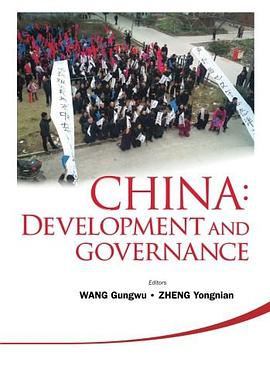
China has achieved significant socio-economic progress and has become a key player on the international stage after several decades of open-door and reform policy. Looking beyond China's transformation, this book focusses on the theme of governance which is widely regarded as the next most critical element to ensure that China's growth remains sustainable.
Today, China is confronted with a host of pressing challenges that call for urgent attention. These include the need to rebalance and restructure the economy, the widening income gaps, the poor integration of migrant populations in the urban areas, insufficient public housing and healthcare coverage, the seeming lack of political reforms and the degree of environmental degradation. In the foreign policy arena, China is likewise under pressure to do more to address global concerns while not appearing to be overly aggressive. The next steps that China takes would have a great deal to do with governance, in terms of how it tackles or fails to address the myriad of challenges, both domestic and foreign.
China: Development and Governance, with 57 short chapters in total, is based on up-to-date scholarly research written in a readable and concise style. Besides China's domestic developments, it also covers China's external relations with the United States, Japan, Korea and Taiwan. Non-specialists, in particular, should find this volume accessible and useful in keeping up with fast-changing developments in East Asia.
作者简介
Professor WANG Gungwu is Chairman of the East Asian Institute, University Professor at the National University of Singapore (NUS), Faculty of Arts and Social Sciences and Emeritus Professor of the Australian National University. He is also Chairman of the governing board of the Lee Kuan Yew School of Public Policy and Chairman of the Board of Trustees of the Institute of Southeast Asian Studies.
Professor Wang received his BA (Honours) and MA degrees from the University of Malaya in Singapore, and his PhD in Mediaeval History from the School of Oriental and African Studies of the University of London (1957). His teaching career took him from the University of Malaya (Singapore and Kuala Lumpur, 1957–1968, Professor of History 1963–1968) to the Australian National University (1968–1986), where he was Professor and Head of the Department of Far Eastern History and Director of the Research of Pacific Studies. From 1986 to 1995, he was Vice Chancellor of the University of Hong Kong. He was Director of the East Asian Institute of NUS from 1997 to 2007.
Professor Wang holds many appointments and awards. He has been made a Commander of the Order of the British Empire (CBE) in 1991. He was conferred the International Academic Prize of the Fukuoka Asian Cultural Prizes. He was awarded the Public Service Medal by the Singapore government in 2004 and a second medal in 2008. In Singapore, he is a member of the new Board of the Chinese Heritage Centre; and of the Board of Governors of the Institute of Defence and Strategic Studies (later renamed as S Rajaratnam School of International Studies), both at Nanyang Technological University.
Professor Wang is a prolific author and is renowned for his scholarship on the history of the Chinese diaspora in Southeast Asia, and the history and civilisation of China and Southeast Asia. In over five decades, he has written more than 500 scholarly works of books, monographs and other edited volumes.
Professor ZHENG Yongnian is Director of the East Asian Institute (EAI) at the National University of Singapore. He received his BA and MA degrees from Beijing University, and his PhD from Princeton University. He was a recipient of the Social Science Research Council-MacArthur Foundation Fellowship (1995–1997) and the John D and Catherine T MacArthur Foundation Fellowship (2003–2004). He was Professor and founding Research Director of the China Policy Institute of the University of Nottingham in the United Kingdom. Professor Zheng is the editor of the Series on Contemporary China (World Scientific Publishing), China Policy Series (Routledge), China: An International Journal and East Asian Policy. His research interests include both China's domestic transformation and its external relations. His papers have appeared in journals such as Comparative Political Studies, Political Science Quarterly and China Quarterly. He is also the author and editor of numerous books.
Besides his research work, Professor Zheng has also been an academic activist. He served as a consultant to the United Nations Development Programme on China's rural development and democracy. In addition, he has been a columnist for Xin Bao (Hong Kong Economic Journal, Hong Kong) and LianheZaobao (Singapore) for many years, writing numerous commentaries on China's domestic and international affairs.
目录信息
Editors
Preface (WANG Gungwu and ZHENG Yongnian)
The Art of Governance: Managing Rising Expectations:
Introduction (CHEN Gang)
China's Fifth Generation Leadership: Characteristics and Policies (BO Zhiyue)
Debating Political Reform: Societal Pressures and Party-State Responses (WU Guoguang)
Intra-Party Democracy in Practice: Balloting for City Leaders in Jiangsu (ZHENG Yongnian and CHEN Gang)
Township Government Reform: Improving Local Governance? (TAN Qingshan)
Innovations in China's Local Governance: An Assessment (XIA Ming)
The Impact of Market on the Grassroots Organisations of the Chinese Communist Party (Lance L P GORE)
China Struggles to Maintain Stability: Strengthening its Public Security Apparatus (XIE Yue and SHAN Wei)
How Secure is China's Food Security? (John WONG)
China's “New Deal” in Xinjiang and its Challenges (SHAN Wei and WENG Cuifen)
The Chinese Leadership and the Internet (LYE Liang Fook and Lily HONG)
Women's Political Participation in China (YANG Lijun and GUO Xiajuan)
Enhancing and Re-Orienting Governance to Promote Sustainable Development:
Introduction (Sarah Y TONG)
China Coming to the End of its High Growth (John WONG and HUANG Yanjie)
China's Economy after Three Decades of Reforms: A Systems Approach (Wolfgang KLENNER)
Evolving Industrial Policies in China: A Governing Tool for Development and Restructuring (Sarah Y TONG)
China's Regional Development Policies (YU Hong)
The 12th Five-Year Programme: A Turning Point in China's Socio-Economic Development (John WONG)
Shadow Banking in China: A Call for Financial Reforms (YAO Jielu and YANG Mu)
The Rise of the Renminbi as International Currency (YANG Mu and YAO Jielu)
China's Local Government Debts: Thorny but Manageable (YAO Jielu)
China's State-Owned Enterprises: The Dilemma of Reform (HUANG Yanjie)
An Update on China's Sovereign Wealth Fund: China Investment Corporation (Catherine CHONG Siew Keng)
China's Economy Remains Highly Export-Oriented (Sarah Y TONG)
Rethinking the Success of China's High-Tech Exports (XING Yuqing)
China's Research and Development (WU Yanrui)
Are Chinese Small and Medium Enterprises Victims of Institutional Pitfalls? (CHEN Shaofeng)
China as a Newly Minted Upper Middle Income Country (LU Ding)
China's Labour Shortage and its Implications (HUANG Yanjie)
Can China Continue to Reap its Demographic Dividend in Economic Growth? (YAN Hao)
Social Transformation, Stability and Governance:
Introduction (ZHAO Litao)
Chinese Working Class and Trade Unions: Transformation and Predicament in the Reform Era (QI Dongtao)
China's Middle Class: Still in the Making (YANG Jing)
China's New Rich Posing a Challenge to Social Stability (SHENG Sixin)
Non-Governmental Organisations in China: Developments and Challenges (XU Ying)
Chengzhongcun in China (ZHONG Sheng)
China's Hukou Reform: The Guangdong and Shanghai Cases (Courtney FU Rong)
Reinventing China's Health System (QIAN Jiwei)
Meeting the Ageing Challenge: China's Social Care Policy for the Elderly (ZHANG Yanxia)
China's Way to Good Housing Governance (ZHOU Zhihua)
China Attracting Global Top Talent: Central and Local Government Initiatives (ZHU Jinjing)
China's Higher Education Reform: The Issue of Governance (ZHAO Litao)
Improving Local Governance without Democratisation: Community Building in Shanghai (SHI Fayong)
Rising Trend of Labour Strikes: Tables Turned for Chinese Workers? (YEW Chiew Ping)
China's External Relations and Global Governance:
Introduction (LYE Liang Fook)
China–US Relations: Coping with a US Pivot to the Asia-Pacific Region (LYE Liang Fook)
Sino–Japanese Relations: Dark and Bright Spots in an Ambivalent Relationship (LAM Peng Er)
China and India: The World is Big Enough for Both (ZHAO Hong)
China–South Korea Relations and Implications for China in Global Governance: Some Notes after 20 Years of Relations (CHOO Jaewoo)
Comrades No More: Beijing's Evolving North Korea Policy (YUAN Jingdong)
China–ASEAN Relationship: An “Offer-Response” Analysis (WANG Yuzhu)
China and Singapore: An Asymmetrical but Substantive Relationship (LYE Liang Fook)
China and the EU: Will China Come to the Rescue of Troubled Economies? (Kjeld Erik BRØDSGAARD)
China's Diplomacy in the Middle-East (CHEN Gang and Ryan CLARKE)
Will the United States Desert Taiwan? (John F COPPER)
Managing Cross-Strait Economic Relations (CHIANG Min-Hua)
China and the Rise of the BRICS (Anthony P SPANAKOS)
China's Soft Power: Growth and Limits (LAI Hongyi)
China's Efforts to Enhance its Energy Security (ZHAO Hong)
The South China Sea Disputes: Current State of Play and Future Prospects (Katherine TSENG Hui-Yi)
China and Global Governance (PANG Zhongying and LYE Liang Fook)
Index
· · · · · · (收起)
读后感
用户评价
**第二段评价** 老实说,这本书的开篇稍微有点让人摸不着头脑,信息量太大,而且叙事视角切换得非常快,我一开始以为自己抓不住重点。但是,一旦坚持读过前三章,那种宏大的结构感就开始显现出来,简直像是在看一幅精妙绝伦的马赛克壁画,一开始是无数个零散的小方块,但当你后退几步,整个壮丽的图案就赫然出现在眼前。作者的想象力令人叹为观止,构建的世界观逻辑严密,细节丰富到令人发指。那些虚构的社会制度、复杂的历史背景,作者处理得既有史诗感,又没有陷入纯粹的学术枯燥。我特别喜欢作者对不同社会阶层人物语言习惯的模仿,那种细微的差别,简直是语言学家都会拍案叫绝的。此外,这本书在探讨“时间”这个哲学命题上,有独到的见解,它不是简单的时间旅行,而是关于记忆、遗忘与存在意义的深刻拷问。读完合上书的那一刻,我感觉自己的思维边界被拓宽了,不再是用惯常的视角去看待我们习以为常的事物。这本书绝对值得反复阅读,每次重读都会发现新的线索和更深层次的寓意。
**第一段评价** 这本书的叙事手法简直是教科书级别的示范,尤其是在描绘人物内心挣扎的那部分,作者简直像一个心理学家一样精准地剖析了人性的幽微之处。我读到主角面临那个艰难抉择的场景时,几乎能感受到他心跳加速的频率,那种左右为难、进退失据的境地被刻画得淋漓尽致。情节的推进不是那种生硬的“为了推动剧情而推动”,而是水到渠成,每一个转折都像是必然会发生的,但又在发生的瞬间让人感到震惊。文笔方面,它呈现出一种老派的、厚重的质感,用词考究,句子结构复杂却不晦涩,读起来需要全神贯注,但回报是极大的审美享受。书中对于环境的描写也极其出色,那种潮湿、压抑的氛围,或者在某个关键时刻突然出现的明亮光线,都像是人物情绪的延伸,而不是简单的背景板。我尤其欣赏作者对“留白”的运用,很多重要的信息和情感并不直白地告诉你,而是巧妙地隐藏在对话的缝隙和人物的动作之间,需要读者自己去挖掘和填充,这种互动感让阅读过程充满了乐趣和深度。这本书不适合那种寻求快速刺激的读者,它更像是一坛陈年的老酒,需要时间去品味,去体会其中层次丰富的味道。
**第四段评价** 坦白讲,这本书的学术性略显厚重,对于纯粹追求消遣的读者来说,可能会有些门槛。它引用了大量的典故和历史事件作为支撑,很多地方需要停下来查阅资料,才能真正领会作者的深意。但这恰恰是这本书的价值所在——它不仅仅是一个故事,更是一部跨越时空的对话录。作者的论证过程严谨,观点鲜明,尤其是在批判某种陈旧的社会结构时,那种毫不留情的犀利笔触,让人拍案叫绝。我特别欣赏作者那种敢于直面历史阴影的勇气,他没有试图去美化或粉饰太平,而是毫不回避地揭示了那些被时间掩盖的真相,让读者不得不去反思我们所继承的一切的根基。文字风格上,它偏向于一种散文式的哲学思辨,句子冗长,充满排比和反问,读起来像是在聆听一位智者娓娓道来。如果你对某一特定领域有深入研究的兴趣,这本书会为你提供一个全新的、充满批判性的视角,它促使你对既有的认知体系发起挑战,而不是被动接受既定结论。
**第三段评价** 这本书的节奏感处理得简直是高超的艺术,像一部精心编排的交响乐。有的章节是沉静的慢板,细腻地铺陈人物的情感涟漪,每一个细微的心绪波动都被放大并被赋予了重量;而有些章节则瞬间进入紧张的快板,动作戏的描写干净利落,充满张力,让你忍不住屏住呼吸直到段落结束。我发现作者非常擅长用对比手法来制造戏剧冲突,比如将极致的温柔与残酷的现实并置,这种强烈的反差极大地冲击了读者的感官。关于角色塑造,我得说,这是一个群像戏的胜利。没有绝对的好人或坏蛋,每个人都有其不可推卸的动机和无可指摘的软弱,他们做出的每一个选择,无论多么令人痛心,你都能理解背后的逻辑。这本书的魅力在于它的真实感,不是现实生活有多么光明美好,而是它忠实地记录了人性在极端环境下的复杂反应。我对书中关于“信任危机”的处理印象尤为深刻,那种猜忌像毒蛇一样在角色间蔓延,让整个故事笼罩在一层挥之不去的阴影中。这是一次酣畅淋漓的阅读体验,读完后感觉自己像经历了一场漫长而艰苦的探险。
**第五段评价** 这本书带给我一种久违的、纯粹的“冒险感”,但这种冒险不是在刀光剑影中,而是在情感的迷宫里。作者的叙事像是散落的珠子,需要读者亲手将它们串联起来,这个过程本身就是一种乐趣。我非常着迷于作者对“记忆碎片”的运用,故事的线索不是按照时间顺序铺陈,而是通过不同角色的回忆和梦境交织而成,这种非线性的结构,完美地模拟了人类记忆的不确定性和跳跃性。每一次回忆的闪回,都像是一次新的发现,揭示了之前看似不相关联的事件之间的内在联系,让人有种豁然开朗的惊喜。文笔上,它呈现出一种近乎诗意的轻盈感,即使描写悲剧性的场景,也带着一种超脱的、唯美的光晕,不会让人感到过度沉溺于痛苦。这本书最成功的一点是,它成功地将宏大的历史背景和极其私密的个人情感融合在一起,让读者明白,任何重大的时代变迁,最终都要落脚到一个个具体的人的命运之上。读完之后,我感觉自己仿佛走过了一条漫长而曲折的隧道,最终看到了出口,心中充满了敬畏与释然。