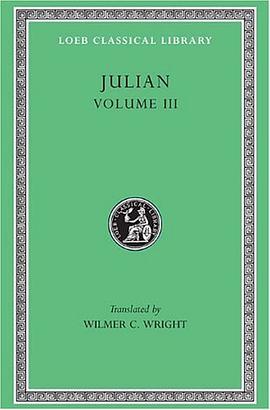

具体描述
Julian (Flavius Claudius Iulianus) "the Apostate," Roman Emperor, lived 331 or 332 to 363 CE. Born and educated in Constantinople as a Christian, after a precarious childhood he devoted himself to literature and philosophy and became a pagan, studying in various Greek cities. In 355 his cousin Emperor Constantius called him from Athens to the court at Milan, entitled him "Caesar," and made him governor of Gaul. Julian restored Gaul to prosperity and good government after the ravages of the Alamanni (he overthrew them at the battle of Strassburg in 357) and other Germans. Between 357 and 361 Julian's own soldiers, refusing to serve in the East at Constantius's orders, nearly involved Julian in war with Constantius--who however died in 361 so that Julian became sole Emperor of the Roman world. He began many reforms and proclaimed universal toleration in religion but pressed for the restoration of the older pagan worships. In 362-363 he prepared at Constantinople and then at Antioch for his expedition against Persia ruled by Shapur II. He died of a wound received in desperate battle. Julian's surviving works (lost are his "Commentaries" on his western campaigns), all in Greek, are given in the Loeb Classical Library in three volumes. The eight "Orations" (1-5 in Volume I, 6-8 in Volume II) include two in praise of Constantius, one praising Constantius's wife Eusebia, and two theosophical hymns (in prose) or declamations, of interest for studies in neo-Platonism, Mithraism, and the cult of the Magna Mater in the Roman world. The satirical "Caesars" and "Misopogon," Beard-hater, are also in Volume II. "The Letters" (more than eighty, Volume III) include edicts or rescripts, mostly about Christians, encyclical or pastoral letters to priests, and private letters. Lastly in Volume III are the fragments of the work "Against the Galilaeans" (the Christians), written mainly to show that evidence for the idea of Christianity is lacking in the Old Testament.
作者简介
Julian (Flavius Claudius Iulianus) "the Apostate", Roman Emperor, lived 331 or 332 to 363 CE. Born and educated in Constantinople as a Christian, after a precarious childhood he devoted himself to literature and philosophy and became a pagan, studying in various Greek cities. In 355 his cousin Emperor Constantius called him from Athens to the court at Milan, entitled him "Caesar", and made him governor of Gaul. Julian restored Gaul to prosperity and good government after the ravages of the Alamanni (he overthrew them at the battle of Strassburg in 357) and other Germans. Between 357 and 361 Julian’s own soldiers, refusing to serve in the East at Constantius’s orders, nearly involved Julian in war with Constantius—who however died in 361 so that Julian became sole Emperor of the Roman world. He began many reforms and proclaimed universal toleration in religion but pressed for the restoration of the older pagan worships. In 362–363 he prepared at Constantinople and then at Antioch for his expedition against Persia ruled by Shapur II. He died of a wound received in desperate battle.
Julian’s surviving works (lost are his Commentaries on his western campaigns), all in Greek, are given in the Loeb Classical Library in three volumes. The eight Orations (1-5 in Volume I, 6-8 in Volume II) include two in praise of Constantius, one praising Constantius’s wife Eusebia, and two theosophical hymns (in prose) or declamations, of interest for studies in neo-Platonism, Mithraism, and the cult of the Magna Mater in the Roman world. The satirical Caesars and Misopogon, Beard-hater, are also in Volume II. The Letters (more than eighty, Volume III) include edicts or rescripts, mostly about Christians, encyclical or pastoral letters to priests, and private letters. Lastly in Volume III are the fragments of the work Against the Galilaeans (the Christians), written mainly to show that evidence for the idea of Christianity is lacking in the Old Testament.
目录信息
Bibliography
Letters
1–58 With Dates
59–73 Undated
Apocryphal Letters 74–83
Shorter Fragments
Epigrams
Against The Galilaeans
Introduction
Text
Fragments
Table Of Numbers
Index
· · · · · · (收起)
读后感
用户评价
哦,天哪,《朱利安,第三卷》!我简直不敢相信我终于读完了。这本书就像一场史诗般的冒险,让我完全沉浸其中,几乎忘了现实世界。从第一页开始,我就被深深地吸引住了,作者构建的世界是如此鲜活,人物的动机和情感也如此真实,让我感同身受。我喜欢作者在细节上的处理,每一个场景都描绘得淋漓尽致,仿佛我亲身经历了那一切。尤其是那些关于权谋斗争和复杂人物关系的描写,简直是精彩绝伦,让我常常捧着书,在深夜里辗转反侧,思考着角色的下一步行动。
《朱利安,第三卷》给我带来的,不仅仅是一个故事,更是一种对人性的探索。作者并没有简单地将角色塑造成好人或坏人,而是展现了他们复杂的内心世界,以及在各种困境下所做出的艰难抉择。我发现自己在阅读过程中,不断地反思自己的价值观,也对周围的世界有了更深的理解。书中那些关于道德困境和个人成长的描写,尤其让我印象深刻,它让我明白,真正的力量往往来自于内心的坚韧和对理想的追求。
坦白说,我花了很多时间来消化《朱利安,第三卷》所包含的一切。这本书的深度和广度都远超我的预期。我喜欢作者在宏大叙事中融入的哲学思考,它们让这本书不仅仅是一部娱乐作品,更是一次思想的洗礼。我反复咀嚼书中的某些段落,思考其中的寓意。我还会推荐给很多朋友,因为我觉得这本书能给不同的人带来不同的启发。这是一本值得反复阅读,并且能在其中不断发现新东西的杰作。
我必须说,《朱利安,第三卷》在叙事节奏的把握上堪称一绝。它既有宏大的史诗感,又不乏细腻的人物刻画,两者完美地结合在一起,创造了一种引人入胜的阅读体验。书中充满了跌宕起伏的情节,总是有意想不到的转折,让我时刻保持警惕,渴望知道接下来会发生什么。作者巧妙地运用悬念,让我在阅读过程中欲罢不能。而且,这本书的语言风格非常独特,既有古典的韵味,又不失现代的流畅,读起来非常享受。
这本书的情感冲击力实在是太强大了。我很少能在一本书里找到如此丰富的情感体验,从激动人心的时刻到令人心碎的悲伤,它毫不费力地将我带入其中。我发现自己在为角色的胜利而欢呼,也为他们的失落而扼腕叹息。作者对人物心理的刻画入木三分,让我能够理解他们做出某些选择的原因,即使这些选择并不总是容易或受欢迎的。我尤其喜欢书中那些关于爱、牺牲和救赎的主题,它们深刻地触动了我,让我对人生有了新的思考。