具体描述
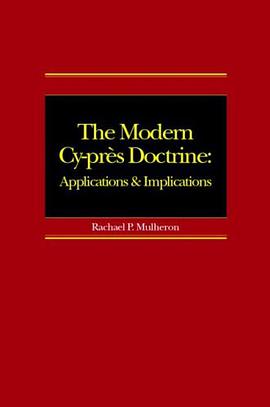
It is unusual, in the precise world of law, to find instances of where 'near enough is good enough'. This book explores when this is possible, referring to property and monetary transfers, under the increasingly important and influential 'cy-pres doctrine'. The doctrine decrees that, when literal compliance is impossible or infeasible, the intention of a donor or testator should be carried out 'as nearly as possible'. Over the past thirty years, this doctrine has marched into other legal territory where 'as near as possible' is also considered sufficient, such as in class actions litigation and under non-charitable trusts. Discussing and analyzing key developments across the Commonwealth jurisdictions and the USA, this book considers whether there is a new and overarching definition which can be attributed to the cy-pres doctrine. It asks whether there is a doctrinal symmetry of analysis that truly renders it a body of 'cy-pres law' in the modern context and whether the doctrine can be expected to play an even greater role in the future. This book is of interest to researchers and practitioners working in trusts and charity law, property law, contract law, and class actions jurisprudence.
Modern Cy-pres Doctrine: A Deep Dive into Charitable Trust Administration and Legacy Fulfillment The complex and evolving landscape of charitable trusts presents a perennial challenge for legal practitioners, philanthropists, and beneficiaries alike. At its core lies the doctrine of cy-pres, a legal principle that allows courts to modify the terms of a charitable trust when it becomes impossible or impracticable to carry out the original charitable intention. This doctrine, while seemingly straightforward in its purpose, has spawned a wealth of nuanced legal interpretation and practical application, particularly in contemporary times. "Modern Cy-pres Doctrine" aims to provide a comprehensive and insightful examination of this critical legal tool, offering a detailed exploration of its historical roots, its theoretical underpinnings, and its multifaceted practical implications in the 21st century. This work delves deeply into the foundational principles that govern cy-pres. It begins by tracing the historical development of the doctrine, from its medieval origins in English ecclesiastical law to its adoption and adaptation within common law jurisdictions. Understanding this historical trajectory is crucial for grasping the evolution of its application and the underlying judicial philosophies that have shaped its contours. The book meticulously analyzes the key cases that have defined and refined the cy-pres doctrine, highlighting the judicial reasoning and policy considerations that informed these decisions. Readers will gain a thorough appreciation for how courts have grappled with questions of donor intent, public benefit, and the practicalities of trust administration over centuries. A significant portion of "Modern Cy-pres Doctrine" is dedicated to exploring the various circumstances that trigger the application of cy-pres. The book dissects the often-subtle distinctions between impossibility and impracticability, providing detailed examples and legal tests used by courts to determine when a trust's original purpose has become unattainable. This includes scenarios such as the disappearance of the named beneficiary, the inadequacy of the trust fund to achieve its stated purpose, changes in the social or economic environment that render the original purpose obsolete, or the need to adapt the trust to comply with modern legal requirements. The analysis goes beyond mere theoretical categorization, offering practical guidance on how to identify and address these situations. Furthermore, the book critically examines the different approaches courts have taken in applying cy-pres. It distinguishes between the "gift over" doctrine, where a trust may specify alternative beneficiaries if the primary purpose fails, and the broader equitable power of cy-pres. The work scrutinizes the principles guiding the selection of alternative charitable purposes, emphasizing the paramount importance of adhering as closely as possible to the original donor's intent. This involves a detailed discussion of the judicial tests used to ascertain this intent, including the consideration of the donor's overall philanthropic goals, the beneficiaries they sought to serve, and the manner in which they wished to achieve those ends. "Modern Cy-pres Doctrine" also addresses the complex interplay between cy-pres and other legal concepts, such as charitable trusts' perpetuity, the enforceability of charitable gifts, and the role of trustees. The book provides an in-depth analysis of a trustee's duties and responsibilities when faced with a cy-pres situation, including their obligations to seek court approval for any modifications and to act in good faith and in the best interests of the charity. The challenges posed by modern trust instruments, including sophisticated endowment funds and complex investment structures, are also explored in relation to cy-pres applications. A particularly compelling aspect of this work is its focus on contemporary issues and debates surrounding the cy-pres doctrine. The book tackles the challenges presented by increasingly globalized charitable endeavors, the impact of digital technology on philanthropy, and the evolving understanding of social justice and public benefit. It explores how courts are adapting the doctrine to address new forms of charitable organizations and to ensure that charitable assets continue to serve their intended public good in a rapidly changing world. The book also engages with scholarly critiques of the doctrine, examining arguments for its reform or even abolition, and presents counterarguments that highlight its enduring utility and adaptability. The practical implications for legal practitioners are a central theme throughout "Modern Cy-pres Doctrine." The book offers strategic advice on how to effectively petition courts for cy-pres modifications, including the preparation of supporting evidence, the identification of suitable alternative purposes, and the navigation of procedural complexities. It provides insights into common pitfalls and best practices for lawyers representing settlors, beneficiaries, or charitable institutions involved in cy-pres litigation or advisory matters. For those involved in charitable planning, the book offers valuable guidance on drafting trust instruments that anticipate potential future contingencies, thereby minimizing the need for costly and time-consuming cy-pres proceedings. The work also considers the perspective of charitable institutions themselves. It explores how organizations can proactively manage their endowments and trusts to avoid situations that might necessitate cy-pres intervention. The book discusses the importance of robust governance structures, regular review of trust instruments, and engagement with legal counsel to ensure ongoing compliance and adaptability. For institutions seeking to secure new charitable legacies, understanding the nuances of cy-pres is essential for advising potential donors and structuring gifts effectively. "Modern Cy-pres Doctrine" is not merely a legal treatise; it is a comprehensive guide designed to foster a deeper understanding and a more effective application of this vital legal principle. It seeks to empower legal professionals, charity administrators, and philanthropic individuals with the knowledge and insights necessary to ensure that charitable intentions are fulfilled, even when circumstances deviate from the original vision. The book is meticulously researched, drawing upon a wide array of case law, statutes, and scholarly commentary. Its clear and accessible prose makes complex legal concepts understandable to a broad audience, while its in-depth analysis and practical recommendations will prove invaluable to specialists in the field. Ultimately, this work serves as an indispensable resource for anyone seeking to navigate the intricate world of charitable trusts and to uphold the enduring spirit of philanthropy in the modern era.