
具体描述
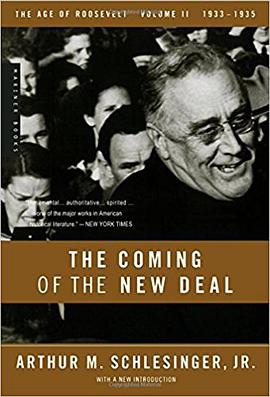
The Coming of the New Deal, 1933-1935, volume two of Pulitzer Prize-winning historian and biographer Arthur M. Schlesinger, Jr.’s Age of Roosevelt series, describes Franklin Delano Roosevelt’s first tumultuous years in the White House. Coming into office at the bottom of the Great Depression, FDR told the American people that they have nothing to fear but fear itself. The conventional wisdom having failed, he tried unorthodox remedies to avert economic collapse. His first hundred days restored national morale, and his New Dealers filled Washington with new approaches to recovery and reform. Combining idealistic ends with realistic means, Roosevelt proposed to humanize, redeem, and rescue capitalism. The Coming of the New Deal, written with Schlesinger’s customary verve, is a gripping account of critical years in the history of the republic.
作者简介
ARTHUR M. SCHLESINGER, JR., the author of sixteen books, was a renowned historian and social critic. He twice won the Pulitzer Prize, in 1946 for The Age of Jackson and in 1966 for A Thousand Days. He was also the winner of the National Book Award for both A Thousand Days and Robert Kennedy and His Times (1979). In 1998 he was awarded the prestigious National Humanities Medal.
目录信息
读后感
用户评价
I am no new deal enthusiast; I think of myself as a bystander unable or perhaps unwilling to understand the surge of hope and commitment that swept american society in both FDR's time and Mr.S's. I am grateful for such a majestical scholarship in 20th century US history and I am content to enjoy his evocation of FDR
I am no new deal enthusiast; I think of myself as a bystander unable or perhaps unwilling to understand the surge of hope and commitment that swept american society in both FDR's time and Mr.S's. I am grateful for such a majestical scholarship in 20th century US history and I am content to enjoy his evocation of FDR
I am no new deal enthusiast; I think of myself as a bystander unable or perhaps unwilling to understand the surge of hope and commitment that swept american society in both FDR's time and Mr.S's. I am grateful for such a majestical scholarship in 20th century US history and I am content to enjoy his evocation of FDR
讲个大概 不深
讲个大概 不深