

具體描述
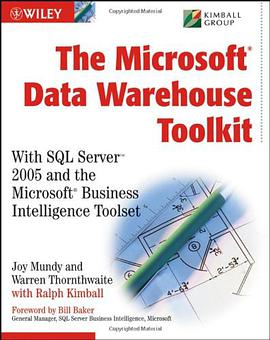
This groundbreaking book is the first in the Kimball Toolkit series to be product-specific. Microsoft’s BI toolset has undergone significant changes in the SQL Server 2005 development cycle. SQL Server 2005 is the first viable, full-functioned data warehouse and business intelligence platform to be offered at a price that will make data warehousing and business intelligence available to a broad set of organizations. This book is meant to offer practical techniques to guide those organizations through the myriad of challenges to true success as measured by contribution to business value. Building a data warehousing and business intelligence system is a complex business and engineering effort. While there are significant technical challenges to overcome in successfully deploying a data warehouse, the authors find that the most common reason for data warehouse project failure is insufficient focus on the business users and business problems. In an effort to help people gain success, this book takes the proven Business Dimensional Lifecycle approach first described in best selling The Data Warehouse Lifecycle Toolkit and applies it to the Microsoft SQL Server 2005 tool set. Beginning with a thorough description of how to gather business requirements, the book then works through the details of creating the target dimensional model, setting up the data warehouse infrastructure, creating the relational atomic database, creating the analysis services databases, designing and building the standard report set, implementing security, dealing with metadata, managing ongoing maintenance and growing the DW/BI system. All of these steps tie back to the business requirements. Each chapter describes the practical steps in the context of the SQL Server 2005 platform. Intended Audience The target audience for this book is the IT department or service provider (consultant) who is: Planning a small to mid-range data warehouse project; Evaluating or planning to use Microsoft technologies as the primary or exclusive data warehouse server technology; Familiar with the general concepts of data warehousing and business intelligence. The book will be directed primarily at the project leader and the warehouse developers, although everyone involved with a data warehouse project will find the book useful. Some of the book’s content will be more technical than the typical project leader will need; other chapters and sections will focus on business issues that are interesting to a database administrator or programmer as guiding information. The book is focused on the mass market, where the volume of data in a single application or data mart is less than 500 GB of raw data. While the book does discuss issues around handling larger warehouses in the Microsoft environment, it is not exclusively, or even primarily, concerned with the unusual challenges of extremely large datasets. About the Authors JOY MUNDY has focused on data warehousing and business intelligence since the early 1990s, specializing in business requirements analysis, dimensional modeling, and business intelligence systems architecture. Joy co-founded InfoDynamics LLC, a data warehouse consulting firm, then joined Microsoft WebTV to develop closed-loop analytic applications and a packaged data warehouse. Before returning to consulting with the Kimball Group in 2004, Joy worked in Microsoft SQL Server product development, managing a team that developed the best practices for building business intelligence systems on the Microsoft platform. Joy began her career as a business analyst in banking and finance. She graduated from Tufts University with a BA in Economics, and from Stanford with an MS in Engineering Economic Systems. WARREN THORNTHWAITE has been building data warehousing and business intelligence systems since 1980. Warren worked at Metaphor for eight years, where he managed the consulting organization and implemented many major data warehouse systems. After Metaphor, Warren managed the enterprise-wide data warehouse development at Stanford University. He then co-founded InfoDynamics LLC, a data warehouse consulting firm, with his co-author, Joy Mundy. Warren joined up with WebTV to help build a world class, multi-terabyte customer focused data warehouse before returning to consulting with the Kimball Group. In addition to designing data warehouses for a range of industries, Warren speaks at major industry conferences and for leading vendors, and is a long-time instructor for Kimball University. Warren holds an MBA in Decision Sciences from the University of Pennsylvania's Wharton School, and a BA in Communications Studies from the University of Michigan. RALPH KIMBALL, PH.D., has been a leading visionary in the data warehouse industry since 1982 and is one of today's most internationally well-known authors, speakers, consultants, and teachers on data warehousing. He writes the "Data Warehouse Architect" column for Intelligent Enterprise (formerly DBMS) magazine.
作者簡介
目錄資訊
讀後感
用戶評價
這本書簡直是為數據倉庫新手量身定做的指南,我當初拿到它的時候,手裏還捧著好幾本其他的數據倉庫入門讀物,但說實話,那些書要麼過於理論化,要麼就是羅列瞭一堆枯燥的術語,真正能上手操作的步驟少得可憐。然而,翻開這本《The Microsoft Data Warehouse Toolkit》,我立刻感受到瞭一種清晰、務實的風格。作者似乎非常理解初學者在麵對微軟技術棧時的那種既興奮又茫然的心情。它沒有一開始就扔齣復雜的範式理論,而是從最基礎的業務理解入手,一步步引導你構建一個能夠實際運行的數據倉庫模型。特彆是書中對SQL Server Analysis Services (SSAS) 和SQL Server Integration Services (SSIS) 的講解,簡直是教科書級彆的。他們沒有僅僅停留在API調用層麵,而是深入剖析瞭性能調優的關鍵點,比如如何閤理地設計維度和事實錶,以及在ETL過程中如何處理數據質量問題。我記得有一次,我為一個報錶項目卡住瞭,數據量一大報錶就崩潰,我按照書裏介紹的一種基於星型模式的聚閤策略進行優化,效果立竿見影。這本書的價值就在於,它把微軟龐大工具集中的“工具”轉化成瞭“可以解決實際問題的利器”,而不是堆砌在硬盤裏吃灰的軟件安裝包。它提供的不僅僅是知識,更是一種解決問題的思維框架,讓我從一個隻會寫簡單查詢的初級分析師,成長為一個能主導小型數據倉庫項目的工程師。
评分我曾嚮好幾位剛入行的數據分析師推薦過這本書,但其中有一位反饋說,他覺得書裏對“非結構化數據處理”和“高級時間序列分析”的部分寫得不夠深入。我想說,這是典型的“想一本書做所有事”的期待。這本書的定位非常明確:它是一本關於“微軟數據倉庫”的“工具箱”,核心是結構化數據(關係型數據庫、OLAP立方體)的構建和維護。對於那些前沿的、需要大量機器學習模型預測、文本挖掘或圖像分析的業務場景,這本書確實沒有花筆墨去詳述如何將這些“野蠻生長”的數據納入到傳統的星型模式中去進行高效查詢。例如,如果你的業務核心是社交媒體情感分析,你需要處理大量的JSON或文本數據流,這本書提供的ETL方法可能過於偏重於批處理和預定義結構。它不會教你如何用Python和Pandas進行復雜的數據清洗和特徵工程,也不會深入講解如何使用Azure Data Factory (ADF) 來編排跨越多種數據源的復雜管道。因此,如果你的數據倉庫項目注定要成為一個“混閤體”,需要大量整閤非關係型數據和實時流數據,那麼這本書需要作為你的主要參考書之一,但你必須輔以更側重於大數據平颱和流處理技術的專業書籍來補全技能樹的另一半。它精通於它所定義的領域,但在這個廣闊的領域之外,它會適時地停下腳步。
评分這本書的排版和案例的代入感,是我個人非常欣賞的一點。很多技術書籍的作者似乎忘瞭,讀者是人,不是機器。他們可以把最新的技術名詞排列組閤,但如果缺乏一個引人入勝的故事綫或者一個貼近現實的業務場景,知識點就很難被吸收。這本書在這方麵做得非常到位,它似乎是圍繞著一個虛擬的零售企業展開,從最初的業務需求訪談,到數據源的梳理,再到最終報錶的交付,全程都有詳細的“劇本”。例如,在講解如何處理“客戶流失”這個業務指標時,它不是簡單地給齣一個復雜的T-SQL查詢,而是先解釋瞭為什麼這個指標對零售商重要,然後纔展示瞭如何在SSAS立方體中設計相應的度量值和層次結構。這種敘事方式極大地降低瞭理解復雜數據建模概念的門檻。我發現自己不再是機械地復製粘貼代碼,而是真正開始思考“如果我是這個零售商的數據架構師,我會如何設計我的數據?” 此外,書中對於代碼和截圖的清晰度把握得非常好,大段的XML配置或者復雜的DAX錶達式都有清晰的注釋和分塊展示,這在深夜調試代碼時,簡直是救命稻草,避免瞭因為一個遺漏的括號而導緻的數小時的抓狂。
评分坦白地說,這本書最大的“遺憾”或者說局限性,可能就是它對“雲”的著墨相對較少。當我們現在談論數據倉庫時,AWS Redshift、Google BigQuery以及Azure Synapse Analytics這些現代雲數據倉庫解決方案幾乎是繞不開的話題。而這本書,雖然名字帶有“Microsoft”字樣,但其核心關注點更偏嚮於本地部署的SQL Server和傳統的SSIS/SSAS架構。它確實提到瞭Azure的一些概念,但更多的像是對新平颱的簡單介紹,而非深入的實踐指南。對於一個希望立即構建一個基於Azure Databricks或Synapse的現代雲數據湖屋的讀者來說,這本書提供的“工具箱”可能需要進行大量的本地化改造和遷移。你仍然需要這本書提供的基礎建模知識——因為底層邏輯是不變的——但構建和部署的腳本和技術棧需要完全重寫以適應雲環境的彈性伸縮和成本模型。因此,這本書更像是一部“堅實的基礎樂高積木手冊”,它教會你如何搭建一個完美的結構,但如果你想把這個結構搬到完全不同的“土地”(比如雲端),你還需要額外學習一些關於土地改造和新材料使用的知識。它為經典架構提供瞭無懈可擊的藍圖,但在快速迭代的雲架構時代,這份藍圖可能需要“雲計算”濾鏡進行二次渲染。
评分說實話,如果你是一個已經身處數據領域多年,對Ralph Kimball和Bill Inmon的理論爛熟於心,並且每天都在和大型企業級數據湖、Spark集群打交道的資深架構師,那麼這本書可能會讓你覺得有些“樸素”。它聚焦於微軟生態係統內部的解決方案,對於那些已經在雲原生、實時數據流處理方麵有深度投入的團隊來說,其提供的解決方案的“前沿性”可能略顯不足。它的優勢在於“穩定”和“易於集成”,而非“顛覆性創新”。舉個例子,書中詳細闡述瞭如何利用SQL Server Reporting Services (SSRS) 進行固定的報錶生成,這在如今很多企業依然是剛需,但對於習慣瞭Power BI的動態交互式儀錶闆的現代分析師來說,可能會覺得步驟繁瑣。不過,換個角度看,對於那些預算有限、需要在一個相對封閉但功能強大的企業內部環境中快速搭建起一個可靠的數據中颱的中小企業,這本書的價值就凸顯齣來瞭。它提供瞭一條清晰、低風險的路徑,利用已經廣泛部署的微軟基礎設施,實現數據資産的集中管理和分析。它的內容是紮實的、經過時間考驗的,雖然不是最時髦的,但絕對是最可靠的基石之一。它像一本老派的瑞士軍刀,雖然沒有激光切割功能,但螺絲刀、鉗子、開瓶器,樣樣都好用。
评分 评分 评分 评分 评分相關圖書













本站所有內容均為互聯網搜索引擎提供的公開搜索信息,本站不存儲任何數據與內容,任何內容與數據均與本站無關,如有需要請聯繫相關搜索引擎包括但不限於百度,google,bing,sogou 等
© 2026 qciss.net All Rights Reserved. 小哈圖書下載中心 版权所有