
具体描述
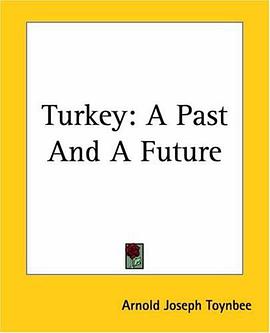
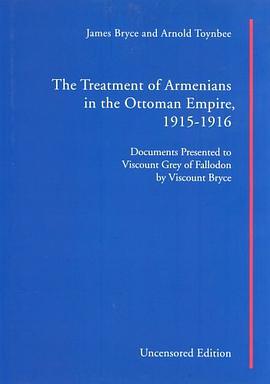
In 1916 the British Parliament published a "Blue Book" that identified the events of 1915-16 as a systematic effort to exterminate the Armenian people. The Blue Book has been one of the most solid and influential sources on the Armenian Genocide. A critical, uncensored edition, edited and with an introduction by Ara Sarafian, has now been published by the Gomidas Institute.
Viscount James Bryce and Arnold Toynbee were commissioned to prepare the Blue Book, which is formally known as "The Treatment of Armenians in the Ottoman Empire, 1915-1916." Toynbee carefully compiled and verified dozens of eyewitness accounts from different parts of the Ottoman Empire. These accounts provided the basis for Bryce's brilliant thesis on the Genocide, published while the crime was still in progress.
The book includes eyewitness accounts from United States consular and missionary sources, as well as the testimony of German, Italian, Danish, Swedish, Norwegian, Greek, Kurdish, and Armenian witnesses.
The original publication was full of blanks: the names of many people and places were obscured in order to safeguard sources still in the Ottoman Empire. The names remain obscured in facsimile editions that have been published over the years. Now Sarafian has restored the obscured names.
In his introduction, Sarafian takes issue with the repeated assertions of Turkish nationalist authors, who claim that the Blue Book was a British propaganda fabrication. He demonstrates the intellectual pedigree of the work. He shows exactly how testimonies were collected, authenticated, and then used in the book.
Generations of official historians of Turkey, such as Enver Zia Karal (Ankara University), Salahi Sonyel (British historian and public activist), Ismail Binark (Director of Ottoman archives, Ankara), Sinasi Orel (director of a much publicized project on declassifying documents on Ottoman Armenians), Kamuran Gurun (former diplomat), Mim Kemal Oke, Justin McCarthy, and others have cited the Blue Book and have insisted that it lacks credibility.
Sarafian has located Toynbee's original manuscript, Toynbee's correspondence with his sources, and most of the original reports, which were copied and sent to London. They can still be found at the Public Record Office (Kew), Bodleian Library (Oxford), National Archives (Washington, D.C.), Library of Congress (Washington, D.C.), and the Houghton Library (Cambridge, Mass.) He has established that the compilers were meticulous in their verification of sources.
According to the "Times Literary Supplement" (London), "This work emerges from Ara Sarafian's examination as documentation of a high order.... Sarafian convincingly rebuts the claims that there was any falsification, or that any of the documents was one-sided British propaganda."
Toynbee, who went on to be a major historian in his own right, was deeply moved by his research on the Genocide. In his 1967 memoir, Acquaintances, Toynbee wrote: "My study [of the Armenian Genocide]... left an impression on my mind that was not effaced by the still more cold-blooded genocide, on a far larger scale, that was committed during the Second World War by the Nazi.
"Any great crime--private or public, personal or impersonal--raises a question that transcends national limits; the question goes to the heart of human nature itself. My study of the genocide that had been committed in Turkey in 1915 brought home to me the reality of Original Sin," Toynbee concluded.
The Treatment of Armenians in the Ottoman Empire 1915-1916 complements the Gomidas Institute's Armenian Genocide Documentation Series, which to date includes four volumes of eyewitness accounts: "Days of Tragedy in Armenia" (Rev. Henry Riggs, Harpoot); "'Turkish Atrocities'" (twenty-one reports compiled by James Barton); "Marsovan 1915" (the diary of Bertha Morley); and "'The German, the Turk and the Devil Made a Triple Alliance'" (the diary of Tacy Atkinson, Harpoot).
作者简介
目录信息
读后感
用户评价
在阅读这本书之前,我尝试去想象作者是如何着手这项艰巨的研究的。我想象着他们可能在堆积如山的档案中,在尘封的文献里,在不同语言的资料之间穿梭,试图拼凑出一段被历史的风沙掩盖或扭曲的记忆。这本书的标题,"The Treatment of Armenians in the Ottoman Empire, 1915-1916",如同一个明确的信号,预示着一种深入挖掘、不回避敏感问题的学术态度。
作为一名对20世纪历史,特别是帝国末期以及其内部民族关系的演变有着浓厚兴趣的读者,这本书的名字立刻吸引了我。它直接点明了研究的主体——奥斯曼帝国境内的亚美尼亚人,以及时间跨度——1915-1916年,这无疑是那个动荡年代中最为关键和敏感的时期之一。我期待着本书能够提供关于当时帝国政策、社会氛围以及亚美尼亚社群所经历的具体细节。
这本书的名字,"The Treatment of Armenians in the Ottoman Empire, 1915-1916",足以引起任何一个对历史真相怀有敬畏之心的人的注意。它并非只是一个简单的标题,而是指向了一段复杂而悲伤的历史时期。在阅读这本书之前,我脑海中浮现的是一位作者,他/她必然花费了大量的时间和精力,去梳理那些被时间磨蚀的痕迹,去还原那些可能被遗忘的声音。
当我在书架上看到这本书时,它的存在本身就仿佛是对历史的一种召唤。书名所包含的“奥斯曼帝国”、“亚美尼亚人”以及具体的“1915-1916”这些关键词,立刻在我脑海中构建起一个宏大而又充满细节的叙事框架。我能够预见到,这本书不会是一篇轻描淡写的通史,而更像是一次对特定历史时期、特定族群遭遇的细致剖析。
这本书的名字,"Armenians in the Ottoman Empire, 1915-1916: The Treatment of Armenians",光是读起来就带着一种历史的沉重感和一种难以言喻的使命感。我翻开这本书,内心充满了复杂的情绪,既有对历史真相的渴望,也夹杂着对其中可能揭露的痛苦和悲剧的预感。作者的笔触,即使尚未深入具体章节,已经能够感受到其严谨和一丝不苟。封面设计本身就传递出一种庄重和严肃,并非那种哗众取宠的风格,而是试图唤起读者对那个特定时期和特定人群的关注。