
具体描述
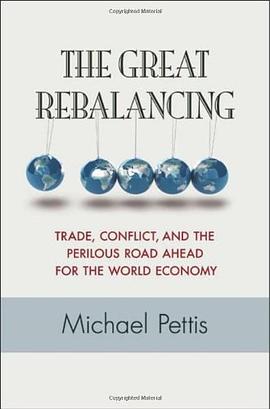
China's economic growth is sputtering, the Euro is under threat, and the United States is combating serious trade disadvantages. Another Great Depression? Not quite. Noted economist and China expert Michael Pettis argues instead that we are undergoing a critical rebalancing of the world economies. Debunking popular misconceptions, Pettis shows that severe trade imbalances spurred on the recent financial crisis and were the result of unfortunate policies that distorted the savings and consumption patterns of certain nations. Pettis examines the reasons behind these destabilizing policies, and he predicts severe economic dislocations--a lost decade for China, the breaking of the Euro, and a receding of the U.S. dollar--that will have long-lasting effects. Pettis explains how China has maintained massive--but unsustainable--investment growth by artificially lowering the cost of capital. He discusses how Germany is endangering the Euro by favoring its own development at the expense of its neighbors. And he looks at how the U.S. dollar's role as the world's reserve currency burdens America's economy. Although various imbalances may seem unrelated, Pettis shows that all of them--including the U.S. consumption binge, surging debt in Europe, China's investment orgy, Japan's long stagnation, and the commodity boom in Latin America--are closely tied together, and that it will be impossible to resolve any issue without forcing a resolution for all. Demonstrating how economic policies can carry negative repercussions the world over, The Great Rebalancing sheds urgent light on our globally linked economic future.
作者简介
Michael Pettis is professor of finance and economics at Peking University, a senior associate at the Carnegie Endowment, and a widely read commentator on China, Europe, and the global economy. He is the author of The Volatility Machine: Emerging Economies and the Threat of Financial Collapse.
目录信息
Underconsumption 4
The Different Explanations of Trade Imbalance 6
Destabilizing Imbalances 9
We Have the Tools 11
Why the Confusion? 14
Some Accounting Identities 17
The Inanity of Moralizing 19
The New Economic Writing 22
CHAPTER TWO How Does Trade Intervention Work? 26
Trade Intervention Affects the Savings Rate 29
Currency Manipulation 32
Exporting Capital Means Importing Demand 34
What Happens If China Revalues the Renminbi? 37
Wealth Is Transferred within China 40
Does China Need a Social Safety Net? 42
CHAPTER THREE The Many Forms of Trade Intervention 47
How Changes in Wealth Affect Savings 50
Wage Growth 52
Trade Policy as the Implicit Consequence of Transfers 55
Financial Repression 58
Higher Interest Rates and Household Wealth 61
Do Higher Interest Rates Stimulate or Reduce Consumption? 64
Currency versus Interest Rates 66
CHAPTER FOUR The Case of Unbalanced
Growth in China 69
What Kind of Imbalance? 74
Growth Miracles Are Not New 78
The Brazilian Miracle 81
Powering Growth 84
Paying for Subsidies 87
Limits to Backwardness 89
The Trade Impact 92
A Lost Decade? 94
Can China Manage the Transition More Efficiently? 96
Some More Misconceptions 97
CHAPTER FIVE The Other Side of the Imbalances 100
Can Europe Change American Savings Rates? 103
How Does Trade Rebalance? 106
Globalization Is Not Bilateral 109
The Global Shopping Spree 113
Trade Remains Unbalanced 115
CHAPTER SIX The Case of Europe 119
The Mechanics of Crisis 122
Too Late 125
German Thrift 128
Forcing Germany to Adjust 131
Two-Sided Adjustment 133
CHAPTER SEVEN Foreign Capital, Go Home! 136
Swapping Assets 139
It's about Trade, Not Capital 142
Trade Imbalances Lead to Debt Imbalances 144
The Current Account Dilemma 147
CHAPTER EIGHT The Exorbitant Burden 150
Why Buy Dollars? 153
It Is Better to Give Than to Receive 157
Foreigners Fund Current Account Deficits, Not Fiscal Deficits 161
Rebalancing the Scales 163
When Are Net Capital Inflows a Good Thing? 166
Can We Live without the Dollar? 168
Why Not Use SDRs? 172
An American Push Away from Exorbitant Privilege 174
CHAPTER NINE When Will the Global Crisis End? 178
Transferring the Center of the Crisis 180
Reversing the Rebalancing 183
Some Predictions 185
The Global Impact 191
Notes 197
Index 205
· · · · · · (收起)
读后感
用户评价
我对《The Great Rebalancing》的期待,更多地源于它所传达出的那种对未来进行深刻洞察的野心。标题本身就带有一种预测和引导的意味,仿佛作者已经洞察到了某种不可避免的趋势,并试图将读者引向对这一趋势的理解和适应。我在阅读过程中,一直在思考作者会用怎样的论据和分析来支撑“大重塑”这个概念。它是否会涉及到技术革新对现有权力结构的影响?或者是在全球化进程遭遇逆流的背景下,国家和区域力量的重新洗牌?又或者,是关于人类文明在面对气候变化、资源枯竭等严峻挑战时,所必须进行的一次深刻自我调整?这本书的厚度也让我感到它绝非泛泛而谈,而是经过了大量的资料搜集和深入的思考。我很好奇作者会如何将如此庞杂的信息编织成一个连贯、有力的论点,引导读者走出迷雾,看到一条可能的出路。
《The Great Rebalancing》这本书的标题,让我脑海中立刻浮现出一幅宏大的画卷,仿佛是世界正在经历一次史无前例的调整,各种力量在相互角力,最终走向一种新的格局。我在阅读时,特别关注作者在描述这种“重塑”过程中所使用的语言和逻辑。是偏向于一种客观的、数据驱动的分析,还是更侧重于一种带有哲学思考的叙述?我个人更倾向于后者,因为“平衡”本身就是一个非常主观和复杂的概念,需要深入的洞察和 nuanced 的表达。这本书的结构,我相信一定是围绕着“平衡”这一核心概念展开,但具体会从哪些角度去论证,又会引用哪些理论和案例,这些都充满了悬念。我期待它能提供一种不同于日常新闻报道的视角,帮助我更清晰地理解当前世界正在发生的复杂变化。
拿到《The Great Rebalancing》这本书,我第一时间就被它所散发出的那种沉静而睿智的气息所吸引。它不像市面上很多畅销书那样追求即时的轰动效应,而是更像一本沉淀了多年思考的著作,字里行间透露出一种对事物本质的探究。我翻阅的片段中,作者似乎在试图解构我们习以为常的许多“平衡”状态,并揭示其内在的不稳定性和即将到来的变化。这让我联想到很多哲学上的探讨,比如是否存在绝对的平衡,或者我们所理解的平衡本身就是一个动态的、不断演变的过程。我对作者如何处理不同尺度上的“平衡”感到非常好奇,是从微观的个体选择,到宏观的国际关系,是否都能找到贯穿其中的逻辑。这本书给我的感觉是,它不是提供答案,而是提出问题,邀请读者一同去思考,去探索。
这本书的标题《The Great Rebalancing》本身就充满了一种宏大的预示感,让人不禁联想到某种重大的、结构性的变化正在发生。我拿到这本书时,最先吸引我的就是它的封面设计,一种抽象但又充满力量感的视觉元素,暗示着某种深刻的调整或回归平衡的过程。虽然我还没来得及细读,但光是翻阅目录和前言,就能感受到作者在试图构建一个极具深度和广度的叙事框架。我特别期待作者如何从一个宏观的视角切入,去探讨“平衡”这一概念,它可能涉及经济、社会、政治,甚至是人类自身与自然的关系。在当今世界,各种不确定性和挑战层出不穷,找到一种新的平衡似乎是迫切的需求。这本书的题目让我想到了很多历史上的重大变革时期,例如工业革命、文艺复兴,这些时期都伴随着旧秩序的瓦解和新秩序的建立,其核心往往是一种“再平衡”的过程。我不确定作者具体会聚焦于哪些领域,但我相信他会提供一种全新的视角来审视这些复杂的问题。
初读《The Great Rebalancing》,我便被其题目所暗示的某种宇宙级的秩序调整所震撼。这是一种非常宏大且引人遐思的命题,让我不禁猜测作者会如何将如此庞杂的概念具象化。是会从历史的长河中寻觅规律,还是会从科技的飞速发展中捕捉信号?亦或是,会着眼于人类社会结构的深层变革?这本书的封面设计也十分耐人寻味,简洁的线条勾勒出一种力量的聚集与释放,暗示着某种必然的走向。我在浏览书中时,注意到作者似乎在强调一种“回归”的意味,这让我很好奇,我们正在从何处“回归”,又将回归到怎样的“平衡”状态?这本书给我的初步印象是,它不仅仅是一本探讨现实问题的著作,更可能是一次关于人类文明未来走向的深刻反思。
很精彩的书,预测基本与现实一致,在如何分配过剩储蓄的角度解读贸易失衡。目前可选择的唯一正确再平衡路径,应是在财富转移(减税)的基础上刺激消费,接受短期经济增速下滑。
需要認真學習。重复太多,写几篇论文/blog显然是作者更喜欢的方式。 美国,近欧国家,德,中,日案例学习,不太清楚具体情况现在是什么,可是没有作者期待的解决方案在真的实行吧(起码中国是烷)。非常有帮助的基本框架。
基本把所有关于中国经济的stereotype都推翻了。信息太多表示还无法融会贯通。整体认为发展中国家尤其是中国的经济不稳定性来自于经济资源分配的不均衡
基本把所有关于中国经济的stereotype都推翻了。信息太多表示还无法融会贯通。整体认为发展中国家尤其是中国的经济不稳定性来自于经济资源分配的不均衡
基本把所有关于中国经济的stereotype都推翻了。信息太多表示还无法融会贯通。整体认为发展中国家尤其是中国的经济不稳定性来自于经济资源分配的不均衡