
具体描述
Book Description:
All software developers use languages its the fundamental tool of the trade. Yet despite widespread curiosity about how languages work, few developers actually learn how they work. For one thing, most texts on language and compiler development are highly academic and theoretical tomes intended for use in college level computer science programs. This is a shame, because the techniques used to make a language work have widespread applications in general programming.
This book takes the mystery out of compiler and language development and makes it accessible to every programmer. Ruthlessly practical, this book teaches fundamental techniques that programmers can use in their every day work.
Developers will learn how to:
- add scripts and macro languages to their applications,
- generate code "on the fly",
- add runtime expression evaluation to their applications
- understand parsing techniques essential for extracting information from any structured form of data ranging from text files to user input to XML or HTML.
As a unique added bonus, this book includes a complete QuickBasic compatible compiler with source code. Not only does this illustrate the techniques taught in the book, it provides a great new .NET language ideal for teaching kids, simple scripting, or just for fun.
Download Description:
All software developers use languages – it’s the fundamental tool of the trade. Yet despite widespread curiosity about how languages work, few developers actually learn how they work. For one thing, most texts on language and compiler development are highly academic and theoretical tomes intended for use in college level computer science programs. This is a shame, because the techniques used to make a language work have widespread applications in general programming.
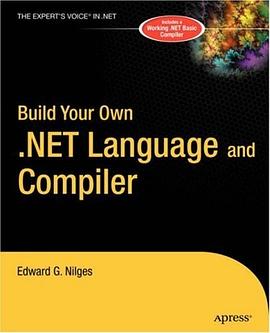
Build Your Own .NET Language and Compiler takes the mystery out of compiler and language development and makes it accessible to every programmer. Ruthlessly practical, this book teaches fundamental techniques that programmers can use in their every day work.
Developers will learn how to
Add scripts and macro languages to their applications
Generate code “on the fly”
Add runtime expression evaluation to their applications
Understand parsing techniques – essential for extracting information from any structured form of data ranging from text files to user input to XML or HTML.
As a unique added bonus, this book includes a complete QuickBasic compatible compiler with source code. Not only does this illustrate the techniques taught in the book, it provides a great new .NET language ideal for teaching kids, simple scripting, or just for fun.
Book Info:
Presents the VB .NET source code for the compiler, complete with a full discussion and analysis on how it works. For programmers. Softcover.
作者简介
Edward G. Nilges has been developing software since 1970. He worked on debugging an early Fortran compiler in 1972 and made it available to a university community. While at Bell-Northern Research, the research arm of Nortel Networks, in 1981, Nilges worked on compiler development and developed the SL-1XT compiler for voice and data PBX programming, as well as a firmware assembler that was compiled automatically from the firmware reference manual.
In 1993, Nilges began developing with VB3 and has developed a variety of projects in Basic. Edward also assisted mathematician John Nash (the real-life protagonist of the movie A Beautiful Mind) with C during a critical period in which Dr. Nash was being considered for the 1993 Nobel Prize. In 1999, Edward developed his vbExpression2Value VB6 technology to parse and interpret SQL Server and VB expressions for his classes at DeVry. In 2001, acting upon a suggestion from a student colleague at Princeton, Nilges used his beta copy of VB .NET to write the fully OO quickBasicEngine.
Nilges currently consults on the use of compiler technology in the real world to parse and interpret complex business rules in industries such as mortgage lending and credit evaluation. He finds that compiler optimization can be used to verify the consistency and completeness of business rule sets.
目录信息
读后感
用户评价
这本书的选材角度非常独特,它不仅仅停留在介绍一门语言的构建流程,更深入地探讨了“为什么”要这样设计。例如,在讨论类型系统和内存管理策略时,作者并未给出标准答案,而是引导读者去权衡不同设计选择带来的性能、安全性和开发效率上的取舍。这种启发式的教学方法,极大地培养了读者的批判性思维。我体会到,编写编译器或设计新语言,远不止是写出能运行的代码,更关乎于对计算模型本质的深刻理解和哲学思考。那些关于运算符优先级、作用域解析的细微差别,在书中被描绘得淋漓尽致,仿佛作者正在分享多年来在编译器设计领域积累的“内行窍门”。这种深度,让这本书超越了一般的工具书范畴,更像是一本关于计算思维的修行手册。
随着阅读的深入,我开始注意到这本书在排版和细节处理上的匠心。图表的运用极其精妙,那些流程图和结构示意图总是恰到好处地出现在最需要解释复杂概念的地方,它们有效地打破了纯文本阅读可能带来的疲劳感,使得复杂的编译流程一目了然。而且,书中对一些历史上的设计决策和经典算法的引用都做了适度的背景介绍,这让整个学习过程充满了历史的厚重感,不只是孤立地学习技术,更是在回顾计算机科学的发展轨迹。对我来说,这本书更像是一份“工具箱”,里面装满了应对未来编程挑战所需的思维框架和核心组件。它提供的不仅仅是一套现成的解决方案,更是一种面对未知技术领域时,敢于解构和重塑的信心。这无疑是一次极具价值的投资。
这本书的封面设计得非常引人注目,那种深邃的蓝色调配合着闪烁的字符,立刻就让人联想到了计算机科学的深层奥秘。拿到手里沉甸甸的质感也给人一种“硬核技术”的期待感。我一直是那种对编程语言底层原理充满好奇的开发者,特别是当我们习惯于使用像 C# 这样的高级语言时,总会忍不住想知道编译器是如何将我们写的代码一步步转化成机器可以理解的指令的。这本书恰好满足了这种探索欲。它没有过多地停留在理论的宏大叙事上,而是直接将读者带入了实践的泥沼,那种亲手搭建一个语言编译器的过程,想想就让人兴奋。它似乎在暗示,掌握了构建语言的能力,你才能真正理解你所使用的工具的每一个细节,这对于想要突破现有技术框架、进行深度定制化开发的工程师来说,无疑是一份宝贵的指南。那种从零开始,定义语法、解析结构、再到生成中间代码的完整流程,光是想象就觉得是一场智力上的冒险。
初翻阅这套书时,最大的感受是其逻辑的严密性和脉络的清晰性。作者似乎对初学者可能会在哪里绊倒有着深刻的理解,所以在讲解每一个编译阶段——从词法分析到语义分析,再到代码生成——都做了极其详尽的铺垫。我特别欣赏它在介绍抽象语法树(AST)构建时的那份耐心,很多教材要么一带而过,要么就是直接抛出复杂的数学模型,让人望而却步。但这本书采取了一种更具“工匠精神”的方法,它没有回避复杂性,而是将复杂问题拆解成一个个可以被逐步攻克的模块。这种步步为营的叙事方式,让原本高不可攀的编译器理论变得触手可及。对于一个已经积累了一些编程经验,但从未涉足语言构造领域的人来说,这本书提供了一条平滑的学习曲线,让人能够在保持信心的同时,不断挑战自己的认知边界。阅读过程更像是在参与一个大型的软件工程项目,而不是仅仅在阅读一本枯燥的教科书。
坦白说,市面上关于编程语言实现的资料汗牛充栋,但真正能将理论与实践完美融合的却凤毛麟角。这本书最让我感到震撼的是它对代码实现的考究。它没有使用晦涩难懂的伪代码来搪塞读者,而是提供了大量可以直接运行、并能清晰展示编译过程核心逻辑的示例代码。这些代码片段不仅是功能的实现,更是设计思路的最佳体现。每一次成功的编译和运行,都带给读者一种强烈的成就感,这种“即时反馈”的学习机制,对于保持学习的动力至关重要。我感觉自己不是在被动接收知识,而是在主动参与到一次真实的软件构建历程中,每一个代码块的敲入,都仿佛在为我自己的“梦想语言”添砖加瓦。这种高度的实践导向,是这本书最宝贵的财富之一。