
具体描述
Book Description
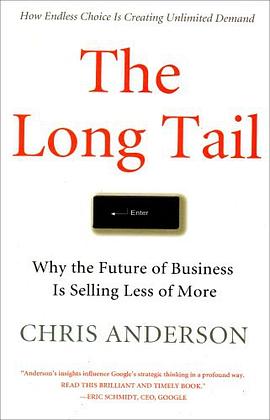
"The Long Tail" is a powerful new force in our economy: the rise of the niche. As the cost of reaching consumers drops dramatically, our markets are shifting from a one-size-fits-all model of mass appeal to one of unlimited variety for unique tastes. From supermarket shelves to advertising agencies, the ability to offer vast choice is changing everything, and causing us to rethink where our markets lie and how to get to them. Unlimited selection is revealing truths about what consumers want and how they want to get it, from DVDs at Netflix to songs on iTunes to advertising on Google. However, this is not just a virtue of online marketplaces; it is an example of an entirely new economic model for business, one that is just beginning to show its power. After a century of obsessing over the few products at the head of the demand curve, the new economics of distribution allow us to turn our focus to the many more products in the tail, which collectively can create a new market as big as the one we already know. The Long Tail is really about the economics of abundance. New efficiencies in distribution, manufacturing, and marketing are essentially resetting the definition of whats commercially viable across the board. If the 20th century was about hits, the 21st will be equally about niches.
From Publishers Weekly
Wired editor Anderson declares the death of "common culture"—and insists that it's for the best. Why don't we all watch the same TV shows, like we used to? Because not long ago, "we had fewer alternatives to compete for our screen attention," he writes. Smash hits have existed largely because of scarcity: with a finite number of bookstore shelves and theaters and Wal-Mart CD racks, "it's only sensible to fill them with the titles that will sell best." Today, Web sites and online retailers offer seemingly infinite inventory, and the result is the "shattering of the mainstream into a zillion different cultural shards." These "countless niches" are market opportunities for those who cast a wide net and de-emphasize the search for blockbusters. It's a provocative analysis and almost certainly on target—though Anderson's assurances that these principles are equally applicable outside the media and entertainment industries are not entirely convincing. The book overuses its examples from Google, Rhapsody, iTunes, Amazon, Netflix and eBay, and it doesn't help that most of the charts of "Long Tail" curves look the same. But Anderson manages to explain a murky trend in clear language, giving entrepreneurs and the rest of us plenty to think about. (July)
From Bookmarks Magazine
In The Long Tail, Chris Anderson offers a visionary look at the future of business and common culture. The long-tail phenomenon, he argues, will "re-shape our understanding of what people actually want to watch" (or read, etc.). While Anderson presents a fascinating idea backed by thoughtful (if repetitive) analysis, many critics questioned just how greatly the niche market will rework our common popular culture. Anderson convinced most reviewers in his discussion of Internet media sales, but his KitchenAid and Lego examples fell flat. A few pointed out that online markets constitute just 10 percent of U.S. retail, and brick-and-mortar stores will never disappear. Anderson's thesis came under a separate attack by Lee Gomes in his Wall Street Journal column. Anderson had defined the "98 Percent Rule" in his book to mean that no matter how much inventory is made available online, 98 percent of the items will sell at least once. Yet Gomes cited statistics that could indicate that, as the Web and Web services become more mainstream, the 98 Percent Rule may no longer apply: "Ecast [a music-streaming company] told me that now, with a much bigger inventory than when Mr. Anderson spoke to them two years ago, the quarterly no-play rate has risen from 2% to 12%. March data for the 1.1 million songs of Rhapsody, another streamer, shows a 22% no-play rate; another 19% got just one or two plays." If Anderson overreaches in his thesis, he has nonetheless written "one of those business books that, ironically, deserves more than a niche readership"
Houston Chronicle
From Booklist
Citing statistical curves called "long-tailed distributions" because the tails are very long relative to the heads, Anderson, editor of Wired magazine, focuses on the tail, or the development in the new digital world of an infinite number of niche markets of any size that are economically viable due to falling distribution costs and in the aggregate represent significant sales. Although the author considers primarily media and entertainment companies, he also shows the long-tail effect at eBay, KitchenAid, Legos, Salesforce.com, and Google. His nine rules for successful long-tail strategies include lowering costs and thinking niche (one product, distribution method, or price does not fit all) and giving up control by sharing information and offering choices. In this excellent book, Anderson tells that "the story of the long tail is really about the economics of abundance--what happens when the bottlenecks that stand between supply and demand in our culture start to disappear and everything becomes available to everyone."
Mary Whaley
From AudioFile
Anderson's premise that Internet-based retailing and personal expression enable much wider variety and more profitable niche markets and, thus, are killing a formerly "hit-driven" culture and retail world is somewhat controversial. (Just Google THE LONG TAIL.) But this audiobook presents the argument well, with much detail and many current (late 2005) examples. Christopher Nissley's reading style fits the content; he's clipped and staccato, like Anderson's writing. His narration is helpful to the listener who prefers not to get bogged down in the theoretical and technical parts of the book. Anderson himself reads the introduction, and there's a brief author interview at the end of Disc 7, plus downloadable copies of the book's graphics. T.F.
Book Dimension
length: (cm)23.8 width:(cm)17.3
作者简介
Chris Anderson is editor-in-chief of Wired Magazine.
目录信息
读后感
作为非IT人士,出于对豆瓣的热爱还是抽空看了这部被阿北推荐过的《长尾理论》。 就像阿北所说,要看这个理论以后10年如何颠覆流行文化。不自觉我的一些阅读方式已经受到了改变。从20世纪末的信息大爆炸到现在有最新互联网技术帮助你过滤感兴趣的过程,daily me这个趋势越来越不...
这是欠花橘子的文,现在也算了却心愿 豆瓣广场上线有一段时间了,井喷的评论也接近尾声了,从来都后知后觉的我这次果然错过了潮流 长尾这本书是没有看完的,废话太多,一句话可以说清楚的偏偏会花一章的笔墨来写,不知道是作者贱卖了思想还是译者的捆绑销售。不是我这个连一句...
http://bizchedan.blogbus.com/logs/47197210.html 从前有个叫刘波的人。给我们的主人公起这个名字,因为据统计这是中国人最常用的名字,有100多万,这些刘波们还在百度贴吧成立了一个刘波吧。这个刘波也是普通人,而且刘波吧跟我们这里讨论的主题也有一定的关系。 初中的一...
http://bizchedan.blogbus.com/logs/47197198.html 蓝长平二不是一个日本人,而是四个Idea:蓝海战略、长尾理论、世界是平的,web2.0。把它们相提并论,不是因为都正流行,前三个还出了畅销书,依我看,是在说同一个事物,就是商业的未来。但可惜也都如同盲人摸象。 这头商业...
用户评价
这本书真是让人大开眼界,它似乎在不动声色间颠覆了我对商业和文化传播的一些固有看法。我原本以为,在信息爆炸的时代,真正能被大众看到的,永远是那些位于聚光灯下的“热门”产品或内容,那些占据主流渠道的巨头们似乎拥有绝对的定义权。然而,这本书却清晰地描绘了一个截然不同的世界——一个由无数小众需求汇聚而成的庞大市场。它不仅用扎实的数据和生动的案例展示了这种“长尾效应”的存在,更重要的是,它提供了一种全新的思维框架,让我开始重新审视那些被忽视的、看似微不足道的角落。比如,在音乐领域,过去我们只能在榜单上看到销量最高的几十首歌,但现在,通过互联网平台,那些一年只被听了几百次的独立音乐人作品,其累积的总销量和影响力,竟然可以与超级畅销专辑相抗衡。这不仅仅是数量上的堆积,更是一种文化生态的重塑,它赋予了“小众”以商业价值和存在的合理性。阅读过程中,我时不时地会停下来思考,我日常接触的许多爱好、我正在追寻的那些非主流的艺术形式,原来早已在这个巨大的“尾巴”上找到了自己的位置,并且正在蓬勃发展。这种感觉就像是突然发现了一个隐藏的宝藏地图,而这本书就是那张精确的指引图。
拿到这本书的时候,我本以为它会是一本枯燥的商业分析报告,充满了晦涩的经济学术语和图表,但读完之后,我的感受是它更像是一部关于“民主化”的史诗。它探讨的不仅仅是市场份额的重新分配,更是权力结构的微妙转移。过去,分销和展示的成本高昂,所以只有少数的“守门人”能够决定什么能被看到、什么会被遗忘。这本书揭示了技术如何无情地削弱了这些守门人的影响力。我印象特别深刻的是其中关于零售业的分析,实体店的货架空间是有限的,但线上的“虚拟货架”几乎是无限的。这种空间上的解放,直接导致了消费者的选择权空前扩大。我记得我曾经想找一本非常冷门、绝版已久的关于十七世纪欧洲哲学的译著,在实体书店里跑遍了所有相关区域都无果,但通过网络平台,我不仅找到了,甚至还能看到其他买家的评论和相关的推荐。这本书让我清晰地理解了,这种便利背后的驱动力,就是对长尾效应的精准捕捉和利用。它让我对“库存管理”和“消费者行为预测”有了全新的、更具人性的认识,不再仅仅是冰冷的数字游戏。
我最近一直在思考如何将书中的理论应用到我自己的工作领域——教育咨询上。这本书的启发性在于,它迫使我们走出“主流课程”的舒适区。我们过去总想设计出最受大家欢迎、覆盖面最广的课程体系,但往往发现效果平平,因为“最大公约数”下的产品总显得平庸。这本书提供了一个反直觉的解决方案:深挖那些最细微、最垂直的需求。例如,对于那些对古希腊语的特定方言有兴趣的学生,过去我们认为这是“不值得投入资源”的边缘需求。但长尾理论提示我们,这类小众需求的集合,可能比我们想象的要庞大得多,而且这些客户的忠诚度和支付意愿往往更高。这种视角上的转变,对任何服务业都是一场革命性的洗礼。这本书的结构清晰,逻辑严密,它不仅仅是描述现象,更是在建立一套可以指导实践的“算法”——如何利用技术平台去发现、服务并盈利于那些分散的市场。读完之后,我感觉自己看待“市场潜力”的雷达被彻底校准升级了。
这本书的洞察力,尤其在于它对“供应端”和“需求端”同时施加的革命性影响。以前,供应端(生产者、创作者)受制于高昂的展示成本,不得不迎合大众口味。但随着数字化的普及,生产和分销成本急剧下降,使得供应端获得了前所未有的自由,他们终于可以“只做自己想做的事”,而无需担心市场销路。与此同时,需求端也因为信息透明化和搜索便利性,摆脱了传统渠道的限制,能够高效地找到最符合自己心意的产品。这种双向的赋能,共同铸就了长尾的繁荣。我个人最欣赏它对“文化记忆”的保存功能。那些在主流视野中一闪而过、很快就会被遗忘的作品或产品,因为被有效地归档和检索,实际上获得了更长的“生命周期”。它们不再是昙花一现,而是成为了一个巨大知识库中的永久组件。这种对文化多样性的积极贡献,是这本书最让我肃然起敬的地方。它不仅仅是一本商业书,更像是对未来文化生态的乐观宣言。
老实说,这本书的叙事风格非常流畅,完全没有一般商业书籍那种故作高深的架子。作者的笔触非常敏锐,他擅长将宏大的市场趋势,落脚到我们日常生活中随处可见的具体例子上,使得那些复杂的经济学概念变得触手可及。我特别欣赏它对“连接”这个概念的强调。长尾的魔力不在于单个小众产品的巨大成功,而在于将数百万个微小的需求点连接起来所产生的合力。这就像是建造一座巨大的桥梁,它不是由几根巨型钢筋支撑,而是由无数根细小的、但精确连接的缆绳拉起的。读到关于内容创作的部分,我深有感触。现在,任何一个人,只要有一点点独特的想法,都有机会通过网络平台接触到全球的受众,哪怕这个想法只吸引了千分之一的人。这种低进入壁垒,极大地激发了创造力的井喷。它告诉我们,衡量成功的标准不再是“迎合最大多数人”,而是“完美匹配特定少数人”。这本书读起来让人感到兴奋,因为它预示着一个更加个性化、更加多元的未来。
Anderson has a totally different written style from his oral one. His pet phrase is you know, you know, you know...The 80/20 rule makes the business hard in the physical world. Can the things change as the digital revolution on its way. Just see.
坦白讲这本书两百多页的内容用一节的篇幅就足以覆盖。剩下的部分主要是一些具体的案例。读的过程中好几次想放弃,但还是啃了下来,然后读着读着就开始庆幸没有半途而废,可见这书的信息密度很不均匀。基本上,跟一般商业书籍一样,该书几乎将世界上所有跟这一新理念(Long Tail)有一点关联的事物都进行了列举和阐述,集扯淡之能事,从历史讲到未来,从娱乐讲到IT,煞有介事,不容反驳。总体来说,大概由于作者的工科出身,书中点出了长尾理论背后的数学原型:幂律分布,让人为之一震。总之,由于本书介绍的是这样一个当今世界无处不在的新理念,还是值得一读的。
thx for the new idea
看他Wired网站上讲长尾理论的文章就可以了。
很好的理论,却伴着一股子戏子腔。间隔的跑题感(wiki?),自视甚高地撇清与80/20的关系,到底在急什么