
具体描述
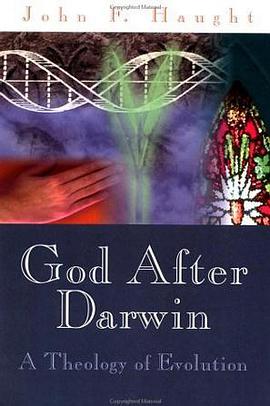
Argues that both evolutionism and creationism rely too heavily on notions of underlying order and design. Instead of focusing on the idea of novelty in human experience-novelty as a necessary component of evolution, and as the essence of divine Mystery. In God After Darwin, John Haught argues that the ongoing debate between Darwinian evolutionists and Christian apologists is fundamentally misdirected: both sides persist in focusing upon an explanation of underlying design and order in the universe. Haught suggests that what is lacking in both of these competing ideologies is the notion of novelty, a necessary component of evolution and the essence of the unfolding of divine Mystery. He argues that Darwin's disturbing picture of life, instead of being hostile to religion - as scientific skeptics and many believers have thought it to be - actually provides a most fertile setting for mature reflection on the idea of God. Solidly grounded in scholarship, Haught's explanation of the relationship between theology and evolution is both accessible and engaging.
"Haught's remarkable study faces without flinching the challenge that the evolutionary character of reality presents to a robust and intelligent [or credible] belief in God. In a most readable and perceptive manner the author dissects the character of that challenge, points out the limitations on its understanding imposed by its prejudices, and explores an excitingly open view of God's creative involvement in the processes of reality and its ecological significance. This is a book full of illuminating insights that will stimulate and inform all those who are seriously interested in the science and religion debate today." -David A. Pailin, University of Manchester
"The relationship of science and religion has once again assumed centrality among cultural and intellectual concerns. John Haught has encouraged this development and continues to give leadership to the reflection involved. This book provides an original, insightful, and exhilarating look at how a quite radical version of neo-Darwinian theory, usually understood as excluding and belief in God, can in fact aid Christians in developing a more Biblical faith by replacing the God of static design and controlling power with the God of vulnerable, self-giving love." -John B. Cobb, Jr., School of Theology at Claremont
"A lucid, learned, and liberating book with a new insight on almost every page. A pleasure to read, God After Darwin subtly rearranges the religious furniture in your head. Haught's thought-provoking proposals, especially his view of God as the dynamic, loving power of the future with a vision rather than a plan for this evolving universe, deserves wide readership and discussion." -Elizabeth A. Johnson, Fordham University
"Haught argues that evolutionary biology can enrich theological conviction, and vice versa. He does so with vigor and insight, reforming and deepening classical ideas of God, often regaining overlooked Biblical wisdom. Against fears of irreconcilable conflict, Haught's challenge is that theology after Darwin not only survives, but is even more of an adapted fit in the world. His analysis is seminal, fertile enough to breed a next generation of theologians." -Holmes Rolston III, Colorado State University; author of Genes, Genesis and God
"On the highly embattled issue of God and evolution, the most well-known positions tell us that God exists but evolution doesn't, that evolution exists but God doesn't, or that science and religion are completely different things. Jack Haught's God After Darwin, which regards evolution as "a gift to theology," presents an alternative vision - of a universe still unfinished and a Creator who, far from the omnipotent designer undermined by evolution, is the cosmic source of possibility, value, novelty, information, and beauty." -David Ray Griffin, Claremont School of Theology; author of Religion and Scientific Naturalism: Overcoming the Conflicts
"God is dead. At least the god of intelligent design is dead, gone the way of the god of the gaps. Daniel Dennett and Richard Dawkins need to re-tool their tedious and narrow theology. In God After Darwin: A Theology of Creation, theologian John F. Haught makes the exciting and compelling case that far from undermining the existence of God, Darwinian evolution points the way to a fresh understanding of God and the natural world. Creation is not finished and the future, so green with the promise of novelty, is not determined. God in an evolutionary cosmos is not a God of static being but of dynamic becoming. A finished creation must be a perfect creation, which is contradicted by the fact of suffering. If creation were perfect, what need have we of a Savior? Because creation cannot receive God's infinite love in a finite instant, the world necessarily has to transform and expand, in a word, to evolve. An unfinished world is necessarily an imperfect world. Drawing on the works of Pierre Teilhard de Chardin, Alfred North Whitehead and Karl Rahner among others, Haught has articulated an understanding of God that respects Christian orthodoxy but also resonates with the world of Darwin, Einstein and Hawking. Can it be that theology owns its own "dangerous idea," namely that metaphysical materialism is incompetent to make full sense of the actual discoveries of evolutionary science? Haught argues that the theological metaphysics of Teilhard allows all of the data of evolution, especially the emergence of novelty, to stand out. In short, he argues for a metaphysics of the future. As an evolutionary biologist, I have read Haught's book with excitement, admiration and pleasure-though it will take me a long time to ponder all of the stimulating ideas." -Peter Dodson, University of Pennsylvania; President, Philadelphia Center for Religion
"John Haught has a track record of presenting magisterial contributions to our understanding of how to regard the engagement of religion and science. In this book, he performs a twofold task: he shows how traditional thinking about God might take the measure of contemporary evolutionary science, and he also provides a resource for theologically serious thinkers in the ongoing work of reconstructing faith in a scientific age. His proposals carry the work to a new level." -Philip Hefner, Lutheran School of Theology at Chicago; director, Zygon Center for Religion and Science; editor, Zygon: Journal of Religion and Science
作者简介
目录信息
读后感
用户评价
如果用一个词来形容阅读这本书的体验,那一定是“智力探险”。作者仿佛是为我们规划了一条穿越思想迷宫的路线图,他毫不留情地指出了那些我们曾经习以为常的思维定势和逻辑陷阱。在讨论到某些后现代思潮对客观实在性的质疑时,书中展现出的严谨性让人印象深刻,作者并未盲目跟随潮流,而是始终坚持一种审慎的实证态度,但同时又对人类局限性保持着深刻的洞察。这种在坚守理性边界和拥抱认知谦逊之间的微妙平衡,是这本书最可贵的品质之一。每当我以为自己已经理解了作者的某个结论时,他总能引入一个新的角度或历史对照,将我的理解推向更深一层。这使得整个阅读过程充满了挑战性,仿佛在跟一位顶级的辩手进行思维的较量,每一次成功的理解都伴随着克服困难的满足感。
这本书最让我感到震撼的,是它对“信仰”这一核心概念进行层次解构的力度。作者并未简单地将信仰视为迷信或理性的对立面,而是将其置于人类认知结构的深处进行审视,探讨了它是如何在进化过程中形成,又是如何支撑起人类社会的复杂结构和道德体系的。这种处理方式超越了传统的“科学与宗教”二元对立的窠臼,提供了一种更为复杂、也更具同情性的视角。书中对于某些长期被视为不证自明的集体信念,进行了极其深入的社会学和心理学层面的剖析,揭示了这些信念背后的实际驱动力和其功能性。我印象深刻的是其中关于集体叙事如何塑造身份认同的一段论述,它迫使我反思自己日常生活中那些习以为常的“真理”究竟建立在何种脆弱的基础之上。这是一次对自我认知的彻底清算,读完不禁脊背发凉,但同时也感到一种久违的、思想被彻底激活的清醒感。
说实话,这本书的语言风格着实让我眼前一亮,它避开了许多同类严肃哲学著作中常见的晦涩与故作高深,反而带有一种近乎散文诗般的流畅与节奏感。作者在构建其核心论点时,大量运用了隐喻和文学性的描述,使得那些原本可能令人望而生畏的概念,变得触手可及,富有画面感。我特别欣赏作者处理历史人物和思想流派的方式——他没有把他们塑造成僵硬的雕塑,而是将他们还原为在特定时代背景下挣扎求索的鲜活个体。例如,对某些关键科学革命时期思想家内心挣扎的刻画,细腻得仿佛能让人感受到他们面对旧有世界观崩塌时的那种迷茫与兴奋交织的复杂心绪。这种叙事上的温度,极大地增强了文本的代入感,使得我能更深层次地进入到作者所构建的知识场域中去体验和思考。它更像是一位博学的智者在壁炉旁与你促膝长谈,而非冷冰冰的教科书陈述,这一点对于非专业读者来说,无疑是一大福音,也让我对后续章节充满了期待。
从排版和装帧上看,这本书的出版质量也值得称赞。厚实的纸张,清晰的印刷,以及恰到好处的字距,都为长时间的沉浸式阅读提供了良好的物质基础。特别是那些关键术语和引文的标注方式,设计得既不突兀又便于查阅,体现了出版方对内容严肃性的尊重。我特别留意了索引和注释部分的组织,它们详尽而系统,为那些希望进一步钻研某一特定主题的读者提供了极大的便利,这表明本书不仅仅是一次性的思想表达,更是一份可以长期参考的知识资源。尽管内容本身非常密集,但整体设计上力求简洁大气,没有多余的装饰分散读者的注意力,真正做到了“内容为王”。这种对细节的关注,让我在阅读过程中几乎没有遇到任何因外部因素而中断思绪的干扰,是一次非常顺畅且愉悦的阅读体验。
这本厚重的著作,初捧在手,便有一种沉甸甸的历史感与思辨的重量压在心头。作者的叙事如同蜿蜒的河流,时而湍急,将我卷入宏大的哲学思辨之中,探讨着人类文明数千年来的精神支柱在当代科学浪潮冲击下的摇摇欲坠。阅读过程中,我不断地在现代科学的坚实地基与人类对终极意义的永恒追问之间往复穿梭。尤其是在论述现代生物学如何重塑我们对“目的性”和“设计”的理解时,那种抽丝剥茧般的逻辑推演,让人不得不停下来,仔细咀嚼每一个论点。它并非一本轻松的读物,它要求读者具备一定的跨学科知识储备,也要求读者有足够的耐心去跟随作者的思路,从古老的宇宙观一点点过渡到由数据和概率构筑的全新现实。书中的案例选取极其精妙,往往能从一个看似微不足道的历史事件或科学发现切入,最终引申出影响深远的哲学反思,这种结构上的张弛有度,体现了作者深厚的学术功底和高超的文字驾驭能力。读完之后,我感觉自己像是完成了一场漫长而艰苦的智力攀登,虽然过程不易,但登顶后视野的开阔感是无可替代的。