
具体描述
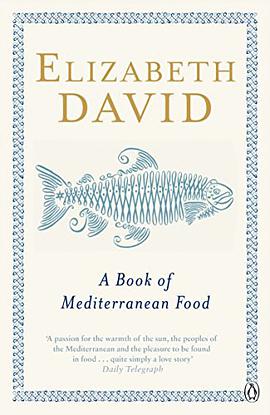
Mediterranean Food,Elixabeth David's first bood,is based on a collection of recipes she made when she lived in France,Italy,the Grddk Islands and Egypt.Here are the satisfying pasta and polenta dishes of Italy.the aromatic and tangy salads of Turdey and Greece and the delicate seafood and saffron dishes of Spain,From the simplicity of taramasalata and hummus to delicious plates of ratatouille of paella,all the tastes of the sunny south lie within these enticing pages.
Quite simply a love story.It tells,in the most beautiful words,of a woman's passion for the warmth of the sun,the peoples of the Mediterranean and the pleasure to be found in food'Thane Prince,Daily Telegraph.
Not only did she transfum the way we cooked but she is a delight to read'Jennifer Paterson,Express on Saturday. 作者简介: Elizabeth David discovered her taste for good food and wine when she lived with a French famliy while studying history and literature at the Sorbomme.A few years after her return to England she made up her mind to learn to cook so that she could reproduce for herself and her friends some of the food that she had come to apreciate in France,Italy,Greece,Egypt and Imdia,ax well as in England.She found not lnly the practical side but also the Iiterature of cookery of absorbing inertest and studied it throughout her life. Her first book,Mediterranean Food,appeared in 1950.French Conntry Coding followed in 1951,Italian Food,after a year of research in Italy,in 1954,Snmmer Cooking in 1955 and French Provincial Cooking in 1960.These books and a stream of often provocative articles in magaxines and mewspapers changed the outlook of English cooks for ever. In her later works she explored the traditions of English cooking (Spices,Salt and Aromatics in the English Kitchen,1970)and with English Bread and Yeast Coodery (1977)became the champion of a long overdue movement for good bread.AnOmelette and a Glass of Wine (1984)is a range of other jounals.The posthumously published Harvest of the Cold Months(1994)is a fascinating historical account of aspects of food preservation,the world-wide ice trade and the early days of refrigeration.South Wind Through the Kitchen,an anthology of recipes and acticles from Mrs David's nine books,selected by her family and friends,and friends,and by the chdfs and writers she inspired,was publishde in 1997,and acts as a reminder of what made Elizabeth David one of the most influential and loved of English food writers.All of her books are published in Penguin.
In 1973 her contribution to the gastronomic arts was recognized with the award of the first Anert Aimon Memorial Fund Book Award.An OBE followed in 1976,and in 1977 she was made a Chervlier de I'Ordre du Merite Agricole.Imthe same year English Bread and Yeast Cookery won Elixabeth Darid the Glenfiddich Writer of the Year Award.The uni-versities of Essex and Bristol conferred honorary doctorates on her in 1979 and 1988 respectively.In 1982 she was elected a Fellow of the Royal Society of Literature and in 1986 was awarded a CBE.Elizabeth David died in 1992.
作者简介
目录信息
读后感
用户评价
这本书的实用性其实是隐藏得比较深的,你得花点心思去“挖掘”。起初我以为它会是那种只适合专业大厨的晦涩指南,因为它的描述常常使用一些非常文学化的词汇来形容味道——比如“海风的咸涩”、“清晨雾气的清冽”。但当你真正拿起工具开始操作时,你会发现作者的每一个步骤都经过了近乎苛刻的精算。例如,在制作一个简单的烤鱼时,它不仅给出了精确到克的配料表,还详细说明了烤箱不同层架的温度差异,以及如何根据鱼皮的微小变化来判断最佳出炉时机。最让我惊喜的是,书中收录了大量针对“初学者”的变通方案,即便是没有找到特定的稀有食材,作者也提供了几种合理且味道不失真的替代方案,并解释了替换后风味会发生哪些细微的偏移。这显示出作者极强的同理心——知道真正的家庭厨房不可能随时备齐所有“完美”的材料,因此它真正做到了将高雅的美食拉入寻常百姓家,让复杂的流程变得可执行,而不是高不可攀。
我很少看到一本书能将“健康”与“放纵”这两个看似矛盾的概念融合得如此和谐。它巧妙地规避了现代健康饮食中那种令人扫兴的“节制感”。书中强调的“健康”并非意味着低脂低糖的枯燥,而是强调食材的新鲜度和自然状态下的营养平衡。比如,它会用非常直白的方式解释为什么多吃当季的豆类和坚果对身体有益,但同时,它也毫不吝啬地赞美了一块优质的、慢炖至酥烂的肉类所带来的精神满足感。作者似乎在向读者传递一个核心理念:享受美食是生存的基本权利,关键在于选择“对的”享受方式。书中对“自制”的推崇也令人信服,它鼓励读者自己动手制作调味品,这样可以完全掌控盐和添加剂的用量,从而在保持风味浓郁的同时,达到真正的健康目的。这本书给我的感觉是,它解放了我的味蕾,让我重拾了对食物的纯粹热爱,没有负罪感,只有满满的活力与满足。
这本书的阅读体验,就像是置身于一个舒适的海边露台,听着老一辈人讲述他们家族的故事。它的“人情味”非常浓厚,大量的篇幅被用来讲述这些食谱背后的家族记忆、节庆习俗甚至是地区间的恩怨情仇。我特别喜欢其中关于“复活节羔羊”那一段的描述,作者没有直接给食谱,而是穿插了一段关于她祖母如何在战争时期用最有限的资源保证节日餐桌丰盛的回忆录。这种叙事手法极大地增强了读者的代入感和情感联结,你不再是单纯地在模仿一个食谱,而是在参与和延续一种生活传统。它让我意识到,食物的味道不仅来自于盐和油,更来自于那些一代代传承下来的情感和仪式感。读完之后,我不仅仅学会了做几道菜,更像是收获了一份珍贵的家族口述历史,这种精神层面的滋养,是任何一本技术手册都无法给予的。
这本书的装帧设计简直是一场视觉盛宴,从封面那幅油画质感的橄榄树林到内页那些泛着温暖光泽的米黄色纸张,都透露出一种沉静而高级的品味。我立刻被它散发出的那种地中海阳光下的慵懒气息所吸引。内页的排版非常考究,文字与留白的比例拿捏得恰到好处,阅读起来丝毫没有压迫感。更值得称道的是,那些插图——不是那种生硬的、事无巨细的照片,而是充满艺术气息的手绘水彩,描绘着初榨橄榄油从陶罐中缓缓流淌的瞬间,或是阳光下晾晒的香草束的剪影。它不仅仅是一本食谱,更像是一本关于“慢生活”和“美学”的指南。每一次翻阅,都像是在进行一次心灵的休憩,让人不由自主地想慢下来,去欣赏那些日常生活中容易被忽略的美好细节。作者在引言部分对食材本味的推崇,也通过这种精致的视觉语言得到了有力的支撑,让人在动手之前,就已经对即将烹饪出的菜肴充满了敬意和期待。这种对整体体验的关注,远超出了普通烹饪书籍的范畴,更像是一件精心打磨的艺术品。
说实话,我本来对“地中海饮食”这种主题有些审美疲劳,觉得无非就是多用橄榄油、多吃鱼和蔬菜,无甚新意。然而,这本书的叙事角度和知识深度彻底颠覆了我的看法。它不是简单地罗列菜谱,而是将食物置于其深厚的文化土壤中去讲述。比如,它用了整整一个章节来探讨不同品种的粗粒小麦在不同岛屿上的演变历史,那种严谨的考据和娓娓道来的叙事方式,让我仿佛跟着作者在希腊群岛和意大利南部进行了一场穿越时空的田野调查。它对香料的运用描述得尤其精妙,不是简单地说“加入一撮牛至”,而是细致地分析了不同地区牛至的挥发油成分差异如何影响最终的口感,这种对“风土”的执着,体现了作者非凡的专业素养。读完这部分,我不再只是一个“做饭的人”,而是一个对食材来源和历史脉络有了更深理解的“学习者”。这种学术性的深度与烹饪的实用性完美结合,是很多同类书籍望尘莫及的。