
具体描述
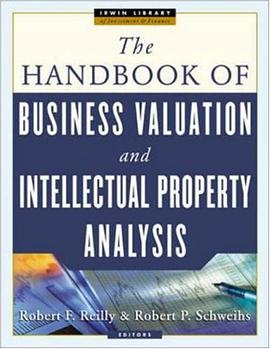
This authoritative title provides timely answers to controversial valuation, damages, and transfer price questions. Adam Smith's three sources of wealth creation - land, labor, and capital - have long been the factors that determine what a business is worth. Over the past few decades, however, a fourth factor, intellectual capital, has become increasingly important, yet difficult to quantify in the valuation equation. "The Handbook of Business Valuation and Intellectual Property Analysis" features the contributions of experts from leading valuation, accounting, investment banking, and law firms, and provides a comprehensive review of contemporary valuation issues related to businesses, securities, and intellectual property.Topics explored in this important book include: Business Valuation Technical Topics, Business Valuation Special Applications, Advanced Business Valuation Issues, Intellectual Property Valuation Issues, Intellectual Property Transfer Price Analysis Issues, Intellectual Property, and Economic Damages Issues. Accurate valuation, damages, and transfer price conclusions don't have to be a shot-in-the-dark proposition. "The Handbook of Business Valuation and Intellectual Property Analysis" presents valuation, damages, and transfer price analyses in a way that is clear, convincing, and cogent for practitioners at every level. Estimating business, security, and intellectual property values is increasingly difficult in today's transformed economy. From employee stock options to intellectual property license agreements, analysts, investors, accountants, lawyers, and regulators must understand complex new factors and confront important new challenges.In addition, governmental and regulatory changes combine with recent judicial precedent to impact both the theory and practice of valuation. "The Handbook of Business Valuation and Intellectual Property Analysis" provides practitioners with the latest information and knowledge on key aspects of business and intellectual property valuation, damages, and transfer price analyses. Contributions from today's leading experts, compiled and organized by valuation authorities Robert Reilly and Robert Schweihs, make this the essential volume for anyone looking for answers to transaction, financing, taxation, litigation, and corporate planning questions, such as: How should valuation discounts be applied in family limited partnerships, and what is the appropriate evidence for quantification of these discounts? And, what is the relevant regulatory framework for arriving at an arms-length transfer price in intercompany transactions?It also answers questions such as: What are the economic attributes and influences that create, destroy, and transfer value in intellectual property? How is the value of securities not traded on organized stock markets affected by their lack of liquidity? And, what three methods for valuing S corporations (and other pass-through entities) may now be more accurate than the traditional method, and why?"The Handbook of Business Valuation and Intellectual Property Analysis" updates and expands the professional literature related to business/intellectual property valuation, economic damages, and intercompany transfer price analyses. Controversial issues are demystified, and advanced topics are explained in ways that are illuminating for experienced practitioners while still remaining understandable for newer professionals. This latest Reilly/Schweihs anthology is certain to become a welcome and required addition to the libraries of valuation analysts, investment bankers, financial accountants, bankruptcy professionals, tax specialists, financial planners, and litigation attorneys.
作者简介
目录信息
读后感
用户评价
从排版和字体选择上,这本书展现出一种令人放松的阅读体验,这在厚重的专业书籍中是难能可贵的。大面积的留白设计使得密集的信息块得到了很好的呼吸空间,眼睛不易疲劳,即使长时间专注于复杂的图表和公式,也能保持较高的阅读舒适度。页边距的处理也十分得体,为读者在阅读过程中进行批注和标记留足了空间,这强烈表明作者和出版方是鼓励读者将这本书作为一本需要反复研读、深度互动的工具书来使用的。更细致的一点是,书中似乎使用了大量的图示和流程图,这些视觉辅助工具在处理跨学科的复杂概念时起到了至关重要的作用,它们充当了抽象理论和实际操作之间的桥梁。我推测,这些图表的设计理念必然是服务于清晰化步骤和关系,而非仅仅是装饰性的点缀。因此,这本书不仅在知识深度上有所建树,在如何有效地“传达”知识上也做到了极大的优化,体现了对读者学习体验的深切关怀。
我个人对这类深度参考资料的评价标准,往往聚焦于其“可引证性”和“时代适应性”。这本书的目录结构显示了对评估标准的深入探讨,这让我期待它能提供一套与最新的监管要求和市场实践保持同步的评估框架。评估领域日新月异,新的风险和新的资产类别不断涌现,一本有生命力的手册必须能够反映出这些变化。如果这本书能在探讨传统价值评估方法的同时,也对新兴的数字化资产、数据价值的计量,以及当前全球化背景下的跨境评估挑战有所着墨,那么它的价值将得到几何级的提升。它应该能够指导我们如何在中短期内,利用现有的工具去应对那些尚未被完全定义的新型价值形态。我期望它不仅仅是一本“知识的集合”,更是一本“行动的指南”,能够帮助专业人士在面对市场不确定性时,依然能够自信、公正地得出具有说服力的评估结论。这种与时俱进的洞察力,是衡量一本专业书籍是否值得长期珍藏的关键标准。
这本书的语言风格,从我翻阅的摘要部分来看,显得非常精准而克制,几乎没有冗余的形容词或情绪化的表达,完全是技术文档的范式。每一个句子都像是一份严谨的法律陈述,力求在定义和解释上达到无懈可击的程度。这对于我们这类追求精确性的专业人士来说,是最好的阅读体验。它不是在“推销”理论,而是在“陈述”事实和方法论。我注意到,书中频繁引用了大量的案例背景描述和法律条款的交叉引用,这暗示了它在理论与司法实践之间的紧密联系。这种严谨性意味着读者需要投入高度的专注力去消化每一个术语和前提条件,因为它设定的讨论场域是建立在严密的逻辑基础之上的,不容许有丝毫的含糊不清。我深信,这本书的价值并不在于教人快速致富的秘诀,而在于提供一把解剖复杂商业结构、拆解无形资产价值的精密手术刀,其阅读过程本身,就是一次对思维严密性的深度训练。
初次接触这本书时,我最直观的感受是其内容组织的宏大叙事结构。它似乎不仅仅停留在对单一评估方法的罗列,而是构建了一个宏观的分析框架,将经济环境、行业趋势乃至法律法规等外部变量,都纳入了考量范围之内。这种全景式的视角,让人立刻意识到,真正的价值评估绝非简单的数学公式套用,而是一门融合了经济学、财务管理乃至战略眼光的综合艺术。从目录上来看,它似乎花费了大量篇幅去探讨那些难以量化的无形资产的界定与保护,这正是当前商业环境中价值创造的核心所在。我预想这本书会用大量篇幅去阐述如何将这些抽象的概念转化为可审计、可量化的数据模型,这无疑是极具挑战性,也最具价值的部分。如果它能成功地提供一套扎实的、可操作的评估流程,那么它就不仅仅是一本“手册”,而更像是一份行业标准制定的蓝本。这种对全面性和深度兼顾的努力,着实令人对它的实际内容充满好奇,期待它如何化繁为简,揭示这些复杂评估背后的核心逻辑。
这本书的装帧设计给我留下了深刻的印象,封面选用了沉稳的深蓝色调,搭配金色的烫印字体,显得既专业又不失档次。纸张的质感也相当上乘,拿在手里有一种厚重而实在的感觉,这对于一本工具书来说是非常重要的,因为它预示着内容的深度和可靠性。整体来看,这本书的实体呈现仿佛一件精心制作的艺术品,让人在翻阅之前就对其中的知识体系充满了敬意和期待。尽管我还没有深入研读其内部的章节,仅仅是初步浏览目录和前言,就能感受到编者在构建知识框架时所下的苦功。他们似乎力求将复杂晦涩的评估理论与实际操作中的每一个环节都梳理得井井有条,逻辑链条清晰可见,这对于初学者而言无疑是一剂强心针,它承诺了一个系统、可遵循的学习路径,而非零散的概念堆砌。这种对细节的关注,从外包装一直延伸到版式设计,都传递出一个明确的信息:这是一部严肃、严谨的学术与实务并重的参考指南,绝非市面上那些浮于表面的商业手册可比。