
具体描述
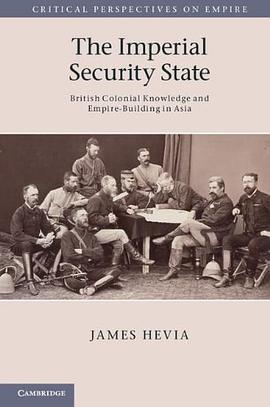
The Imperial Security State explores an important but under-explored dimension of British imperialism – its information system and the close links between military knowledge and the maintenance of empire. James Hevia's innovative study focuses on route books and military reports produced by the British Indian Army military intelligence between 1880 and 1940. He shows that together these formed a renewable and authoritative archive that was used to train intelligence officers, to inform civilian policy makers and to provide vital information to commanders as they approached the battlefield. The strategic, geographical, political and ethnographical knowledge that was gathered not only framed imperial strategies towards colonised areas to the east but also produced the very object of intervention: Asia itself. Finally, the book addresses the long-term impact of the security regime, revealing how elements of British colonial knowledge have continued to influence contemporary tactics of counterinsurgency in twenty-first-century Iraq and Afghanistan.
- Innovative study of British military intelligence before World War One
- Sheds new light on the close links between empire-building and intelligence
- Reveals the long-term origins of contemporary counterinsurgency tactics
"This book is a groundbreaking study of the rise of the British imperial security regime in the 19th century. James L. Hevia’s mastery of rare military archives demystifies the trope of the Great Game and provides an extraordinarily detailed analysis of how the geopolitical boundaries of Asia were produced through a proliferation of route books, maps and statistics, and other apparati of imperial intelligence networks. His scrutiny of the imperial past makes the contemporary security-obsessed American empire supremely legible."
Lydia H. Liu, author of The Clash of Empires
"Clearly written, well researched, and persuasively argued, Hevia's latest book will engage a range of readers. Scholars of diplomatic history will find especially valuable Hevia's insights into the growth and development of military intelligence as the other major component of the developing European security regimes in Europe and in Asia. Historians of Asia will also gain much from his research, linking as it does south, central, and eastern Asia into the British imperial network of intelligence gathering and control."
Michael H. Fisher, H-Diplo
"… an elegant, thoughtful and often provocative analysis of how security imperatives dictated the collection, analysis, and dissemination of military information … The Imperial Security State makes a persuasive and passionate argument for the centrality of military intelligence in not only developing strategies to intervene in Asia but more significantly in defining what Asia actually meant then and now. It is a very compelling account, lucidly presented, solidly researched and theoretically sophisticated."
Douglas M. Peers, Journal of Colonialism and Colonial History
"Recommended."
Choice
作者简介
James Hevia, University of Chicago
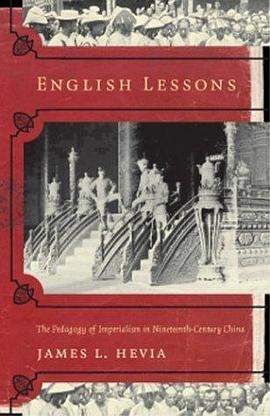
James Hevia is Professor of International History at the University of Chicago. His research interests have centred on European imperialism in Asia from the late eighteenth century onwards, and his previous publications include English Lessons: The Pedagogy of Imperialism in Nineteenth-Century China (2003).
目录信息
1. Introduction
2. The military revolution of the nineteenth century
3. Imperial state formation, the professionalization of the army, and the making of experts
4. Forming intelligence, making an archive
5. Disciplining the space of Asia: triangulation and route books
6. Regulating the facts of Asia: military reports and handbooks
7. The uses of intelligence
8. The effects of the imperial security regime in Asia and Great Britain
9. Imperial security and the transformation of Asia
Bibliography.
· · · · · · (收起)
读后感
用户评价
我必须说,这本书的文本密度高得令人发指,读起来需要极大的专注力,但回报也是丰厚的。它更像是一部精心编织的学术论文,只不过披着文学的外衣,充满了对历史、哲学和社会学的深刻洞察。作者似乎对权力体系的运作逻辑有着近乎偏执的迷恋,书中对官僚机构层级、意识形态渗透工具的解剖,细致入微,简直可以作为案例研究的范本。我花了不少时间去反复咀嚼那些长句,那些复杂的从句和嵌套的修饰语,它们本身就构成了一种语言上的迷宫,模仿了书中描绘的那个复杂到令人窒息的社会结构。它没有给出一个清晰的“英雄”或“反派”,取而代之的是一系列受困于制度中的角色,他们的动机模糊不清,行为逻辑往往是反直觉的,这使得解读难度倍增,但也更贴近真实世界的复杂性。对于那些期待情节跌宕起伏的读者来说,这本书可能会显得有些晦涩和缓慢,但对于热衷于深层社会结构分析的读者而言,这无疑是一座富矿,它提供的不是故事的慰藉,而是对权力本质的冷峻审视。
说实话,初读时我差点放弃,因为它的文风太过疏离和冷静,缺乏那种传统小说中常见的“情感联结”。主角群的刻画,与其说是塑造丰满的人,不如说是功能性的符号,他们更像是这个庞大机器上的齿轮,体现着制度对人性的异化。然而,一旦我接受了作者设定的这种“去情感化”的叙事策略,这本书的魔力才真正显现出来。这种冷峻正是其力量所在,它避免了廉价的同情,迫使读者必须用智力而非情感去参与到对这个世界的理解中。书中对不同社会阶层之间微妙的权力距离的描绘,细致到了可以嗅到空气中的尘埃味道。每一个场景的布置,都充满了象征意义,比如对特定建筑风格、特定色彩的反复强调,都在不动声色地建立起一个视觉和心理上的等级制度。这是一部需要被“解码”的作品,它拒绝被轻易消化,反而要求读者主动构建属于自己的理解框架,那种智力上的挑战,比任何情节上的反转都更让人上瘾。
这本书的艺术成就,我认为在于它成功地创造了一种“替代性现实感”。它并非完全是科幻,也不是纯粹的历史虚构,而是巧妙地悬置在两者之间,构建了一个逻辑自洽、但又让人后背发凉的平行世界。作者在构建这个世界时,展现了惊人的细节把控能力,无论是行政文书的格式、规章制度的措辞,还是社会交往中的特定礼仪,都打磨得如同真品。这种极端的真实感,反而增强了其虚构的恐怖性,因为它让人觉得,“这随时可能发生”,或者“这也许正在世界的某个角落发生”。书中对“服从的艺术”的探讨尤为深刻,它揭示了最高效的控制并非通过高压,而是通过将服从内化为一种近乎宗教信仰的义务感。读完后,我有一种奇怪的后遗症,仿佛对周围环境中那些看似无害的指示牌和口号,都会多看几眼,去揣测其背后的权力意图。这是一次成功的文学实验,它用精妙的构建挑战了我们对“正常”社会的理解边界。
这本书最让我震撼的地方,在于其对“记忆”这一概念的颠覆性处理。作者似乎在挑战我们对过去和历史的既有认知,它不是一个简单的叙事,而是一场关于“真实性”的持续辩论。书中的世界观建立在一个不断被重塑和编辑的历史基础之上,每一个官方叙事都像是一件精美的、但易碎的玻璃制品。更妙的是,作者通过一些看似无关紧要的边缘人物的视角,暗示了那些被抹去的部分是如何以一种幽灵般的方式回返的——不是通过激烈的反抗,而是通过碎片化的、难以捕捉的“非官方”记忆的残留。这种处理手法,赋予了文本一种近乎形而上学的深度。它让我开始反思自己所接受的历史教育,以及我们如何构建自己的身份认同,当我们赖以生存的“已知历史”随时可能被更高权威的力量所覆盖时,个体还剩下什么可以抓住?这种探讨的价值,远超出了故事本身,它触及了存在论的层面,是一次对心智自由的拷问。
这本书的叙事节奏简直让人喘不过气来,作者的笔力之老道,在描绘那些深层权力运作时,展现出一种近乎冷酷的精准。我尤其欣赏作者对宏大叙事与个体命运交织的处理,那种无处不在的压抑感并非靠着突兀的暴力场面堆砌而成,而是通过对日常琐碎中渗透出的不信任和规则的不断收紧来体现。举例来说,书中关于信息流动的描写,那种微妙的审查机制,如何像藤蔓一样缠绕住人们的思想和交流,远比直接的禁令来得更具穿透力。它探讨的不仅仅是极权主义的结构,更是这种结构如何内化为人格的一部分,使人从内心深处开始自我规训。每一次角色的选择,无论看似多么微不足道,都像是被放在显微镜下审视的样本,揭示了在极端环境下,人性的弹性与脆弱是如何被拉伸到极限的。读到后半部分,我感到一种强烈的生理不适,那不是因为情节的血腥,而是源于对那种系统性、结构性压迫的深刻共鸣。这种文学的张力,在于它迫使读者直面那些我们通常选择回避的社会病理,不给任何逃避的空间,读完后,很长一段时间内,周围的世界都仿佛蒙上了一层薄薄的、难以言喻的阴影。
military intelligence was arts of government, also a product of the new mechanisms of state formation, the disciplinary and regulatory regims, transformed European states and Asia
military intelligence was arts of government, also a product of the new mechanisms of state formation, the disciplinary and regulatory regims, transformed European states and Asia
对我而言没有English Lesson 启发性强,但是其中的很多想法在EL里面已经有所体现。史实很翔实。
我们不要把情报、资讯都自动代入高度机密保密局啦,换一种角度想,如果这些东西是公开出版的呢?
military intelligence was arts of government, also a product of the new mechanisms of state formation, the disciplinary and regulatory regims, transformed European states and Asia