
具体描述
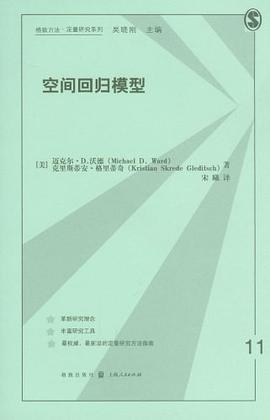
《空间回归模型》主要解决线性回归分析中空间依赖关系的相关问题,为社会科学家完备地介绍如何将空间依赖性的分析纳入回归框架。本书作者向读者介绍了两种应用最广泛的空间回归模型:空间定距因变量和空间性误差模型。此外还补充了空间分析中的疑难问题。
作者简介
目录信息
前言
第1章 导论
第1节 交互作用与社会科学
第2节 世界各国的民主
第3节 空间依赖关系介绍
第4节 将地图作为可视化数据
第5节 空间依赖性和相关性测量
第6节 接近性测量
第7节 估计空间模型
第8节 小结
第2章 空间滞后因变量
第1节 空间滞后因变量的回归
第2节 估计空间滞后y模型
第3节 空间性间隔y模型的最大似然估计:以民主研究为例
第4节 空间滞后y模型的均衡效应
第5节 意大利投票率的空间依赖关系
第3章 空间误差模型
第1节 空间误差模型
第2节 空间误差模型的最大似然估计
第3节 以民主和发展研究为例
第4节 空间滞后y和空间误差的比较
第5节 估计成对贸易往来中的空间性误差
第6节 小结
第4章 扩展
第1节 识别连接性
第2节 推论与模型评估
第3节 小结
附录
注释
参考文献
译名对照表
· · · · · · (收起)
读后感
用户评价
这本书的名字就叫《空间回归模型》,光是听着就让人觉得充满了学术的味道。我一直对数据背后的规律深感兴趣,尤其是当这些数据与地理位置息息相关的时候。我总觉得,我们生活的这个世界,充满了各种各样的空间联系,比如,一个地区的经济发展水平,很可能受到周边地区交通便利程度的影响;一种疾病的传播,也往往不是随机发生的,而是沿着特定的空间路径蔓延。传统的回归模型,在处理这种空间上的相互影响时,似乎总是有一些力不从心。 所以,我非常期待这本书能够为我提供一套系统的方法,来理解和量化这些空间上的关联。我猜想,书中会从最基础的“空间自相关”概念讲起,让我明白,为什么相邻的地理区域,其观测值会倾向于相似(正自相关)或者相反(负自相关)。接着,我期盼着书中能详细介绍几种主流的空间回归模型,比如,能够考虑空间滞后项(spatial lag term)的模型,即一个地区的因变量会受到其邻近地区因变量的影响;以及能够处理空间误差项(spatial error term)的模型,即误差项在空间上是相互关联的。 我特别想知道,书中在介绍这些模型时,会不会详细讲解如何构建“空间权重矩阵”(spatial weight matrix)。我知道,这个矩阵是定义空间邻接关系的关键,它决定了哪些地理单元被认为是“相邻”的,以及这种相邻关系的强度如何。书中会讨论基于地理边界的权重,还是基于距离的权重,或者其他更复杂的权重定义方式吗?我希望能够得到一些清晰的指导,让我能够根据实际的研究问题,选择最合适的空间权重。 Furthermore, I am particularly eager to learn about the practical implementation of spatial regression models. I expect the book to guide readers through the process of estimating these models using statistical software, such as R or Python. Understanding the syntax and commands for fitting spatial lag and spatial error models, as well as performing diagnostic tests, is crucial for applying these techniques in real-world research. My anticipation also extends to the interpretation of the results from spatial regression models. Unlike traditional regression, where coefficients have straightforward interpretations, spatial regression coefficients can be more complex. I hope the book will provide clear explanations and examples of how to interpret the estimated parameters, distinguishing between direct and indirect effects, and assessing the significance of spatial dependencies. Moreover, I am keen to explore the various applications of spatial regression models across different disciplines. I believe that understanding how these models are used in fields such as environmental science, public health, urban planning, and criminology will broaden my perspective and inspire new research ideas. Real-world case studies demonstrating the power of spatial regression in addressing complex spatial problems would be highly valuable. The title, "Spatial Regression Models," also suggests a comprehensive coverage of different modeling approaches. I anticipate that the book might delve into advanced topics such as geographically weighted regression (GWR), which allows for spatially varying relationships, or panel spatial data models, which account for both spatial and temporal dependencies. Such coverage would provide a solid foundation for advanced study and research. In conclusion, my excitement for "Spatial Regression Models" stems from its promise to equip me with the theoretical knowledge and practical skills necessary to analyze spatially structured data. I believe this book will be an invaluable resource, enabling me to move beyond simplistic analyses and to uncover the intricate spatial relationships that drive many phenomena in our world, ultimately contributing to more informed and spatially aware research and decision-making.
这本书叫做《空间回归模型》,听起来就充满了科学探索的意味。我一直对那些发生在地理空间上的现象,以及它们之间千丝万缕的联系感到好奇。比如,为什么某些地区的房价会比其他地区高很多?是什么因素导致了某种疾病的聚集性传播?传统的回归分析,虽然强大,但在处理这类问题时,似乎总是漏掉了“空间”这个至关重要的维度,就像分析一幅画,却忽略了构图和色彩的搭配。 我希望《空间回归模型》能够填补我在这方面的知识空白。我猜想,它会从最基础的“空间自相关”理论讲起,让我理解,为什么地理位置上的相近会使得变量的值也倾向于相似,或者产生某种程度上的关联。然后,我期待书中能够详细介绍几种核心的空间回归模型,例如,能够考虑空间滞后效应(spatial lag effect)的模型,即一个地区的因变量受到其邻近地区因变量的影响;以及能够处理空间误差(spatial error)的模型,即误差项在空间上是不独立的。 我特别想了解,书中会如何指导我进行模型诊断,特别是如何判断我的数据是否确实存在空间自相关,以及我的回归模型是否有效地解决了这个问题。我知道,这通常需要一些特殊的统计检验,比如莫兰指数(Moran's I)的残差检验,或者吉尔伯特指数(Geary's C)的残差检验。掌握这些诊断工具,对于确保我的研究结论的可靠性至关重要。 Furthermore, I am keenly interested in the book's approach to model specification and selection. Given the variety of spatial regression models available, understanding the criteria for choosing the most appropriate one for a particular research problem is paramount. I anticipate that the book will provide clear guidelines on how to evaluate the assumptions of different models, conduct diagnostic tests, and compare model performance using statistical criteria, ensuring that the chosen model best reflects the underlying spatial processes. My anticipation also extends to the practical aspects of implementing spatial regression models. I expect the book to offer guidance on using common statistical software packages, such as R or Python libraries, to estimate these models. The ability to translate theoretical concepts into actual computational procedures is essential for conducting empirical research, and I look forward to learning about the specific functions and workflows involved in spatial regression analysis. Moreover, I'm eager to explore how the book addresses the interpretation of spatial regression coefficients. Unlike traditional regression, where coefficients represent straightforward marginal effects, spatial coefficients can have complex interpretations involving both direct and indirect influences. I hope the book will provide clear frameworks and illustrative examples for understanding and communicating these nuanced interpretations, enabling me to derive meaningful insights from my spatial analyses. The potential for "Spatial Regression Models" to help me uncover spatially structured relationships in my own research is a significant motivation. Whether it's understanding the spatial determinants of economic inequality, the geographic patterns of disease outbreaks, or the spatial diffusion of technological innovations, I believe this book will provide the analytical toolkit necessary to conduct rigorous and impactful spatial research, moving beyond simple correlations to a deeper understanding of spatial causality. I also foresee the book discussing the importance of selecting appropriate spatial weights matrices. The definition of spatial relationships is fundamental to spatial regression, and I expect the book to cover various methods for constructing these matrices, such as contiguity-based, distance-based, and kernel-based approaches, along with the rationale for choosing the most suitable method for different types of spatial data and research questions. Ultimately, "Spatial Regression Models" promises to be a comprehensive and insightful guide for anyone looking to integrate spatial considerations into their analytical framework. I am confident that this book will equip me with the necessary theoretical knowledge and practical skills to confidently apply spatial regression techniques to a wide range of research problems, thereby enhancing the depth and validity of my spatial analyses and contributing to a more nuanced understanding of the world around us.
《空间回归模型》这个书名,对我来说,就像是打开了一个充满无限可能的分析工具箱。我一直对数据背后的故事充满好奇,尤其是当这些数据承载着地理位置的信息时。我常常思考,为什么有些地方的经济发展总是呈现出集聚效应?为什么某些环境污染的指标会呈现出明显的空间扩散趋势?传统的回归分析,在处理这些问题时,往往只能提供一个全局的视角,而忽略了空间上的细微之处。 我迫切希望这本书能够让我掌握一套科学的方法,去捕捉和量化这些空间上的关联。我猜想,书中会从最基础的“空间自相关”理论讲起,让我理解,为什么相邻的地理单元上的观测值会倾向于相似(正自相关)或相反(负自相关),并提供衡量这种空间依赖性的统计指标。随后,我期待书中能够详细介绍几种核心的空间回归模型,例如,能够考虑空间滞后项(spatial lag term)的模型,即一个地区的因变量会受到其邻近地区因变量的影响;以及能够处理空间误差项(spatial error term)的模型,即误差项在空间上是不独立的。 我特别想了解,书中在讲解这些模型时,是否会深入地探讨“空间权重矩阵”(spatial weight matrix)的设计和选择。我知道,这个矩阵是定义空间邻接关系的核心,它的构建方式直接影响到模型的估计结果。书中会不会讨论不同类型的空间权重,比如基于共享边界的、基于距离衰减的,甚至是基于网络连接的?以及,如何根据研究问题的性质,选择最适合的权重矩阵,从而避免产生误导性的分析结果,这是我非常关心的一个方面。 Furthermore, I am eager to learn about the practical implementation and interpretation of spatial regression models. I anticipate that the book will provide guidance on using statistical software, such as R or Python, to estimate these models and to conduct diagnostic tests for spatial autocorrelation and model fit. The ability to translate theoretical concepts into empirical analysis is crucial for any researcher. My anticipation also extends to the interpretation of the estimated coefficients in spatial regression. Unlike traditional regression models, spatial regression coefficients can have more complex interpretations due to the inclusion of spatial lags or errors. I hope the book will offer clear frameworks and illustrative examples to help readers understand and communicate these nuanced interpretations, ensuring that the findings are both statistically sound and practically meaningful. Moreover, I am keen to explore the diverse applications of spatial regression models in various fields. I believe that seeing how these techniques are applied to real-world problems in areas like public health, environmental science, economics, and urban planning will greatly enhance my understanding and inspire new research avenues. Case studies and examples will undoubtedly be invaluable in this regard. The title "Spatial Regression Models" suggests a comprehensive treatment of the subject. I expect the book to cover not only the foundational models but also potentially more advanced topics, such as geographically weighted regression (GWR) or spatio-temporal models, which would provide a broader perspective on spatial analysis. Ultimately, "Spatial Regression Models" promises to be an essential guide for anyone seeking to incorporate spatial considerations into their statistical analysis. I am confident that this book will equip me with the theoretical knowledge and practical skills necessary to conduct rigorous and insightful spatial research, moving beyond simple correlations to a deeper understanding of spatial causality and interaction, and contributing to more informed and spatially aware decision-making.
这本书的名字叫做《空间回归模型》,光听名字就有一种很强的学术气息扑面而来,让我这个对地理信息科学和统计学有着浓厚兴趣的读者,充满了期待。我一直觉得,我们生活的世界充满了各种各样的空间联系,而这种联系往往不是孤立存在的,而是相互影响、相互关联的。比如,一个地区的经济发展水平,可能会受到周边地区交通便利性的影响,也可能因为人口流动而呈现出某种趋势。又或者,某种疾病的传播,也往往不是随机发生的,而是与地理位置、环境因素等有着千丝万缕的联系。正是这些潜藏在空间之下的规律,深深地吸引着我,让我渴望能够找到一种科学的工具,去理解和量化这些空间关系。 《空间回归模型》这本书,在我看来,就是这样一把解锁空间奥秘的钥匙。虽然我还没有深入阅读这本书的具体章节,但仅从书名,我就能联想到它所涵盖的丰富内容。它很有可能不仅仅是介绍几种简单的回归分析方法,而是会深入探讨如何将空间因素纳入到回归模型中,从而更精确地解释和预测空间现象。我设想,书中会从最基础的空间自相关理论讲起,比如莫兰指数(Moran's I)和吉尔伯特指数(Geary's C)这些经典的概念,帮助我们理解“近邻效应”是否存在,以及其强度如何。然后,它应该会循序渐进地引导读者进入更为复杂的模型,比如空间滞后模型(Spatial Lag Model)和空间误差模型(Spatial Error Model),解释它们各自适用的场景和数学原理。 我特别期待书中能够详细阐述这些模型是如何克服传统回归模型在处理空间数据时的局限性的。传统的线性回归假设样本是独立的,但现实中的空间数据往往不是如此,相邻地点的数据往往具有相似性,这种空间相关性如果不加以考虑,会导致模型估计的偏误和统计推断的失效。这本书,我猜想,一定能够提供清晰的解释,说明空间回归模型是如何通过引入空间权重矩阵等工具,来捕捉和量化这种空间依赖性,从而得到更准确、更可靠的研究结果。 Furthermore, I'm eager to explore how these spatial regression techniques can be applied to a wide range of real-world problems. For instance, in urban planning, understanding how factors like proximity to public transportation or the presence of green spaces influence housing prices is crucial. Spatial regression models could offer a powerful framework for quantifying these relationships, allowing planners to make more informed decisions about land use and development. Similarly, in environmental science, analyzing the spatial patterns of pollution or the spread of invasive species could greatly benefit from these methodologies. The book's potential to equip readers with the tools to uncover such spatial dependencies across various disciplines is truly exciting. I also anticipate that the book will delve into the practical aspects of implementing spatial regression models. This likely includes discussions on data preparation, the selection of appropriate spatial weights matrices (e.g., contiguity, distance-based), and the interpretation of model outputs. I'm particularly interested in learning about diagnostic tools to assess model fit and to identify potential spatial outliers or influential observations. The ability to not only build these models but also to rigorously evaluate their performance and to understand the nuances of their results is what separates a theoretical understanding from practical mastery, and I believe this book aims to bridge that gap. It is my strong belief that "Spatial Regression Models" will not just be a textbook but a gateway to a deeper understanding of how geographic location shapes and is shaped by various phenomena. I envision chapters dedicated to the intricacies of geographically weighted regression (GWR), a powerful technique that allows for the estimation of relationships that vary across space. Understanding how local parameters are estimated and how to interpret these spatially varying coefficients would be a significant takeaway. This would enable researchers to move beyond global averages and capture the heterogeneities inherent in complex spatial systems. The book's potential to foster a more nuanced understanding of causality in spatial contexts is another aspect I find particularly compelling. Traditional regression often struggles to disentangle correlation from causation when spatial autocorrelation is present. I anticipate that "Spatial Regression Models" will offer insights into how to design studies and interpret results in a way that minimizes spurious correlations and moves closer to identifying genuine spatial effects, perhaps through techniques like instrumental variables in a spatial setting or advanced causal inference methods adapted for geographic data. Moreover, I'm keen to see how the book addresses the challenges of spatial data mining and the integration of different types of spatial data. Modern research often involves combining raster, vector, and point data, and understanding how spatial regression can be adapted to handle these diverse data formats would be incredibly valuable. The ability to build comprehensive models that account for various spatial interactions and data characteristics is a significant hurdle, and I am optimistic that this book will provide guidance in this complex area. Finally, the prospect of exploring advanced topics such as Bayesian spatial regression or spatio-temporal models is something that greatly excites me. The ability to incorporate prior knowledge and to model the dynamic evolution of spatial patterns over time would represent a significant leap in analytical capability. I imagine the book will not shy away from these more sophisticated methodologies, offering a comprehensive overview that caters to both introductory and advanced readers, thereby broadening the scope of its impact and utility. In summary, while I haven't yet had the pleasure of reading a single page of "Spatial Regression Models," my anticipation is palpable. The title alone evokes a sense of intellectual exploration and practical utility, promising to unlock the complex spatial dependencies that govern our world. From foundational concepts of spatial autocorrelation to advanced modeling techniques, I expect this book to be an indispensable resource for anyone seeking to understand and analyze phenomena with a spatial dimension, equipping them with the knowledge to uncover hidden patterns and make more informed decisions in an increasingly interconnected world.
《空间回归模型》这个名字,对我来说,简直就是指引我探索空间数据背后隐藏着秘密的一盏明灯。我一直对我们生活的这个世界充满好奇,特别是那些由地理位置所塑造的现象。我常常在想,为什么某些地方会比其他地方更繁荣?为什么某些疾病更容易在特定的区域蔓延?传统的回归分析,虽然能帮助我们理解变量之间的关系,但在处理这些具有空间依赖性的问题时,总感觉像是隔靴搔痒,无法触及问题的本质。 我非常期待这本书能够为我打开一扇新的窗户,让我能够更深入地理解和运用那些能够捕捉空间特征的统计模型。我猜想,书中会从“空间自相关”这个核心概念讲起,让我明白,为什么相邻的地理区域,其观测值之间会存在一定的相关性,并提供一些量化这种相关性的方法。随后,我希望能详细地了解到几种主要的“空间回归模型”,比如,能够处理空间滞后效应(spatial lag effect)的模型,即一个地区的因变量受到其邻近地区因变量的影响;以及能够处理空间误差项(spatial error term)的模型,即误差项在空间上是不独立的。 我特别关注书中对“空间权重矩阵”(spatial weight matrix)的介绍。我知道,这个矩阵在空间回归中扮演着至关重要的角色,它定义了不同地理单元之间的空间关系。书中会讨论如何根据数据的类型和研究的目的,选择不同类型的空间权重,例如基于距离的、基于共享边界的,还是基于网络连接的吗?我希望能够获得清晰的指导,以便我能更准确地构建我的空间回归模型。 Furthermore, I am particularly eager to learn about the practical implementation of spatial regression models. I anticipate that the book will provide guidance on using statistical software, such as R or Python, to estimate these models and to conduct diagnostic tests for spatial autocorrelation and model fit. The ability to translate theoretical concepts into empirical analysis is crucial for any researcher. My anticipation also extends to the interpretation of the estimated coefficients in spatial regression. Unlike traditional regression models, spatial regression coefficients can have more complex interpretations due to the inclusion of spatial lags or errors. I hope the book will offer clear frameworks and illustrative examples to help readers understand and communicate these nuanced interpretations, ensuring that the findings are both statistically sound and practically meaningful. Moreover, I am keen to explore the diverse applications of spatial regression models in various fields. I believe that seeing how these techniques are applied to real-world problems in areas like public health, environmental science, economics, and urban planning will greatly enhance my understanding and inspire new research avenues. Case studies and examples will undoubtedly be invaluable in this regard. The title "Spatial Regression Models" suggests a comprehensive treatment of the subject. I expect the book to cover not only the foundational models but also potentially more advanced topics, such as geographically weighted regression (GWR) or spatio-temporal models, which would provide a broader perspective on spatial analysis. Ultimately, "Spatial Regression Models" promises to be an essential guide for anyone seeking to incorporate spatial considerations into their statistical analysis. I am confident that this book will equip me with the theoretical knowledge and practical skills necessary to conduct rigorous and insightful spatial research, moving beyond simple correlations to a deeper understanding of spatial causality and interaction, and contributing to more informed and spatially aware decision-making.
书名《空间回归模型》一出现,就仿佛打开了一扇通往更深层理解世界的大门。我一直觉得,我们所处的空间环境,对各种现象的发生和发展有着潜移默化的影响,而很多时候,这种影响并非独立存在,而是具有一种“连锁反应”式的特征。比如,经济活动的集聚和扩散,疾病的传播路径,甚至是交通拥堵的形成,都离不开空间这个维度。传统的统计方法,在分析这类问题时,往往忽略了这种空间上的相互依赖性,就像是在“盲人摸象”,无法窥全貌。 因此,我非常期待这本书能够为我揭示,如何将“空间”这个重要维度,有效地纳入到回归分析框架中。我猜想,它会从最基础的“空间自相关”概念入手,让我明白,为什么相邻地区的数值会倾向于相似,或者相反,并提供衡量这种关系的统计指标。随后,我期盼着书中能详细介绍几种主要的“空间回归模型”,比如,那些能够处理空间滞后效应(spatial lag effect)的模型,和那些能够捕捉空间误差项相关性(spatial error correlation)的模型。 我尤其希望书中能细致地讲解,在构建这些模型时,如何处理“空间权重矩阵”(spatial weight matrix)。我知道,这个矩阵的构建是空间回归分析的关键一步,它决定了空间邻接关系的定义和强度。书中会不会讨论不同类型的空间权重,比如基于共享边界的、基于距离衰减的,甚至是基于网络连接的?以及,如何根据研究问题的性质,选择最适合的权重矩阵,从而避免产生误导性的分析结果? Furthermore, the prospect of understanding the nuances of spatial regression model specification is something I'm very excited about. I imagine the book will guide readers through the process of selecting the appropriate model among various spatial econometric specifications, such as distinguishing between a spatial lag model and a spatial error model, or even considering mixed-effects models that incorporate both. The ability to make informed decisions about model specification based on theoretical considerations and diagnostic checks is crucial for producing reliable spatial analyses. I am also eager to learn about the estimation and inference procedures specific to spatial regression. Unlike ordinary least squares (OLS) in traditional regression, spatial regression models often require maximum likelihood estimation (MLE) or other specialized techniques to account for the spatial dependence in the data. I anticipate that the book will provide a clear exposition of these estimation methods, as well as the methods for conducting statistical inference, including hypothesis testing and constructing confidence intervals for the estimated parameters. Moreover, the book's potential to equip me with the skills to interpret the results of spatial regression models is a significant draw. Understanding the meaning of spatial coefficients, distinguishing between direct and indirect effects, and assessing the overall model fit in the presence of spatial autocorrelation are complex tasks that I hope this book will simplify and clarify. I look forward to learning how to present and communicate spatial regression findings effectively, making them accessible to both academic and non-academic audiences. The application of spatial regression to contemporary research challenges is another area of great interest. I hope the book will showcase how these models can be used to address pressing issues in fields such as environmental sustainability, public health disparities, economic development, and urban planning. Real-world examples and case studies will undoubtedly enhance my understanding and demonstrate the practical relevance of spatial regression analysis. Finally, the title "Spatial Regression Models" implies a journey into advanced methodologies. I anticipate that the book might touch upon extensions of basic spatial regression, such as panel spatial data models or Bayesian spatial regression techniques, offering a glimpse into cutting-edge research frontiers and providing a foundation for further exploration in these complex domains. In conclusion, my anticipation for "Spatial Regression Models" is driven by its promise to provide a comprehensive and practical framework for understanding and analyzing spatial phenomena. I believe this book will be an invaluable resource, empowering me to uncover the hidden spatial patterns that shape our world and to conduct more robust and insightful spatial research, moving beyond mere correlation to a deeper understanding of spatial causality and interaction.
《空间回归模型》这个书名,对我来说,简直就像是打开了一个神秘的宝藏。我一直觉得,我们生活的这个世界,到处都充满了空间上的联系,这些联系就像是无形的丝线,将各个地点、各种现象巧妙地联系在一起。比如,为什么经济发达的地区往往会吸引更多的人口和投资?为什么某种传染病的传播速度和范围,会受到地理位置和交通网络的影响?传统的回归分析,在处理这些问题时,往往只能看到局部,而忽略了整体的空间格局。 我非常期待这本书能够为我提供一种全新的视角,让我能够“看见”这些空间上的联系,并用科学的方法去量化它们。我猜想,书中会从最基本的“空间自相关”概念入手,让我理解,为什么相邻的地理单元上的观测值会倾向于相似,或者相反,并提供衡量这种空间依赖性的指标。接着,我期盼着书中能够详细介绍几种主流的空间回归模型,例如,能够考虑空间滞后效应(spatial lag effect)的模型,即一个地区的因变量会受到其邻近地区因变量的影响;以及能够处理空间误差项(spatial error term)的模型,即误差项在空间上是不独立的。 我特别想了解,书中在讲解这些模型时,是否会深入地探讨“空间权重矩阵”(spatial weight matrix)的设计和选择。我知道,这个矩阵是定义空间邻接关系的核心,它的构建方式直接影响到模型的估计结果。书中会不会讨论不同类型的空间权重,比如基于共享边界的、基于距离衰减的,甚至是基于网络连接的?以及,如何根据研究问题的性质,选择最适合的权重矩阵,从而避免产生误导性的分析结果,这是我非常关心的一个方面。 Furthermore, I am eager to learn about the practical implementation and interpretation of spatial regression models. I anticipate that the book will provide guidance on using statistical software, such as R or Python, to estimate these models and to conduct diagnostic tests for spatial autocorrelation and model fit. The ability to translate theoretical concepts into empirical analysis is crucial for any researcher. My anticipation also extends to the interpretation of the estimated coefficients in spatial regression. Unlike traditional regression models, spatial regression coefficients can have more complex interpretations due to the inclusion of spatial lags or errors. I hope the book will offer clear frameworks and illustrative examples to help readers understand and communicate these nuanced interpretations, ensuring that the findings are both statistically sound and practically meaningful. Moreover, I am keen to explore the diverse applications of spatial regression models in various fields. I believe that seeing how these techniques are applied to real-world problems in areas like public health, environmental science, economics, and urban planning will greatly enhance my understanding and inspire new research avenues. Case studies and examples will undoubtedly be invaluable in this regard. The title "Spatial Regression Models" suggests a comprehensive treatment of the subject. I expect the book to cover not only the foundational models but also potentially more advanced topics, such as geographically weighted regression (GWR) or spatio-temporal models, which would provide a broader perspective on spatial analysis. Ultimately, "Spatial Regression Models" promises to be an essential guide for anyone seeking to incorporate spatial considerations into their statistical analysis. I am confident that this book will equip me with the theoretical knowledge and practical skills necessary to conduct rigorous and insightful spatial research, moving beyond simple correlations to a deeper understanding of spatial causality and interaction, and contributing to more informed and spatially aware decision-making.
书名《空间回归模型》,一听就感觉是那种能够深入挖掘数据背后隐藏的空间规律的“利器”。我一直觉得,我们所处的地理环境,对各种现象的发生和发展有着不可忽视的影响。比如,一个地区的经济发展,不仅仅取决于其内部的因素,周边地区的产业结构、交通网络,甚至是政策导向,都可能对其产生“辐射”或“虹吸”效应。传统的一些回归分析方法,在处理这些空间上的相互作用时,总是显得有些力不从心,无法完全捕捉到这种“此消彼长”的动态。 我期待这本书能够为我揭示,如何构建能够“看见”空间联系的回归模型。我猜想,它会从最基本的“空间自相关”概念讲起,让我理解,为什么相邻的地理单元上的观测值会存在一定的相关性,并提供衡量这种相关性的统计指标。随后,我希望书中能详细介绍几种核心的空间回归模型,例如,能够处理空间滞后项(spatial lag term)的模型,即一个地区的因变量受到其邻近地区因变量的影响;以及能够处理空间误差项(spatial error term)的模型,即误差项在空间上是不独立的。 我特别想知道,书中在讲解这些模型时,是否会深入地探讨“空间权重矩阵”(spatial weight matrix)的设计和选择。我知道,这个矩阵是定义空间邻接关系的核心,它的构建方式直接影响到模型的估计结果。书中会不会讨论不同类型的空间权重,比如基于共享边界的、基于距离衰减的,甚至是基于网络连接的?以及,如何根据研究问题的性质,选择最适合的权重矩阵,从而避免产生误导性的分析结果,这是我非常关心的一个方面。 Furthermore, I am keen to understand the practical implementation and interpretation of spatial regression models. I anticipate that the book will provide guidance on using statistical software, such as R or Python, to estimate these models and to conduct diagnostic tests for spatial autocorrelation and model fit. The ability to translate theoretical concepts into empirical analysis is crucial for any researcher. My anticipation also extends to the interpretation of the estimated coefficients in spatial regression. Unlike traditional regression models, spatial regression coefficients can have more complex interpretations due to the inclusion of spatial lags or errors. I hope the book will offer clear frameworks and illustrative examples to help readers understand and communicate these nuanced interpretations, ensuring that the findings are both statistically sound and practically meaningful. Moreover, I am eager to explore the diverse applications of spatial regression models in various fields. I believe that seeing how these techniques are applied to real-world problems in areas like public health, environmental science, economics, and urban planning will greatly enhance my understanding and inspire new research avenues. Case studies and examples will undoubtedly be invaluable in this regard. The title "Spatial Regression Models" suggests a comprehensive treatment of the subject. I expect the book to cover not only the foundational models but also potentially more advanced topics, such as geographically weighted regression (GWR) or spatio-temporal models, which would provide a broader perspective on spatial analysis. Ultimately, "Spatial Regression Models" promises to be an essential guide for anyone seeking to incorporate spatial considerations into their statistical analysis. I am confident that this book will equip me with the theoretical knowledge and practical skills necessary to conduct rigorous and insightful spatial research, moving beyond simple correlations to a deeper understanding of spatial causality and interaction, and contributing to more informed and spatially aware decision-making.
这本书的名字是《空间回归模型》,光是听这个名字,我就觉得它一定能给我带来许多新鲜的知识和启发。我一直以来都对那些隐藏在数据背后,与地理位置息息相关的规律非常感兴趣。比如,为什么某些地方的经济发展总是比其他地方快?为什么某些疾病更容易在特定区域传播?传统的一些统计方法,在处理这类问题时,似乎总是有一些力不从心,无法完全捕捉到那种“近朱者赤,近墨者黑”的空间效应。所以,我非常期待这本书能够为我揭示这些问题的科学解答,能够让我更好地理解和运用那些能够“看见”空间关联的模型。 我设想,《空间回归模型》这本书,绝不仅仅是教我几招简单的统计技巧。我猜想,它会从最基本的概念讲起,就像是在为我铺设一条坚实的道路。可能第一步就是关于“空间自相关”的讲解,让我明白,为什么相邻的地理单元上的观测值会倾向于相似,或者相反。接着,我期待书中能详细介绍几种主流的空间回归模型,比如空间滞后模型(Spatial Lag Model)和空间误差模型(Spatial Error Model)。我好奇的是,这两种模型在数学形式上有什么不同?它们分别适用于什么样的研究场景?又该如何判断我的研究问题更适合哪一种模型呢? 我特别想知道,书中会如何处理空间权重矩阵(Spatial Weight Matrix)的设计。我知道,这个矩阵在空间回归模型中扮演着至关重要的角色,它定义了地理单元之间的空间邻接关系。是基于相邻关系(contiguity)来定义?还是基于距离(distance)?不同的定义方式,会不会对回归结果产生显著的影响?我希望书中能给出一些清晰的指导,告诉我如何根据实际的研究需求,选择或者构建合适的空间权重矩阵,而不是仅仅依赖一些现成的、标准化的设置。 Furthermore, I'm particularly excited about the prospect of learning how to interpret the coefficients in spatial regression models. Unlike traditional linear regression, where coefficients represent the marginal effect of a predictor on the dependent variable, spatial regression coefficients often have a more complex interpretation due to the inclusion of spatial lags or errors. I'm eager to understand how to correctly interpret parameters in models like the spatial lag model, where the coefficient of a predictor might capture both direct and indirect spatial effects, and how to distinguish these from the direct effect of the predictor itself. My anticipation also extends to the practical implementation aspects discussed within the book. I imagine it will cover various software packages commonly used for spatial regression analysis, such as R or GeoDa. The ability to translate theoretical concepts into actual computational procedures is vital for any researcher. I look forward to learning about the specific functions or commands needed to estimate these models, conduct diagnostic tests, and visualize the results, making the learning process more hands-on and applicable to real-world research projects. Moreover, I am keen to explore how the book addresses the issue of model selection and validation in the context of spatial regression. Choosing the most appropriate model among various spatial econometric specifications is often a challenging task. I hope the book will provide clear guidelines and statistical criteria for comparing different spatial models, perhaps discussing information criteria like AIC or BIC, and methods for assessing the goodness-of-fit and predictive accuracy of the chosen model, ensuring that the results are robust and reliable. I also foresee the book delving into the nuances of spatial autocorrelation diagnostics. Understanding the presence and nature of spatial autocorrelation is the first step, but assessing whether the chosen regression model has effectively accounted for it is equally crucial. I'm looking forward to learning about post-estimation diagnostic tests for spatial regression, such as Moran's I on the residuals, to confirm that the spatial dependencies have been adequately captured and that the model assumptions are met. The potential for "Spatial Regression Models" to guide me in uncovering hidden spatial relationships in my own research is immense. Whether it's analyzing the spatial diffusion of innovations, understanding the clustering of poverty, or modeling the spatial distribution of environmental impacts, I believe this book will provide the necessary theoretical grounding and practical tools to conduct rigorous and insightful spatial analyses, moving beyond simple correlations to a deeper understanding of spatial causality. It is my strong conviction that this book will serve as a comprehensive guide, transforming abstract spatial concepts into tangible analytical frameworks. I envision it as a cornerstone for anyone serious about spatial data analysis, empowering them to ask more sophisticated questions and derive more meaningful answers from their geographically referenced data, ultimately contributing to a more informed and spatially aware approach to research and decision-making in various fields. In essence, my pre-reading excitement for "Spatial Regression Models" is rooted in its promise to bridge the gap between theory and practice in spatial econometrics. The anticipation of gaining a profound understanding of how to model and interpret spatial dependencies, coupled with the practical guidance on implementation and validation, makes me eager to immerse myself in its pages and unlock the full potential of spatial regression for my own academic pursuits.
我一直对我们生活的这个星球上,事物是如何在空间上相互关联的感到着迷。《空间回归模型》这本书的名字,恰好触及了我心中最渴望探索的领域。我总觉得,很多现象的发生,都不是孤立存在的,地理位置、邻近区域的特征,往往会对结果产生深远的影响。比如,一个城市的犯罪率,可能不仅与该城市自身的社会经济状况有关,也可能受到周边城市犯罪率的影响。或者,一种农作物的产量,可能会受到邻近农田的种植情况、灌溉水源的分布等多种空间因素的制约。 我期待的是,这本书能为我提供一套系统的、科学的方法,去量化和理解这些空间上的影响。光是“回归模型”这个词,就足以让我联想到它能够帮助我建立起变量之间的数学关系,而加上“空间”二字,则意味着这种关系是考虑了地理位置的因素。我猜想,书中不会只是简单地介绍一些统计公式,而是会深入地讲解,为什么在分析空间数据时,需要用到特殊的回归方法,传统回归模型又有哪些不足之处。 我尤其好奇,书中会对“空间异质性”(spatial heterogeneity)和“空间依赖性”(spatial dependence)这两个核心概念进行怎样的阐释。空间异质性是指,变量之间的关系可能在不同的地理区域表现出差异,而空间依赖性则指,一个地点的观测值会受到其邻近地点观测值的影响。我希望书中能够提供清晰的例子和方法,来检测和度量这两种空间特征,并进一步指导我如何将它们纳入到回归模型中。 Furthermore, I am particularly interested in understanding the different types of spatial effects that regression models can capture. The book's title suggests a comprehensive exploration, which likely includes distinguishing between spatial lag effects (where the dependent variable in one location is influenced by the dependent variable in neighboring locations) and spatial error effects (where the error terms in neighboring locations are correlated). Grasping the theoretical underpinnings and practical implications of these distinctions will be crucial for selecting the appropriate model for a given research question. I also anticipate that "Spatial Regression Models" will delve into the practical considerations of data preparation and the construction of spatial weights matrices. The accuracy and relevance of spatial regression results heavily depend on how spatial relationships are defined and quantified. I'm looking forward to learning about different types of spatial weights, such as rook contiguity, queen contiguity, inverse distance weighting, and kernel-based methods, and understanding the rationale behind choosing one over the others based on the nature of the phenomenon being studied. My eagerness extends to the statistical inference aspects of spatial regression. I expect the book to provide guidance on hypothesis testing and confidence interval estimation when dealing with spatially correlated data, which often violates the independence assumptions of traditional inferential statistics. Understanding how to correctly assess the statistical significance of estimated coefficients and the overall model fit, while accounting for spatial autocorrelation, is a key skill I hope to acquire. Moreover, I'm keen to explore the application of spatial regression models to various fields beyond traditional econometrics. The book's potential to offer case studies or examples from disciplines like public health, environmental science, sociology, or urban planning would be highly beneficial. Seeing how these powerful analytical tools are used to address real-world problems will undoubtedly solidify my understanding and inspire new research ideas. The prospect of learning about advanced techniques, such as geographically weighted regression (GWR), which allows for non-stationary relationships, is another significant draw. The ability to model local variations in relationships, rather than assuming a single global relationship, is a powerful concept that I'm eager to explore in detail. This would enable a much more nuanced understanding of spatial processes. Ultimately, "Spatial Regression Models" promises to be an essential guide for anyone seeking to move beyond conventional statistical analysis and embrace the spatial dimensions of their data. I believe it will equip me with the critical thinking skills and analytical tools necessary to tackle complex spatial problems, fostering a deeper appreciation for the intricate web of relationships that shape our world and enabling me to conduct more rigorous and impactful spatial research. The title itself, "Spatial Regression Models," conjures up images of maps interwoven with statistical equations, a powerful synergy that I am ready to explore. I am confident that this book will not only illuminate the theoretical foundations of spatial regression but also provide the practical know-how to apply these models effectively, making it an invaluable addition to my academic library.
1维时间相关可以用时间序列分析。这本书讨论2维以上空间相关时的回归。包括空间滞后模型(与自相关模型类似),空间误差模型(残差之间空间相关)。
1维时间相关可以用时间序列分析。这本书讨论2维以上空间相关时的回归。包括空间滞后模型(与自相关模型类似),空间误差模型(残差之间空间相关)。
1维时间相关可以用时间序列分析。这本书讨论2维以上空间相关时的回归。包括空间滞后模型(与自相关模型类似),空间误差模型(残差之间空间相关)。
1维时间相关可以用时间序列分析。这本书讨论2维以上空间相关时的回归。包括空间滞后模型(与自相关模型类似),空间误差模型(残差之间空间相关)。
1维时间相关可以用时间序列分析。这本书讨论2维以上空间相关时的回归。包括空间滞后模型(与自相关模型类似),空间误差模型(残差之间空间相关)。