
具体描述
作者简介
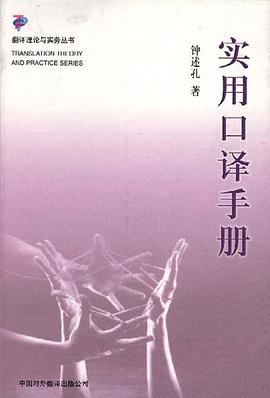
钟述孔,1949年毕业于四川大学英国语文学系。1950年入外交部亚洲司工作并兼任外交部高级翻译。1965年后,任北京外国语学院副教授、外交学院兼职教
授,后任联合国“中国译员培训部”兼职教授。1980年起,参与一系列国际会议,后出任联合国总部技术合作促进发展部政策与发展规划司司长。1990年任外交部国际司公使衔参赞;曾出席国际经济、发展、环境领域的一系列多边谈判会议;后任外交部环境问题特别顾问至今。目前仍受聘外交学院的兼职教授。
著作有:《英汉翻译手册》(商务印书馆,1980年)、《实用口译手册》(中国对外翻译出版公司,1981年、1999年增订版)、《21世纪的挑战和机遇》(世界知识出版社,1992年)、《国际经济关系和全球环境与发展》(英文,经贸大学出版社,1993年)等书。
目录信息
PART ONE INTRODUCTION
CHAPTER 1 INTRODUCTION TO INTERPRETATION
I . What Interpretation Means
II The Two Most Widely-Used Forms of
Interpretation
III. Prerequisites for Interpretation
IV . Basic Qualities Required of the Interpreter
V Dialectical-Materialism in Interpretation: Unity of
Accuracy and Smoothness is Our Goal
VI Genuine Knowledge Comes from Practice
PART TWO STEPPING-STONE TO COMPE-
TENCY IN CONSECUTIVE INTERPRETATION
CHAPTER 2 FAMILIARITY WITH THE STRUCTURE OF
SPOKEN ENGLISH
I . Stressing
II . Pronunciation
III . Intonation
IV. Rhythm
V . Word Order
VI Reading Aloud - Drills 1 and 2
CHAPTER 3 FAMILIARITY WITH POLITE FORMS IN
ENGLISH
EX. 1 Interpret the Following 80 Sentences
Asking Favours
Complaining
Apologizing
Polite Refusal
Polite Orders
Expressing Disapproval or Objection
CHAPTR 4 CONSTANT EXPOSURE IS OF VITAL
IMPORTANCE
I . Our Strong Points and Weak Points
II. Recognizing and Using the Correct Levels of
English
III. Absorption of Knowledge and Useful Expressions
EX. 2 A Passage in the Consultative Style (E - C)
EX. 3 A Passage in the Formal Style (E - C)
EX.4 Sight-interpreting an Important Memorandum of
Understanding
CHAPTER 5 PROPER HANDLING OF IDIOMS - THREE
RULES TO GO BY
I Render the Meaning, not Mere Words, in the Light
of the Context
II . Distinguish the Commendatory Term from the
Derogatory Term
III . Do Not Misuse Foreign Idioms in Interpreting
EX. 5 Interpret the Following Sentences into Chinese,
Paying Attention to the Handling of the Idioms
Therein
EX.6 Interpret the Following Chinese Idioms into
English
CHAPTER 6 NOTE-TAKING IN INTERPRETING
I . Two Special Features
II . Some Practical Hints
DI Practising Note-taking-Interpreting Procedural
Brief for Meetings of the Security Council
EX. 7 Interpret the Following Parts of Procedural Brief
(E-C)
EX.8 Interpret the Following Parts of Procedural Brief
(C-E)
CHAPTER 7 THE INTERPRETING OF FIGURES
I . Some Practical Difficulties for Chinese Interpreters
II . Practice Makes Perfect
EX.9 Interpreting Figures (C-E) - Practising Notetaking
at the Same Time
EX.10 Interpreting Figures: Emphasis on Accuracy in
Interpreting Dates
EX.11 Interpreting Abbreviations-Specialized Agencies
Related to the UN
EX.12 Interpreting figures (C-E)
EX.13 Interpreting figures (C-E)
EX.14 Interpreting figures (E-C) on Sectoral Growth
Rates of GDP (Countries in South Asia)
EX.15 Interpreting Figures (C-E)-Facts and Figures on
China's Achievements
PART THREE PRACTISING CONSECUTIVE
INTERPRETATION ON VARIOUS THEMES
CHAPTER 8 FEATURES OF PART THREE AND THE BASICS
OF INTERPRETATION TECHNIQUES
I . Basic Features of the 13 Chapters in Part Three
II . On the Basics of Interpretation Techniques
III. Weighing C - E and E - C, Consecutive and
Simultaneous
CHAPTER 9 PROTOCOL ROUTINE
EX.16 Background Notes 1: Diplomatic Style Fostered by
Premier Zhou (E- C)
EX. 17 Background Notes 2: Arrival of a Foreign Guest
(E-C)
EX.18 Meeting a Foreign Guest
EX.19 Making Appointment
EX.20 Making Appointments, Etc. (C- E)
CHAPTER 10 WEATHER AND DINNER PARTIES
EX.2l Background Notes 1: The Climate of Beijing
(E-C)
EX.22 Background Notes 2: On Dinner Parties(E - C)
EX.23 Talking about the Weather
EX.24 Entertaining Guests at Dinner
EX.25 More Dialogues for Consecutive Interpretation
(C-E)
CHARTER 11 ON CHINA' S AGRICULTURE
EX.26 Background Notes 1: A Brief Survey
EX.27 Background Notes 2: More Facts & Figures
EX.28 Background Notes 3: Visiting a Rural
Household
EX.29 Briefing on China's Agriculture
EX.30 Visiting a Peasant's Home
EX.31 Discussions on Modernization of China's
Agriculture
CHARTER 12 VISITING PLACES OF INTEREST
EX. 32 Background Notes 1: A Brief Account of History
of China
EX.33 Background Notes 2: On China's Geography and
Ethnic Groups
EX.34 Background Notes 3: Expanding Tourism
EX.35 A Brief Introduction to Beijing
EX.36 Sightseeing Trip to the Great Wall & Ming
Tombs
EX.37 Touring the Summer Palace
EX.38 Guilin to Yangshuo by Boat
EX.39 Initial Discussion on Environmentai Protection
CHARTER 13 DAY-TO-DAY CONVERSATION IN
DIPLOMATIC SERVICE
EX.40 Background Notes 1: Our Principled Stand in
International Relations
EX.41 Background Notes 2: China Adheres to Her
Independent Foreign Policy of Peace
EX.42 Background Notes 3: On Peace and
Development
EX.43 Asking the Foreign Office for Help
EX.44 On Overseas Chinese
EX.45 Expressing Regret & Lodging Protest
EX.46 Exchange of Views on Disarmament
EX.47 Discussions on Peace & Development and on
Issues of Human Rights
CHARTER 14 ON INTERNATIONAL ECONOMIC RELATIONS
AND INTERNAnONAL ECONOMIC COOPERATION
EX.48 Background Notes 1: On International Economic
Situation & Establishment of NIEO
EX.49 Background Notes 2: On Self-reliance
EX.50 Background Notes 3: Our Basic View-points on
International Economic Relations(C-E)
EX.51 One Session of the Trade Talks (covering also
discussions on TNCs and on trade
liberalization)
EX.52 Talking about Shipping Documents
EX.53 Exchanging for Chinese Money (at a hotel
bank)
EX.54 Conversation on Income Tax Concerning Foreign
Enterprises
EX.55 A Briefing on UN/DTCD
EX.56 Another Round of Trade Talks
CHARTER 15 ON CHINA'S INDUSTRIES
EX.57 Background Notes 1: A Brief Survey
EX.58 Background Notes 2: 40 Years-Facts and
Figures
EX.59 Background Notes 3: Make Foreign Things Serve
China
EX.60 Making New Breakthroughs in Reform of State-
owned Enterprises (SOEs)
EX6l An Introduction to a Machinery Factory
(C-E)
EX.62 Discussion at a Factory Reception Room
EX.63 A Casual Dialogue between Two Foreign
Visitors
EX.64 Further Discussion with a Foreign Guest
CHARTER 16 DISCUSSIONS ON ART & LITERATURE
EX.65 Background Notes 1: A High Ethical and Cultural
Level
EX.66 Background Notes 2: Some of Our Guiding
Principles
EX.67 Background Notes 3: On Policy Matters
(C-E)
EX.68 Going to a Concert
EX.69 OnChinese Painting
EX.70 On Music and Dance
EX.71 On Chinese Acrobatics
EX.72 Discussion on Chinese Arts and Crafts
CHARTER 17 VISITING A DIVISION OF PLA & DISCUSSION
ON RELATED MATTERS
EX.73 Background Notes 1: A Brief Account of the
History of PLA
EX.74 Background Notes 2: Strengthen the Modernization
of Our National Defence
EX.75 A Brief Account of the History of Division 196
EX.76 Discussion at the Divisional Headquarters
EX.77 Visiting Regiment 587
EX.78 Viewing Various Items of Military Training
EX.79 Talk by a Visiting Ex-pilot from USA
CHARTER18 ON CHINA'S POLITICAL SYSTEM
EX.80 Background Notes 1: On the Constitution of
People's Republic of China
EX.8l Background Notes 2: On the National People's
Congress(NPC)
EX.82 Background Notes 3: On the Origin and Function
of CPPCC
EX.83 Discussion on China's Political System
EX.84 On the Rights & Duties of the Citizens
of China
CHARTER 19 ON REVITALIZING THE NATION THROUGH
SCIENCE AND EDUCATION
EX.85 Background Notes 1: President Jiang on Vital Role
of S&T at the Turn of the Century
EX.86 Background Notes 2: On Implementation of the
Strategies of Revitalizing the Nation through
Science and Education and of Achieving
Sustainable Development
EX.87 Discussions on the Spark Programme and
the Torch Programme of China
EX.88 Discussion on China's New & High
Technology
CHARTER 20 ON SUSTAINABLE DEVELOPMENT
EX.89 Background Notes 1: Implementing the Strategy
of Revitalizing the Nation through Science &
Education and the Strategy of Sustainable
Development
EX.90 Background Notes 2: Development is the Absolute
Principle
EX. 91 Background Notes 3: UNEP Statement on
Sustainable Development
EX.92 Discussion on Environment and Development
EX.93 Discussion on China's Strategy of Sustainable
Development
CHARTER 21 ON INTERNATIONAL SITUATION AND
CHINA'S FOREIGN POLICY
EX.94 Jiang Zemin's Statement on International
Situation & Our Foreign Policy
EX.95 Deng Xiaoping on National Sovereignty and
Security
EX.96 Excerpts from President Jiang Zemin's Speech at
the U.N Special Meeting in Commenmoration
of 50 th Anniversary of U. N
EX.97 On Forging a Good-neighbourly Partnership of
Mutual Trust between China and ASEAN
EX.98 On China's Relations with Western Countries
EX.99 Chinese Premier Congratulating the 30th Anniversary
of the Founding of the Group of 77
EX. 100 Chinese Premier on Cooperation between Asia and
Europe
PART FOUR STEPPING-STONE TO
COMPETENCY IN SIMULTANEOUS
INTERPRETATION
CHARTER 22 PROFESSIONAL ETHICS AND EVALUATION
I. On the Professional Ethics
II On the Professional Evaluation
CHARTER 23 BASICS OF SIMULTANEOUS INTERPRETA
TION TECHNIQUE
I Striking a Proper Balance between Listening and
Speaking
II. Rendering the Idea, not Mere Words
III. Keeping the Situation under Control
IV Always Analysing the Peculiarities of Transference in
Simultaneous Interpretation
V. Always Trying to be Dialectical in Approach
VI Samples Showing Application of Basic Simultaneous
Interpretation Techniques
EX.101 A Sample Speech for Simultaneous
Interpreting
PART FIVE PRACTISING SIMULTANEOUS
INTERPRETATION
CHARTER 24 GENUINE KNOWLEDGE COMES FROM
PRACTICE
I. The Training Must be Severely Practical
II. Setting a Higher Demand on Ourselves
III. Features of Exercises in Part Five and Suggested
Procedure to be Followed
CHARTER 25 MORE ON PRACTISING SIGHT
INTERPRETATION
1. Four Points of Attention for Interpreter-trainees
EX. 102 Sample Texts for Practising Sight-interpretation,
Focusing on Properly Chopping the Sentences into
Sense Groups as Appropriate
CHARTER 26 EXERCISES ON USEFUL EXPRESSIONS
RELATING TO MEETINGS
EX.103 Simultaneous Interpretation of Stock-
phrases
EX.104 Simultaneous Interpretation of Procedural
Matters
EX.105 Exercising Right of Reply (by Chinese
Delegate)
EX. 106 Speech in Explanation of Vote (for C - E
Simultaneous Interpretation)
CHARTER 27 SPEECHES, ETC. ON POLITICAL AND
SECURITY MATTERS
EX.107 Agenda Item:The Situation in the Occupied Arab
Territories
EX.108 Peace in the Atomic Age --- TV Speech by
Einstein
EX.109 Speech by Chinese Representative
EX.110 Speech by Chinese Representative
EX.lll Statement by Ministry Spokesman on Protesting
Japan's Remarks on Surrounding Situation
CHARTER 28 ON ECONOMIC MATTERS
EX. 112 Speech by Barbados
EX.ll3 Speech on North-South Relations
(by UK Delegate)
EX.114 Speech by Leader of the Chinese Delegation
at Special Session of G.A.
EX.115 Properly Addressing Globalization - Initial
Comments on E/CN. 4/s11)0.2/1997/9
EX.116 Li Peng's Statememt at 1997 Annual Meeting
of World Bank and IMF
CHARTER 29 SPEECHES, ETC. ON SCIENTIFIC MATTERS
EX.117 Role of Science & Technology in
Development
EX.118 A Talk on Computers
EX.119 Speech by Chinese Delegate
EX.120 The Use of Atoms
EX.121 History of China's S&T Progress
CHARTER 30 LEGAL MATTERS RELATING TO U.N
ACTIVITIES
EX.122 Main Contents of Provisional Agenda
EX.123 Progress Report on Treaty-Making
EX 124 On Combating International Terrorism
EX.125 Views on D. 1/CP. 3 of FCCC Convention
CHARTER 31 GLOBAL ENVIRONMENT AND
DEVELOPMENT
EX.126 Adoption of the Preamble to Agenda 21
EX.127 On Global Environment and Development
EX.128 UNGA Statement of Commitment
EX.129 Speech by Minister Chen Yaobang(at COP3)
EX.130 Speech by Dr. Song Jian at the UNGA Special Session
PART SIX KEY TO THE INTERPRETATION
EXERCISES
Chapter 32 STRIVE FOR COMPETENCY BOTH IN
CONSECUTIVE AND IN SIMULTANEOUS
KEY TO EX.1
KEY TO EX.2
KEY TO EX.3
KEY TO EX.4
KEY TO EX.5
KEY TO EX.6
KEY TO EX.7
KEY TO EX.8
KEY TO EX.9
KEY TO EX.10
KEY TO EX.ll
KEY TO EX.12
KEY TO EX.13
KEY TO EX.14
KEY TO EX.15
KEY TO EX.16
KEY TO EX.17
KEY TO EX.18
KEY TO EX.19
KEY TO EX.20
KEY TO EX.21
KEY TO EX.22
KEY TO EX.23
KEY TO EX.24
KEY TO EX.25
KEY TO EX.26
KEY TO EX.27
KEY TO EX.28
KEY TO EX.29
KEY TO EX.30
KEY TO EX.31
KEY TO EX.32
KEY TO EX.33
KEY TO EX.34
KEY TO EX.35
KEY TO EX.36
KEY TO EX.37
KEY TO EX.38
KEY TO EX.39
KEY TO EX.40
KEY TO EX.41
KEY TO EX.42
KEY TO EX.43
KEY TO EX.44
KEY TO EX.45
KEY TO EX.46
KEY TO EX.47
KEY TO EX.48
KEY TO EX.49
KEY TO EX.50
KEY TO EX.5l
KEY TO EX.52
KEY TO EX.53
KEY TO EX.54
KEY TO EX.55
KEY TO EX.56
KEY TO EX.57
KEY TO EX.58
KEY TO EX.59
KEY TO EX.60
KEY TO EX.6l
KEY TO EX.62
KEY TO EX.63
KEY TO EX.64
KEY TO EX.65
KEY TO EX.64
KEY TO EX.67
KEY TO EX.68
KEY TO EX.69
KEY TO EX.70
KEY TO EX.71
KEY TO EX.72
KEY TO EX.73
KEY TO EX.74
KEY TO EX.75
KEY TO EX.76
KEY TO EX.77
KEY TO EX.78
KEY TO EX.79
KEY TO EX.80
KEY TO EX.8l
KEY TO EX.82
KEY TO EX.83
KEY TO EX.84
KEY TO EX.85
KEY TO EX.86
KEY TO EX.87
KEY TO EX.88
KEY TO EX.89
KEY TO EX.90
KEY TO EX.91
KEY TO EX.92
KEY TO EX.93
KEY TO EX.94
KEY TO EX.95
KEY TO EX.96
KEY TO EX.97
KEY TO EX.98
KEY TO EX.99
KEY TO EX.100
KEY TO EX.101
KEY TO EX.102
KEY TO EX.103
KEY TO EX.104
KEY TO EX.105
KEY TO EX.106
KEY TO EX.107
KEY TO EX.108
KEY TO EX.109
KEY TO EX.ll0
KEY TO EX.111
KEY TO EX.112
KEY TO EX.ll3
KEY TO EX.114
KEY TO EX.ll5
KEY TO EX.116
KEY TO EX.ll7
KEY TO EX.ll6
KEY TO EX.l19
KEY TO EX.120
KEY TO EX.121
KEY TO EX.122
KEY TO EX.123
KEY TO EX.124
KEY TO EX.125
KEY TO EX.126
KEY TO EX.127
KEY TO EX.128
KEY TO EX.129
KEY TO EX.130
POSTSCRIPT
Appendix A Brief Chinese Chronology
· · · · · · (收起)
读后感
用户评价
说实话,我拿到这本书时,主要期望是能找到一些提高“流利度”的练习方法,但这本书带给我的惊喜远不止于此。它真正厉害的地方在于,它似乎能洞察到学习者在面对高压口译任务时,那种心理上的巨大波动。书中有一部分内容专门聚焦于“心理建设与抗压训练”,作者非常坦诚地分享了自己在处理重大国际会议时的紧张感,以及如何通过一系列自我调节步骤来稳定情绪,保证输出的质量。这部分内容非常接地气,让我意识到,技术固然重要,但强大的心理素质才是决定成败的关键。我尝试着书里建议的几种“即时放松法”,比如在翻译间隙进行深呼吸或肌肉放松,效果出奇地好,至少能让我从刚才的紧张中抽离出来,为下一段任务做好准备。这本书不仅仅是关于“怎么说”,更是关于“如何成为一个能够稳定发挥的口译员”,这种全面的视角,非常难得。它让我明白,口译是一门身心合一的艺术。
这本书简直是为那些渴望在日常交流中提升口译技能的普通人量身打造的。我一直觉得口译是件高深莫测的事情,总觉得需要那种天才型的语言天赋,但这本书彻底颠覆了我的看法。它没有堆砌那些晦涩难懂的理论,而是用一种极其贴近生活的语言,手把手地教你如何观察、如何思考,以及最关键的——如何快速、准确地传达信息。比如,它里面有一章专门讲“情景适应性”,教你如何在嘈杂的商务宴会和宁静的私人会谈中切换你的思维模式和表达方式,这一点对我帮助特别大,因为我经常需要在不同的场合进行即时沟通。而且,它还提供了大量实用的“速记符号”和“语块拆解”技巧,这些小窍门非常实用,让你在听到长串信息时,不再慌乱,而是能迅速抓住核心要义。我甚至开始尝试在看新闻直播时,偷偷练习同步复述,感觉自己的反应速度和组织语言的能力都有了质的飞跃。这本书的精髓在于,它把一个看起来很专业的技能,拆解成了可以被任何人掌握的、可操作的步骤,读完之后,我真的觉得,只要肯下功夫,人人都能成为沟通的高手。
我得说,这本书在结构设计上真是别具一格,读起来完全没有传统工具书那种枯燥乏味的感觉。它更像是一位经验丰富的前辈,坐在你身边,耐心地为你剖析那些看似复杂的工作场景。最让我印象深刻的是它对“文化语境”的强调。很多时候,我们觉得口译失败,不是因为词汇量不够,而是因为错过了某个文化背景下的特定含义或言外之意。作者在这部分投入了大量的篇幅,通过一系列精彩的案例分析,展示了东西方思维方式的差异,比如在赞美和拒绝时,不同文化背景下的措辞禁忌。这种细致入微的观察,让这本书的价值远超一本单纯的“技巧指南”,它更像是一部跨文化交流的“行为艺术学”读本。我特别喜欢它对“沉默的力量”那一节的论述,它提醒我们,在某些特定的语境下,恰当的停顿比滔滔不绝的翻译更能体现专业性。这本书的深度和广度,足以让已经有一定基础的学习者也能从中发现新的启发点,简直是老手的新灯塔。
这本书的编排风格非常注重实践性,简直像是一本可以直接带进工作现场的“战术手册”。我最欣赏它的地方在于,它对不同场景下的“语域”变化做了极其细致的区分。比如,在描述如何处理法律文件翻译时的严谨性,和在描述如何进行市场营销推介时的生动活泼,两者之间的切换逻辑,作者给出了非常具体的范例和语气词替换指南。它不像很多教材那样,把所有东西混在一起讲,而是像一个模块化的工具箱,你可以根据自己当天的工作需求,快速找到对应的章节进行查阅和参考。我发现自己已经习惯在准备重要任务前,快速浏览一下关于“风险规避”和“争议处理”的那几页,这些实战经验的总结,比我过去几年独自摸索积累的要高效得多。这本书的实用性是毋庸置疑的,它真正做到了将理论转化为可立即执行的行动指南,是那种读完后,会忍不住在工作中反复翻阅的宝典。
我是在一个偶然的机会下接触到这本“实用口译手册”的,说实话,一开始我对这个名字有点不以为然,觉得可能又是泛泛而谈的入门读物。然而,翻开之后,我立刻被其中对“信息重构”的独到见解所吸引。作者并没有简单地教你“一对一”的直译方法,而是深入探讨了如何根据听众的预期和知识背景,对源语言信息进行精妙的“二次加工”——这个过程,才是高水平口译的灵魂。书中有许多关于如何处理比喻、俚语和技术术语的章节,特别是对那些没有直接对应词汇的复杂概念,作者提供了一套非常清晰的“概念映射与类比”框架。我记得有一个关于量子物理学的例子,书中展示了如何用听众熟悉的日常生活场景来解释抽象概念,简直是化腐朽为神奇。这本书的价值在于,它教会你如何成为一个“意义的传递者”,而不是仅仅一个“声音的搬运工”。对于那些想从“能翻译”跨越到“能说服”的人来说,这本书是不可或缺的阶梯。
方法很好,就是您这个范儿太out了
方法很好,就是您这个范儿太out了
很经典。
方法很好,就是您这个范儿太out了
很经典。