
具体描述
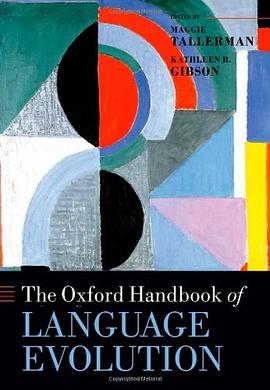
In The Oxford Handbook of Language Evolution, sixty leading scholars present critical accounts of every aspect of the field. The Volume's five parts are devoted to insights from comparative animal behaviour; the biology of language evolution (anatomy, genetics, and neurology); the prehistory of language (when and why did language evolve?); the development of a linguistic species; and language creation, transmission, and change. Research on language evolution has burgeoned over the last three decades. Interdisciplinary activity has produced fundamental advances in the understanding of language evolution and in human and primate evolution more generally. This book presents a wide-ranging summation of work in all the disciplines involved. It highlights the links in different lines of research, shows what has been achieved to date, and considers the most promising directions for future work. The Oxford Handbook of Language Evolution will be valued by everyone interested in one of the most productive and fascinating fields in natural and cognitive science.
作者简介
目录信息
PART 1: INSIGHTS FROM COMPARATIVE ANIMAL BEHAVIOUR
2. Introduction to Part 1: Insights from comparative animal behaviour
3. Language or Protolanguage? A review of the ape language literature
4. Primate Social Cognition as a Precursor to Language
5. Cooperative Breeding and the Evolution of Vocal Flexibility
6. Gesture as the Most Flexible Modality of Primate Communication
7. Have we Underestimated Great Ape Vocal Capacities?
8. Bird Song and Language
9. Vocal Communication and Cognition in Cetaceans
10. Evolution of Communication and Language: Insights from parrots and songbirds
11. Are Other Animals as Smart as Great Apes? Do Others Provide Better Models for the Evolution of Speech or Language?
PART 2: THE BIOLOGY OF LANGUAGE EVOLUTION: ANATOMY, GENETICS, AND NEUROLOGY
12. Introduction to Part 2: The Biology of Language Evolution: Anatomy, genetics, and neurology
13. Innateness and Human Language: A biological perspective
4. Evolutionary Biological Foundations of the Origin of Language: The co-evolution of language and brain
15. Genetic Influences on Language Evolution: An evaluation of the evidence
16. Not the Neocortex Alone: Other brain structures also contribute to speech and language
17. The Mimetic Origins of Language
18. Evolution of Behavioural and Brain Asymmetries in Primates
19. Toward an Evolutionary Biology of Language Through Comparative Neuroanatomy
20. Mirror Systems: Evolving imitation and the bridge from praxis to language
21. Cognitive Prerequisites for the Evolution of Indirect Speech
22. The Anatomical and Physiological Basis of Human Speech production: Adaptations and exaptations
PART 3: THE PRE-HISTORY OF LANGUAGE: WHEN AND WHY DID LANGUAGE EVOLVE?
23. Introduction to Part 3: The pre-history of Language: When and why did language evolve?
24. Molecular Perspectives on Human Evolution
25. The Fossil Record: Evidence for speech in early hominins
26. The Genus Homo and the Origins of 'Humanness'
27. The Palaeolithic Record
28. Musicality and Language
29. Linguistic Implications of the Earliest Personal Ornaments
30. Inferring Modern Language From Ancient Objects
31. Natural Selection-it is
32. The Role of Honimim Mothers and Infants in Prelinguistic Evolution
33. Infant-directed Speech and Language Evolution
34. Displays of Vocal and Verbal Complexity: A fitness account of language, situated in development
35. Tool-dependent Foraging Strategies and the Origin of Language
36. Gossip and the Social Origins of Language
37. Social Conditions for the Evolutionary Emergence of Language
PART 4: LAUNCHING LANGUAGE: THE DEVELOPMENT OF A LINGUISTIC SPECIES
38. Introduction to Part 4: Launching Language: The development of a linguistic species
39. The Role of Evolution in Shaping the Human Language Faculty
40. The Origins of Meaning
41. The Origins of Language in Manual Gestures
42. From Sensorimotor Categories and Pantomime to Grounded Symbols and Propositions
43. The Symbol Concept
44. Words Came First: Adaptations for word-learning
45. The Emergence of Phonetic Form
46. The Evolution of Phonology
47. The Evolution of Morphology
48. What is Syntax?
49. The Origins of Syntactic Language
50. The Evolutionary Relevance of More and Less Complex Forms of Language
51. Protolanguage
52. The Emergence of Language, From a Biolinguistic Point of View
PART 5: LANGUAGE CHANGE, CREATION, AND TRANSMISSION
53. Introduction to Part 5: Language Change, Creation, and Transmission
54. Grammaticalization Theory as a Tool for Reconstructing Language Evolution
55. Domain-general Processes as the Basis for Grammar
56. Pidgins, Creoles, and the Creation of Language
57. What Modern-day Gesture can tell us About Language Evolution
58. Monogenesis or Polygenesis: A single ancestral language for all humanity?
59. Prehistoric Population Contact and Language Change
60. Why Formal Models are Useful for Evolutionary Linguists
61. Language is an Adaptive System: The role of cultural evolution in the origins of structure
62. Robotics and Embodied Agents Modelling of the Evolution of Language
63. Self-organization and Language Evolution
64. Statistical Learning and Language Acquisition
65. A Solution of the Logical Problem of Language Evolution: Language as an adaptation to the human brain
· · · · · · (收起)
读后感
《牛津语言演化手册》(The Oxford Handbook of Language Evolution)由M.Tallerman和K.R.Gibson联合主编,于2012年由牛津大学出版社出版。全书共65章,分为五部分,收录了来自多个领域的62位学者的论文。首章为全书绪论,另有5章是各部分引言,为各部分第一章。该手册前两部分从动物...
《牛津语言演化手册》(The Oxford Handbook of Language Evolution)由M.Tallerman和K.R.Gibson联合主编,于2012年由牛津大学出版社出版。全书共65章,分为五部分,收录了来自多个领域的62位学者的论文。首章为全书绪论,另有5章是各部分引言,为各部分第一章。该手册前两部分从动物...
《牛津语言演化手册》(The Oxford Handbook of Language Evolution)由M.Tallerman和K.R.Gibson联合主编,于2012年由牛津大学出版社出版。全书共65章,分为五部分,收录了来自多个领域的62位学者的论文。首章为全书绪论,另有5章是各部分引言,为各部分第一章。该手册前两部分从动物...
《牛津语言演化手册》(The Oxford Handbook of Language Evolution)由M.Tallerman和K.R.Gibson联合主编,于2012年由牛津大学出版社出版。全书共65章,分为五部分,收录了来自多个领域的62位学者的论文。首章为全书绪论,另有5章是各部分引言,为各部分第一章。该手册前两部分从动物...
《牛津语言演化手册》(The Oxford Handbook of Language Evolution)由M.Tallerman和K.R.Gibson联合主编,于2012年由牛津大学出版社出版。全书共65章,分为五部分,收录了来自多个领域的62位学者的论文。首章为全书绪论,另有5章是各部分引言,为各部分第一章。该手册前两部分从动物...
用户评价
这本书的装帧设计简直是一场视觉盛宴,封面那种深沉的藏青色搭配烫金的字体,透露出一种经得起时间考验的学术厚重感。我拿到手的时候,那种沉甸甸的分量感就让人觉得物有所值。内页的纸张质感也无可挑剔,不是那种廉价的反光纸,而是略带米白的,印刷的字体清晰锐利,即便是那些复杂的图表和公式,也显得井井有条,阅读起来非常舒适,长时间盯着看也不会觉得眼睛疲劳。排版上看得出编辑团队下了大功夫,行间距和字距的把握恰到好处,使得整本书看起来既充实又不拥挤,阅读体验远超一般的学术专著。装订也十分牢固,感觉即便是频繁翻阅也不会轻易散页。光是摆在书架上,它就散发着一种知识的威仪,绝对是那种值得珍藏、可以伴随学者走过数年研究生涯的工具书。我特别欣赏他们对细节的执着,这种对物理呈现的重视,本身就暗示了内容质量的可靠性。初次接触这本书,首先带来的就是这种高级的、值得信赖的感官印象,让人迫不及待想深入探索其内部的知识宝库。
我得说,这本书的论述结构构建得极其精妙,它没有采用那种平铺直叙的线性叙事,而是像一个复杂的多维坐标系,将语言演化的各个面向——从生物学基础到文化传播,再到认知机制——巧妙地编织在一起。每一章节的作者似乎都在进行一场精心编排的对话,彼此之间既有继承和呼应,又有健康的学术张力与辩论。比如,某一节关于早期人类喉部结构变化的讨论,紧接着就无缝衔接到符号早期产生的社会学意义,这种跨学科的整合能力是很多同类手册望尘莫及的。阅读过程中,我经常发现自己需要不断地在不同章节间来回参照,这并非因为内容晦涩,而是因为作者们构建了一个逻辑闭环,使得理解一个分支的深度,必须依赖于对其他分支的把握。这种“互文性”极大地拓展了读者的思维边界,强迫你跳出单一学科的窠臼,以一种更加整体和系统性的眼光去看待语言这一宏大议题。它提供的不是结论的堆砌,而是一套严谨的、可供深入探究的思维框架。
这本书的广度令人叹为观止,它几乎涵盖了语言起源与演化研究领域内所有主要的理论流派和实证路径。你很难想象如何能将如此庞杂的、横跨古人类学、神经科学、计算建模和比较语言学的知识点,有效地压缩进一本“手册”之中。令人印象深刻的是,它对一些新兴或边缘的研究方向也给予了足够的篇幅,比如利用复杂系统理论来模拟词汇扩散的模型,或者近期关于基因与语言能力的关联性研究。这表明编纂者们不仅是对历史上的经典理论了如指掌,对当下最前沿的争论点也保持着高度的敏感性。对于一个想要快速建立起对该领域全景式认知的初学者来说,它无疑是最佳的起点;而对于深耕多年的专家而言,书中那些针对特定子领域深入挖掘的专题章节,也提供了重新审视自己研究盲区的机会。与其说这是一本书,不如说它是一个高度浓缩的、不断更新的知识地图,指引读者在广阔的研究海洋中航行。
我个人非常欣赏这本书在处理理论争议时所采取的平衡立场。在语言演化这个领域,各种假说之间的“战争”从未停歇,从“先声夺人”的理论到“慢热型”的认知发展论,每一种都有其坚实的拥护者。这本书的编者们显然没有偏袒任何一方,而是提供了一个极为公正的平台。他们会清晰地梳理A学派的核心论点、关键证据,然后紧接着介绍B学派如何通过新的实验数据来反驳或修正A的观点。这种呈现方式,极大地提升了读者批判性思维的能力。它教会你的不是“什么”是正确的,而是“如何”去判断什么可能是更有力的解释。阅读时,你会感觉到自己不是在被动接受信息,而是在一个高水平的学术研讨会上,听取各方精英的论辩。这种对学术诚信和多角度考察的坚持,是任何一本严肃学术参考书的灵魂所在。
从实用性的角度来看,这本书的索引和交叉引用系统达到了教科书级别的完善程度。这对于需要频繁查找特定概念或特定学者的研究者来说,是决定性的优势。我尝试随机抽取了几个关键词,比如“FOXP2基因”、“社会学习”、“替代性模仿”,系统都能在极短的时间内定位到所有相关的讨论段落,而且注解详尽到可以追溯到原始文献的出处。此外,章节末尾的“推荐阅读”列表简直是一份黄金书单,它精准地为每一个主题推荐了后续可以深入钻研的经典文献和最新的重量级论文。这极大地节省了我在文献海洋中筛选的时间。可以说,这本书不仅仅是知识的载体,更是一个高效的科研导航仪,它确保了读者在最短的时间内,能够以最有效率的方式,从宏观概念准确地过渡到微观细节的检索与掌握。
很全面且很细致的一本handbook
很全面且很细致的一本handbook
很全面且很细致的一本handbook
很全面且很细致的一本handbook
很全面且很细致的一本handbook