具体描述
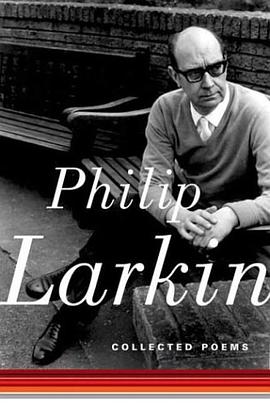
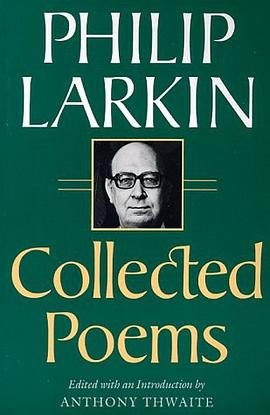
This entirely new edition brings together all of Philip Larkin's poems. In addition to those in Collected Poems (1988), and in the Early Poems and Juvenilia (2005), some unpublished pieces from Larkin's typescripts and workbooks are included, as well as verse (by turns scurrilous, satirical, affectionate, and sentimental) tucked away in his letters. The manuscript and printed sources have been scrutinized afresh; more detailed accounts than hitherto available of the sources of the text and of dates of composition are provided; and previous accounts of composition dates have been corrected. Variant wordings from Larkin's typescripts and the early printings are recorded.
For the first time, the poems are given a comprehensive commentary. This draws critically upon, and substantially extends, the accumulated scholarship on Larkin, and covers closely relevant historical contexts, persons and places, allusions and echoes, and linguistic usage. Due prominence is given to the poet's comments on his poems, which often outline the circumstances that gave rise to a poem, or state what he was trying to achieve. Larkin played down his literariness, but his poetry enrichingly alludes to and echoes the writings of many others; Archie Burnett's commentary establishes him as a more complex and more literary poet than many readers have suspected.
Review
"More often than any other English poet since the war, Larkin gave us lines that it is unlikely we'll be able to forget."" --"Ian Hamilton, "The Times "(London)
"Larkin is resolute, forthright, witty, and gloomy. This is the man who famously said that deprivation was for him what daffodils were for Wordsworth. Yet surely the results of this life, in the shape of his poems, are gifts, not deprivations."" --"Donald Hall, "The New Criterion"
Praise for "The Complete Poems"
"["The Complete Poems"] is a must-have for anyone who enjoys Larkin . . . Burnett's notes offer a fascinating, compendious "vade mecum "into Larkin's poetic world. Full of reassuring exactitude about variants, and extensive reference to the poet's own comments on the work, they are most stimulating of all when they cite buried sources . . . A lot of thought as well as an enormous amount of research has clearly gone into this [volume]."
--Fiona Sampson, "The Independent"
"[Archie] Burnett presents a very different picture of Larkin from the one by which he came to be known; one that is far more literary, and occasionally far more amusing. A reader can now trace Larkin's development from his allusive [early efforts] . . . to his more mature, better-known works." --"The Economist"
"Apart from representing an unprecedented Larkin poetic storehouse, the other glory of "The Complete Poems "is Burnett's dazzlingly detailed commentary . . . One of the chief pleasures . . . is tracing the emergence of one of English poetry's most distinctive poetic voices . . . A landmark volume, a wonder-book of verse by one of the art form's best practitioners of the last hundred years." --Terry Kelly, "The London Magazine"
Praise for Philip Larkin:
"More often than any other English poet since the war, Larkin gave us lines that it is unlikely we'll be able to forget."" --"Ian Hamilton, "The Times "(London)
"Larkin is resolute, forthright, witty, and gloomy. This is the man who famously said that deprivation was for him what daffodils were for Wordsworth. Yet surely the results of this life, in the shape of his poems, are gifts, not deprivations."" --"Donald Hall, "The New Criterion"
Book Des cription
The Complete Poems of Philip Larkin in an entirely new edition that brings together all of Larkin's poems in addition to some unpublished pieces.
作者简介
Philip Arthur Larkin CH CBE FRSL (9 August 1922 – 2 December 1985) was an English poet, novelist and librarian. His first book of poetry, The North Ship, was published in 1945, followed by two novels, Jill (1946) and A Girl in Winter (1947), and he came to prominence in 1955 with the publication of his second collection of poems, The Less Deceived, followed by The Whitsun Weddings (1964) and High Windows (1974). He contributed to The Daily Telegraph as its jazz critic from 1961 to 1971, articles gathered in All What Jazz: A Record Diary 1961–71 (1985), and he edited The Oxford Book of Twentieth Century English Verse (1973).[1] His many honours include the Queen's Gold Medal for Poetry.[2] He was offered, but declined, the position of Poet Laureate in 1984, following the death of Sir John Betjeman.
After graduating from Oxford in 1943 with a first in English language and literature, Larkin became a librarian. It was during the thirty years he worked with distinction as university librarian at the Brynmor Jones Library at the University of Hull that he produced the greater part of his published work. His poems are marked by what Andrew Motion calls "a very English, glum accuracy about emotions, places, and relationships", and what Donald Davie described as "lowered sights and diminished expectations". Eric Homberger (echoing Randall Jarrell) called him "the saddest heart in the post-war supermarket"—Larkin himself said that deprivation for him was what daffodils were for Wordsworth.[3] Influenced by W. H. Auden, W. B. Yeats, and Thomas Hardy, his poems are highly structured but flexible verse forms. They were described by Jean Hartley, the ex-wife of Larkin's publisher George Hartley (the Marvell Press), as a "piquant mixture of lyricism and discontent",[4] though anthologist Keith Tuma writes that there is more to Larkin's work than its reputation for dour pessimism suggests.[5]
Larkin's public persona was that of the no-nonsense, solitary Englishman who disliked fame and had no patience for the trappings of the public literary life.[6] The posthumous publication by Anthony Thwaite in 1992 of his letters triggered controversy about his personal life and political views, described by John Banville as hair-raising, but also in places hilarious.[6] Lisa Jardine called him a "casual, habitual racist, and an easy misogynist", but the academic John Osborne argued in 2008 that "the worst that anyone has discovered about Larkin are some crass letters and a taste for porn softer than what passes for mainstream entertainment".[7] Despite the controversy Larkin was chosen in a 2003 Poetry Book Society survey, almost two decades after his death, as Britain's best-loved poet of the previous 50 years, and in 2008 The Times named him Britain's greatest post-war writer.[8]
In 1973 a Coventry Evening Telegraph reviewer referred to Larkin as "the bard of Coventry",[9] but in 2010, 25 years after his death, it was Larkin's adopted home city, Kingston upon Hull, that commemorated him with the Larkin 25 Festival[10] which culminated in the unveiling of a statue of Larkin by Martin Jennings on 2 December 2010, the 25th anniversary of his death.[11][12][13] On 2 December 2016, the 31st anniversary of his death, a floor stone memorial for Larkin was unveiled at Poets' Corner in Westminster Abbey.[14]
目录信息
读后感
要么让生命完美,要么让作品完美。我当然理解这句话的意思,但是往往生命做不到完美的人,作品也无法做到完美的。作品不过是我们对于世界的认知格局的一种反映,它携带着我们的行动力,我们对于自己处境的条分缕析的结论,我们的同情心的限度和我们观察事物的能力,而这些也都...
● 迄今为止最全面的拉金诗全集。囊括了包括打字稿、诗歌笔记中的大量未发表作品,以及一些夹在书信里的短诗韵文在内的拉金的全部诗歌作品。 ●由著名学者亚齐·伯内特首次为拉金诗歌作品做了全面评注,向我们确认了拉金是一个比大多数读者预想的更丰富、更具文人气息的诗人。 ...
购读过舒丹丹翻译拉金诗集《高窗》,虽然普遍反映良好,却因读时不够用心,没有留下太深印象。自得知诗人阿九在翻译拉金诗集,一直颇为期待,希望翻译出更胜一筹的译本。收书将两者粗略对读,发现除了评注部分较有参考价值,诗歌主体的中文表达(我不懂外语,只论中文诗歌表达...
要么让生命完美,要么让作品完美。我当然理解这句话的意思,但是往往生命做不到完美的人,作品也无法做到完美的。作品不过是我们对于世界的认知格局的一种反映,它携带着我们的行动力,我们对于自己处境的条分缕析的结论,我们的同情心的限度和我们观察事物的能力,而这些也都...
要么让生命完美,要么让作品完美。我当然理解这句话的意思,但是往往生命做不到完美的人,作品也无法做到完美的。作品不过是我们对于世界的认知格局的一种反映,它携带着我们的行动力,我们对于自己处境的条分缕析的结论,我们的同情心的限度和我们观察事物的能力,而这些也都...
用户评价
Philip Larkin的诗集,我常常在午后的阳光下翻阅,那些文字,总有一种独特的魔力,能够将我带入一个既熟悉又陌生的世界。他笔下的世界,总是弥漫着一种淡淡的忧伤,一种对生活无处不在的失落感的体认。但他又不像其他一些诗人那样,沉溺于悲伤的情绪,而是用一种冷静、理性的态度去审视这一切。他就像一个观察者,静静地看着人生的潮起潮落,看透了那些虚假的繁荣,看穿了那些转瞬即逝的欢愉。他的诗歌,不是那种能让你产生共鸣、热泪盈眶的作品,更像是你在深夜里,独自一人,对着窗外的月光,默默地思考人生。他的语言,简洁而有力,没有多余的修饰,却能精准地传达出他想要表达的情感。我喜欢他那种对现实的直接呈现,他毫不避讳地描绘生活中的种种不如意,也毫不掩饰他对人性的洞察。读他的诗,你会有一种被点醒的感觉,仿佛那些曾经模糊不清的情感,在他笔下,变得清晰起来。
我一直认为,Philip Larkin的诗歌,是中国读者不太容易一下子理解的类型,因为他身上有着浓厚的英国式的含蓄和幽默。但他独特的魅力,就在于他能够用一种看似漫不经心的笔触,勾勒出生活中最真实的,甚至是有些残酷的一面。他的诗歌,总是带着一种对社会现实的观察,对个体在群体中的疏离感的描绘,以及对时间流逝的无奈。他不像那些抒发壮志豪情的诗人,他的关注点,更多地落在普通人身上,落在那些被生活琐事磨平棱角的灵魂里。我特别欣赏他那种对细微之处的捕捉,比如一个微小的动作,一句无心的话语,或者是一个平凡的场景,在他手中,都能被赋予深刻的含义。他的诗歌,不是那种能让你瞬间感受到激情的作品,更多的是一种温火慢炖,让你在阅读的过程中,慢慢地品味其中的味道,然后,在某个不经意的时刻,被深深地震撼。他的诗,就像是一位老朋友,用一种平和的口吻,告诉你生活的真相,让你在清醒中,找到自己的位置。
我一直觉得,Philip Larkin的诗歌,就像是英国阴沉天气里的一杯烈酒,入口微苦,却后劲十足。他似乎有一种天赋,能将最普通的生活场景,挖掘出最深层的情感内核。他写爱情,写得不带一丝浪漫的滤镜,更多的是一种现实的考量,一种带着忧伤的妥协。他写死亡,写得那么坦然,那么直接,仿佛那只是生活中不可避免的一部分,没有丝毫的矫揉造作。他的诗句,总是显得那么不经意,却又字字珠玑,仿佛是从他的内心深处自然流淌出来的。我尤其喜欢他那种对日常细节的精准描摹,比如一个老人的沉默,一个孩子的玩耍,或者是一辆旧火车的隆隆声,这些在他手中,都变成了一幅幅鲜活的画面,充满了生活的气息。读他的诗,你会感觉到一种与他心灵的连接,仿佛他就是坐在你身边,用一种平和却又充满力量的语气,诉说着他的人生感悟。他的诗歌,不是让你去仰望星空,而是让你低头审视脚下的土地,去感受那份沉甸甸的真实。
Philip Larkin的诗集,我读过不少,但《The Complete Poems of Philip Larkin》这本书,我总觉得像是打开了一个被精心锁上的抽屉,里面藏着他整个灵魂的碎片,有些甚至有些刺眼。初读 Larkin,你可能会被他那种冷峻、讥诮的语调所吸引,仿佛他坐在那里,用一把手术刀般精准的语言,解剖生活中的庸常与失落。他的诗歌里,没有华丽的辞藻,没有宏大的叙事,更多的是对寻常景象的细致观察,对人类普遍情感的深刻洞察。比如,他笔下的通勤人群,带着疲惫和麻木,他们的生活仿佛被固定在了一个永无止境的循环里,而 Larkin却能从中捕捉到一丝丝的孤独,一丝丝的绝望,以及,偶尔闪现的,那微不足道却又无比珍贵的希望。他的诗,不是那种让你读了就热血沸腾、心潮澎湃的作品,更像是一种默默的陪伴,一种与你一同走在昏暗小径上的低语。你会在他的字里行间,看到自己过去的影子,看到自己曾经的犹豫,看到自己如今的无奈。这是一种近乎残酷的诚实,但正是这种诚实,才让他的诗歌具有如此强大的生命力,能够穿越时空,触动每一个读者的心弦。
说实话,一开始接触 Larkin的作品,有点被他那种“丧”和“冷”给震住了。他写的东西,总给人一种“生活就是这样了,没什么好大惊小怪的”的架势,但细品下去,却发现里面藏着太多东西。他的诗,就像是在你最平淡无奇的生活缝隙里,悄悄地塞进一颗小小的,带着尖刺的礼物。他观察世界的方式,总是带着一种旁观者的疏离感,但这种疏离感,反而让他看得更清楚,更能直击人性的本质。他写那些日常的场景,比如一个阴雨绵绵的下午,一个空荡荡的火车站,或者是一个无人问津的酒吧,这些看似寻常的画面,在他笔下却被赋予了特殊的意义。他善于捕捉那些被忽略的细节,那些转瞬即逝的情绪,然后将它们放大,让你不得不去面对。他的诗歌,不是那种能让你瞬间获得启迪的“鸡汤”,更多的是一种让你在安静中反思的力量。你可能会觉得他有点刻薄,有点悲观,但你又无法否认,他所描绘的,很多时候就是我们真实的生活状态。他的诗,就是一面镜子,照出我们不愿面对的自己,也让我们在清醒中,学会如何更好地与自己相处。
Sexual intercourse began/In nineteen sixty-three/(which was rather late for me)-/Between the end of Chatterley ban/And the Beatle's first LP
读的也是FSG版~
在英国买的第一本书
读的也是FSG版~
在英国买的第一本书