
具体描述
作者简介
目录信息
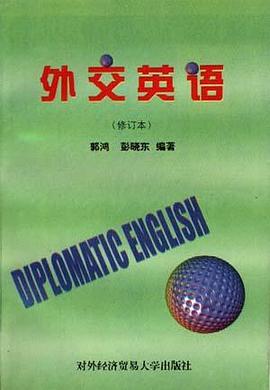
LANGUAGE - A STYLISTIC
STUDY OF DIPLOMATIC ENGLISH
1. Diplomacy and Diplomatic Language
1.1 Linguistic Guide to the Study ofDiplomatic Language
1. 2 Definition of 'Diplomacy' and the Important RoleLanguage Plays in Diplomacy
l. 3 The Origin and Evolution of Modern Diplomacy and Its Cuitural Background and the Evolution of Diplomatic Language
1. 3.1 The Origin of Diplomacy
1. 3. 2 The Cultural Background of Modern Diplomacy
l. 3. 3 The Evolution of Diplomacy and Diplomatic Language
1 4 Diplomatic Activities
1 4.1 Functions of Diplomatic Activities
1 4. 2 Diplomatic Rules and Procedures
1. 5 Questions
The Past and the Present of Diplomatic
Language
Diplomatic Language
Guarded Understatement
Technical Terms in Diplomacy
The Actual Language Used in Diplomacy
Latin
French
English
Questions
Main Features of Diplomatic Activities and
Diplomatic Language
Main Features of Diplomatic Activities
Conservativeness
Formalism
Rigid Hierarchy and Precedence
Causes of the Above-mentioned Features
Linguistic Analysis of Diplomatic Language
Users of Diplomatic Language (dialect)
Uses of Diplomatic Language (register)
Field of Discourse of Diplomatic Language
Tenor of Discourse of Diplomatic Language
Mode of Discourse (medium) of
Diplomatic Language
General Features of Diplomatic Language
Trend of Diplomatic Language
Questions
4 Varieties of Diplomatic Language and Their Respective Linguistic Features
4.1 Functions of Language
4.2 Classification of Diplomatic Language in Terms of Function
4.3 Varieties of Diplomatic Language and Their Respective Linguistic Features
4.3.1 Conversation on Social Occasions (phatic function)
4.3.2 Speeches or Talks on Diplomatic Occasions (conative, emotive and poetic functions)
4.3.3 Diplomatic Documents concerning Protocol Matters (phatic and emotive functions)
4.3.4 Diplomatic Documents for Publicity (conati-ve function)
4.3.5 Diplomatic Documents for Communication (referential function)
4.3.6 Diplomatic Documents for Identification (referential function)
4.3.7 Legal Diplomatic Documents (referential and metalinguistic functions)
4.4 Questions
5 Conclusion
PART TWO SELECTED READINGS IN
DIPLOMATIC ENGLISH
(CLASSIFIED IN TERMS
OF FUNCTION)
1. CONVERSATION ON SOCIAL OCCASIONS (phatic function, omitted)
2. SPEECHES OR TALKS ON DIPLOMATIC OCCASIONS (conative, emotive and poetic functions)
2.1 Discussion on the Situation in Bosnia and Herzegovina at Security Council (Dec. 18, 1997)
2.2 Qian Qichen Talks about International Issues and China's Foreign Policies (March 12,1997)
2.3 Towards a China-US Relationship for the 21st Century (April 29,1997)
2.4 Speech by President Jiang Zemin at the White House State Dinner (October 29, 1997)
2.5 Remarks of President Clinton at Arrival Ceremony (October 29, 1997)
2.6 President Nixon's Toast at the Banquet Given by Premier Zhou Enlai (Feb. 21, 1972)
2.7 President Nixon's Toast for Reciprocal Banquet (Feb. 25, 1972)
2.8 Questions
DIPLOMATIC DOCUMENTS CONCERNING
MATTERS OF PROTOCOL (phatic and
emotive functions)
Speech on Presentation of Credentials
by Chinese Ambassador to India
(Translation)
Chinese Leader's Condolences on the Passing
Away of Ohira (June 12, 1980)
To Express Sympathy over an Assassination
Attempt (October 8 1959)
Telegram of Thanks to President Clinton by
President Jiang Zemin (November 3 1997)
Questions
DIPLOMATIC DOCUMENTS FOR PUBLICITY
(conative function)
Statement of the Government of the People's
Republic of China on the Complete prohibition and
Thorough Destruction of Nuclear Weapons
(Translation) (July 31, 1963)
Joint China-US Statement
(October 29, 1997)
Joint Sino-French Declaration on the
Establishment of a Comprehensive Partnership
(May 16, 1997)
Announcement on President Nixon's Visit to China
(January 15, 1971)
Joint Communique between the People's Republic of
China and the United States of America
(Issued in Shanghai, February 28, 1972)
Joint Communique on the Establishment of Diplomatic
Relations between the People's Republic of China and
the United States of America
(January 1, 1979)
Foreign Ministry News Briefings
(November 10 12, 1998)
Questions
DIPLOMATIC DOCUMENTS FOR
COMMUNICATION (referential function)
Formal Note to Notify the Arrival of a Charge
d'affaires a i. (to dean of the diplomatic corps)
(Translation)
Verbal Note to Inform Another Embassy of
the Establishment of an Embassy and
the Designation of its Charge
d'affaires a. i (Translation)
Formal Diplomatic Letter to Invite
a Leader for a Visit (Translation)
Informal Diplomatic Letter to Request Assistance
in Providing Facilities for Covering a Visit
Personal Message from Prime Minister Nehru to
Premier Zhou Enlai (September 14, 1956)
Letter from Premier Zhou Enlai to Prime Minister
Nehru (October 19, 1956)
Memorandum Concerning a Protocol Retorm
(Translation)
Telegram to Notify Decision to Establish
Diplomatic Relations
Questions
DIPLOMATIC DOCUMENTS FOR
IDENTIFICATION (referential function)
Sample of a Standard Passport of
the United States of America
Letter of Credence for Ambassador of
Ceylon Accredited to China
Full Powers
A Chinese Example (translation)
A British Example
An American Example
Letter of Introduction (Translation)
Letter of Appointment of a Consul-General
Exequatur
Questions
LEGAL DIPLOMATIC DOCUMENTS
Treaty on European Union (Extracted)
(Maastricht, February 1992)
Sino-American Trade Agreement
(July 7, 1979)
Agreement between the Government of the Republic
of Austria and the Government of the People's
Republic of China Concerning Cooperation
in Matters of Health (May 13, 1998)
Protocol on Economic Cooperation between China
and Australia (September 22 1981)
7. 5 Charter of the United Nations (Abridged) (July 26. 1945)
7. 6 Vienna Convention on Diplomatic Relations (April 18 1961)
7. 7 Universal Declaration of Human Rights (adopted and
proclaimed by UN General Assembly resolution
217 A(III) of December 10, 1948)
7. 8 Notes Exchanges between China and
Japan on Japanese Loans to China
(September 4 1997)
7. 9 Memorandum of Understanding Concerning
the Construction of the New Airport
in Hong Kong and Related Questions
(September 3, 1991)
7. 10 Regulations of the People's Republic of China
on Diplomatic Privileges and Immunities
(September 8, 1986)
7.11 Notice to Military Attaches of Foreign Embassies
in the People's Republic of China
(August 1, 1988)
7. 12 Power of Attorney, Certificate and
Samples of Authentication
7.13 Questions
· · · · · · (收起)
读后感
用户评价
这本书的“实用性”绝对是顶级的,这一点我必须强调。它不仅仅停留在理论层面,而是像一个经验丰富的外交官在手把手地教你“如何做”。书中详细拆解了各种复杂的外交信函、会议纪要乃至即兴发言的结构和常用句式,这些都是在其他同类书籍中难以找到的宝贵经验。我特别喜欢它所提供的“替代表达库”,当你想表达一个强硬立场但又不想显得过于咄咄逼人时,书里提供的几种不同强弱程度的表达方式,简直是救急良方。这种细致入微的指导,让我感觉自己仿佛拥有了一套随时待命的“语言武器库”。而且,作者在内容更新上看得出非常用心,很多例子都引用了近期的国际动态,保证了知识的时效性和相关性。对于职场人士来说,这本书简直是一部案头必备的参考书,它的价值会随着你的经验增长而不断显现。
我发现这本书最吸引我的地方在于它对“语境”的强调。作者似乎非常执着于告诉读者,在外交场合,脱离了特定的历史背景、权力结构和社会文化,任何语言表达都是苍白无力的。书中对不同文化背景下,同一句话可能产生的截然不同的解读进行了细致的对比,这对我这样一个经常需要与不同背景人士打交道的人来说,简直是醍醐灌顶。我以前总以为只要掌握了标准的“外交辞令”就万事大吉,但这本书让我明白,真正的外交艺术在于对“人”的深刻理解。里面的分析,有时候甚至带有一丝哲学思辨的味道,探讨了沟通的本质和人类交流的局限性。这种深层次的探讨,使得这本书的阅读体验远远超越了一般的实用指南。它促使我反思自己的沟通习惯,并尝试用更具同理心和策略性的方式去构建我的表达。这本书的深度和广度,绝对值得我反复研读。
这本书的排版和整体设计给我留下了非常深刻的印象。它没有采用那种刻板的教科书式的布局,而是更像一本精心制作的杂志,图文并茂,视觉上非常舒适。我尤其欣赏作者在处理专业术语时所采取的策略。他们没有生硬地堆砌复杂的词汇,而是通过非常清晰的图表和实例来辅助解释,使得即便是对于初次接触国际关系术语的读者来说,理解起来也毫无压力。这种注重用户体验的设计理念,贯穿了全书,让人在长时间阅读后也不会感到疲劳。而且,书中的案例选择非常贴近现实,很多都是近年来发生在我们身边的国际事件,这使得理论和实践的结合更为紧密。每次翻阅,我都能从中找到新的感悟,发现自己之前可能忽略掉的语言细节和背后的外交含义。这本书的价值在于它提供了一个多维度的学习框架,鼓励读者主动去探索和发掘,而不是被动地接受信息。对于希望提升自己跨文化交际能力的人来说,这本书无疑是一个极佳的起点,它提供的视角是如此的丰富和多变。
这本书的语言风格真是让人耳目一新,充满了对国际事务那种独到的洞察力。作者的叙事方式非常老练,仿佛带领我们置身于那些高规格的外交场合之中。我特别喜欢他对那些微妙的语言艺术的描摹,那种如何用最恰当的词汇去化解紧张局势,或者如何通过措辞的微妙变化来传递坚定的立场,都写得入木三分。读起来,感觉不仅仅是在学习“英语”,更像是在接受一堂关于国际政治和沟通策略的进阶课程。那些案例分析,每一个都像是经过精心挑选的,不仅展示了语言的实际运用,更深层次地揭示了不同文化背景下交流的复杂性。这本书的结构安排也十分巧妙,从宏观的理论基础到具体的案例剖析,逻辑层层递进,让人很容易跟上作者的思路,并且在阅读过程中不断产生新的思考。我常常会在读完一段后停下来,琢磨一下自己如果处在那个情境中,会如何表达,这极大地提升了我的批判性思维能力。总而言之,这是一本让人受益匪浅的书,不仅仅是语言工具书,更是一部关于世界运作的智慧之书。
从文学性的角度来看,这本书的处理方式也相当高明。虽然主题是严肃的外交和语言,但作者的文字功底扎实,叙述流畅,没有丝毫的晦涩难懂。他运用了大量的排比、对比等修辞手法,使得那些原本枯燥的规则和原则,读起来也充满了节奏感和力量。尤其是作者在总结陈词时所展现出的那种沉稳而有力的文风,极具感染力,让人在合上书本之后,依然能感受到那种来自专业领域的自信和权威感。阅读的过程,与其说是学习,不如说是一种沉浸式的体验,作者仿佛是一位优秀的讲故事者,将外交的复杂性编织成了一个个引人入胜的故事线索。这种将知识性与艺术性完美结合的写作手法,让这本书在众多专业书籍中脱颖而出,成为了一本我愿意向所有人推荐的佳作,因为它不仅教会了你“说什么”,更重要的是让你体会到了“如何说出影响力”。