
具体描述
作者简介
目录信息
Preface xi
Chapter l Introduction to Communication Networks
1.1 What Are Communication Networks?
1.2 Why Should You Leam about Communication Networks?
1.3 What Should You Leam about Communication Networks?
1.4 Evolution of Communication Networks
1.4.1 Telephone Network
1.4.2 Computer Networks
1.5 Organization of the Book
Summary
Chapter 2 The Way Networks Work
2.1 Ethemet
2.1.1 Shared Ethemet: Hubs and Collisions
2.1.2 Discovering Addresses: ARP and RARP
2.1.3 Interconnecting Ethemets: Switches and Routers
2.2 Intemet
2.2.1 AnExample
2.2.2 Routing: OSPFandBGP
2.2.3 Transmission Control Protocol
2.2.4 Client/ServerApplications
2.3 Asynchronous Transfer Mode
2.3.1 MainFeatures
2.3.2 Routing
2.3.3 Control of QoS: LeakyBuckets
2.4 Network Architecture
2.4.1 Layered Architecture
2.4.2 End-to-End Services
2.4.3 Physical View
2.5 Complement l: Insights behind the Information Revolution
2.5.1 The Digital Revolution
2.5.2 Source and Channel Coding
2.5.3 Packet Switching
Summary
Problems
References
Chapter 3 Intemet
3.1 ABriefHistory
3.2 Architecture
3.2.1 LAN-Link Layer
3.2.2 Network Layer ,
3.2.3 Transport
3.2.4 Applications
3.3 Names and Addresses
3.3.1 Names
3.3.2 Addresses
3.4 Intemet Protocol
3.4.1 IP Datagrams and lCMP
3.4.2 OSPF
3.4.3 BGP
3.4.4 PlugandPlay: DHCP
3.4.5 Mobile IP
3.5 End-to-End Transmission
3.5.1 Overview
3.5.2 Retransmission Protocol
3.5.3 TCP
3.5.4 UDP
3.6 Complement l: Link Protocols
3.6.1 SLlP
3.6.2 PPP
3.7 Complement 2: Analysis of Dijkstra's Shortest Path Algorithm
3.7.1 Definition
3.7.2 Shortest Paths
3.8 Complement 3: Other Routing Algorithms
3.8.1 Bellman-Ford
3.8.2 Spanning Tree
3.9 Complement4:IPv6
3.10 Complement 5: Multicast Routing
3.10.1 Flooding
3.10.2 Spanning Tree Routing
3.10.3 Reverse-Path Forwarding
3.10.4 Core-Based Trees
3.10.5 MOSPF
3.10.6 PIM
Summary
Problems
References
Chapter 4 Local Area Networks
4.1 Architecture and Characteristics
4.1.1 Architecture
4.1.2Characteristics of LANs
4.2 Ethernet and IEEE 802.3
4.2.1 Layout
4.2.2 Physical Layer
4.2.3 MAC
4.2.4 Switched lOBASE-T
4.2.5 lOOBASE-T
4.2.6 Gigabit Ethemet
4.3 Token Ring Networks
4.3.1 Layout
4.3.2 Physical Layer
4.3.3 MAC
4.3.4 Interconnecting Token Rings
4.4 FDDI
4.4.1 Layout
4.4.2 Physical Layer
4.4.3 MAC
4.4.4 Station Management
4.5 Wireless LANs
4.5.1 Architecture
4.5.2 Physical Layer
4.5.3 Hiperlan
4.5.4 IEEE802.11
4.6 Logical Link Control
4.7 Complement 1: Latency of LANs
4.8 Complement 2: Analysis of CSMA/CD Protocol
4.8.1 CSMA/CD Protocol
4.8.2 EfficiencyofCSMA/CD
4.8.3 Analysis
4.8.4 Examples
4.8.5 Average Medium Access Time
4.8.6 Efficiency of IEEE 802.3
4.9 Complement 3: Analysis ofToken RingMAC Protocol
4.9.1 Token Ring MAC Protocol
4.9.2 Efficiency of Token Ring MAC Protocol
4.9.3 Analysis
4.9.4 Maximum Medium Access Time
4.10 Complement 4: Analysis of FDDl MAC Protocol
4.10.1 FDDl Protocol
4.10.2 MMATofFDDlProtocol
4.10.3 Analysis
4.10.4 Efficiency of FDDl Protocol
4.11 Complement5: ALOHA
4.11.1 Description
4.11.2 ALOHA Protocols
4.11.3 EfficiencyofALOHAProtocols
4.11.4 Analysis
4.11.5 Reservations
Summary
Problems
References
Chapter 5 Asynchronous Transfer Mode
5.1 Architecture
5.1.1 Protocol Layers
5.1.2 Three Application Examples
5.1.3 Design Philosophy of ATM
5.1.4 Operating Principles
5.1.5 ATM Cell Fonnat
5.1.6 AAL
5.1.7 Network Operations and Maintenance
5.2 Routing in ATM
5.2.1 Routing Tables
5.2.2 Network Node Interface
5.2.3 Switch Designs
5.3 End-to-End Services
5.3.1 Quality of Service Attributes
5.3.2 Traffic Descriptors
5.3.3 Service Classes
5.4 Intemetworking with ATM
5.4.1 IPoverATM
5.4.2 LAN Emulation over ATM
5.5 Complement: Delay in Simple Switch
Summary
Problems
References
Chapter 6 Data Link Layer and Retransmission Protocols
6.1 Framing
6.1.1 Encapsulation
6.1.2 ErrorControl
6.2 Retransmission Protocols
6.2.1 Link or End-to-End Control
6.2.2 Retransmission Protocols: Preview and Summary
6.3 Stop-and-Wait Protocol (SWP)
6.3.1 Summary of Operations
6.3.2 Correctness
6.3.3 Efficiency
6.4 Altemating Bit Protocol (ABP)
6.4.1 Summary of Operations
6.4.2 Correctness
6.4.3 Efficiency
6.5 GOBACKN(GBN)
6.5.1 Summary of Operations
6.5.2 Efficiency
6.5.3 Concrete Examples: Choosing W
6.5.4 Adapting to Network Delays
6.5.5 GO BACK N Summary
6.6 Selective Repeat Protocol (SRP)
6.6.1 Summary of Operations
6.6.2 Efficiency
6.6.3 Correctness
6.6.4 Selective Repeat Protocol Summary
6.7 Examples
6.7.1 DataLinkofSNA
6.7.2 Data Link Layer of Public Data Networks (X.25)
6.7.3 Retransmission Protocol in Intemet
6.7.4 Data Link Layer in Frame Relay
6.7.5 XMODEM
6.7.6 Kermit
6.8 Complement l: Error Control Codes
6.8.1 Calculating the CRC
6.8.2 Bose-Chaudhuri-Hocquenghem and Reed-Solomon Codes
6.8.3 Convolutional Codes
6.8.4 Turbo Codes
6.9 Complement 2: Correctness ofABP
6.10 Complement3: Correctness in a Non-PlFO Network
6.10.1 ABP
6.10.2 GBN
6.11 Complement 4: Congestion and Flow Control in Internet
6.11.1 Objectives and Mechanisms
6.11.2 Delay/Window Mechanism (Vegas)
6.11.3 Algorithm (Vegas)
6.11.4 Loss/Window Mechanisms (Tahoe, Reno)
6.11.5 Additive Increase-Multiplicative Decrease
6.11.6 Incompatibility of Reno and Vegas l 94
6.1l.7 Rate-Based Control: ABR in ATM
6.11.8 Detecting Late Acknowledgments
6.l2 Complement5: Efficiency of Protocols in the Presence of Errors
Summary
Problems
References
Chapter 7 Physical Layer
7.1 Communication Links and Their Characteristics
7.1.1 DigitalLink
7.1.2 Frequency and Propagation
7.1.3 Limitations
7.1.4 Converting between Bits and Signals
7.2 Optical Links
7.2.1 Overview
7.2.2 Propagation in Fibers
7.2.3 Light Sources :
7.2.4 Light Detectors
7.2.5 Free-Space Infrared
7.3 Copper Lines
7.3.1 Overview
7.3.2 Modulation
7.3.3 CATV and Video-on-Demand Systems
7.4 Radio Links
7.4.1 Overview
7.4.2 Propagation
7.4.3 Cellular Networks
7.5 Complement l: Shannon Capacity
7.6 Complement 2: Sampling and Quantization
7.7 Complement 3: SONET
7.7.1 SONET Architecture
7.7.2 Frames
7.8 Complement 4: Power Budget in Optical Link
7.9 Complement 5: RS-232-C
7.10 Complement 6: ADSL
Summary
Problems
References
Chapter 8 Security and Compression
8.1 Threats and Protections
8.1.1 Threats against Users
8.1.2 Threats against Documents
8.2 Cryptography
8.2.1 General Principles
8.2.2 Secret Key Cryptography
8.2.3 Public Key Cryptography
8.2.4 Hashing
8.3 Security Systems
8.3.1 Integrity
8.3.2 Key Management
8.3.3 Identification
8.3.4 Replications and Deletions
8.3.5 Kerberos
8.3.6 Pretty Good Privacy
8.4 Foundations of Compression
8.4.1 Lossy and Lossless Compression
8.4.2 Batch, Stream, Progressive, Multilayer
8.4.3 Source Coding
8.4.4 Finding the Minimum Number of Bits
8.4.5 Huffman Encoding
8.4.6 Lempel-Ziv Compression
8.5 Audio Compression
8.5.1 Differential Pulse Code Modulation (DPCM)
8.5.2 Adaptive DPCM (ADPCM)
8.5.3 Subband Coding ADPCM
8.5.4 Code Excited Linear Prediction
8.6 Video Compression
8.6.1 Some Algorithms
8.6.2 Discrete Cosine Transform
8.6.3 Motion Compensation
8.6.4 MPEG
8.7 Complement l: Secret Key Cryptography
8.7.1 SecretCodes
8.8 Complement 2: Public Key Cryptography
8.8.1 RSA
8.9 Complement3: Proof of RSA Lemma
8.10 Complement 4: Source Coding Theory
Problems
References
Chapter 9 Performance Evaluation and Monitoring
9.1 Monitoring, SNMP, CMOT. and RMON
9.1.1 Monitoring Summary
9.2 Models and Analysis
9.2.1 AFlFOQueue
9.2.2 M/M/i Queue
9.2.3 Application to Statistical Multiplexing
9.2.4 Networks of M/M/l Queues
9.2.5 W/G/1 Queues
9.2.6 A Word of Caution
9.2.7 Queues with Vacations
9.2.8 Priority Systems
9.2.9 Cyclic-Service Systems
9.2.10 Model Summary
9.3 Simulation
9.3.1 Time-Driven Simulation
9.3.2 Event-Driven Simulation
9.3.3 Regenerative Simulation
9.3.4 Simulation Packages
9.3.5 Simulation Summary
Summary
Problems
References
AppendixA Probability
A-l Probability and Random Variables
A.2 Expectation
A.3 Independence
A.4 Regenerative Method
A.5 Complement l: Channel Coding
Summary
Problems
References
Appendix B Queues and Networks of Queues
B.l Markov Chains and M/M/i Queues
B.2 NetworksofM/M/i Queues
B.3 Average Delays
Summary
Problems
References
Appendix C ConununicatioQ Principles
C.l Frequency Spectrum
C.2 Modulation arid Demodulation
C.3 Phase-Locked Loop
C.4 Nyquist's Sampling Theorem
Summary
References
Appendix D References
· · · · · · (收起)
读后感
用户评价
这本书的排版和术语一致性做得非常出色,这一点值得肯定。从头到尾,**术语的首次出现都伴随着清晰的定义**,并且索引做得非常详尽,这对于需要快速查阅某个特定概念的读者来说是极大的便利。我特别欣赏它对**IP地址分类体系(A/B/C类网络)的历史演变**的介绍,它不仅仅是告诉我们这些分类已经过时,还解释了当初这样划分的初衷以及随后引入**CIDR(无类别域间路由)**的必要性。这种对技术发展脉络的追溯,能让读者更深刻地理解为什么今天的网络是这个样子。不过,在**数据封装与解封装**的章节中,关于**帧头和报头字段的二进制位级描述**,虽然严谨,但字体和间距的处理上略显拥挤,导致在对比不同协议报头结构时,视觉疲劳感比较强,如果能采用代码块或者更清晰的表格格式来呈现这些低层级的位域信息,阅读体验会大幅提升。总体来说,这是一本内容扎实、脉络清晰的参考书,适合希望建立精确、无歧义的底层知识体系的读者。
这本书的行文风格非常“学院派”,用词考究,逻辑推演滴水不漏,但坦白说,对于我这种偏爱“动手实践”的工程师来说,阅读过程稍显沉闷。它更像是一本为准备参加理论考试的学生精心编写的参考书。比如在解释**TCP的拥塞控制算法**时,作者详尽地描述了慢启动、拥塞避免的数学模型和状态转移图,所有参数的含义都解释得清清楚楚,但是,全书几乎没有提供任何**Wireshark抓包分析实例**来佐证这些理论在实际网络传输中的表现。读者需要自己去搭建一个模拟环境,然后手动去捕捉和分析TCP的三次握手、四次挥手过程,才能真正将书本上的“窗口大小变化”和“序列号确认”对应起来。这种理论和实践之间的鸿沟,使得学习过程中的顿悟时刻相对较少。我更希望看到的是,每讲完一个复杂的协议环节后,都能紧跟一个“实战演练”的小节,展示如何通过命令行工具(如`netstat`或`ss`)来观察系统状态,这样学习效果会事半功倍。
我对本书在**网络拓扑和架构设计**这一块的讲解持保留态度。作者将大量篇幅用于阐述OSI七层模型每一层的职责划分,这一点无可厚非,它奠定了理论基础。然而,在讲解如何将这些基础知识应用于构建一个实际的**企业园区网或数据中心互联**时,深度明显不足。书中对**冗余设计和高可用性**的讨论,主要集中在STP协议的原理上,对于现代网络中更为关键的**VRRP/HSRP**等网关冗余方案,讲解得过于简略,缺乏对不同方案在负载均衡和故障切换速度上的优劣对比分析。更令人遗憾的是,书中完全跳过了对**网络虚拟化技术**的介绍,比如VLAN间路由的实现原理,以及更近期的Overlay网络(如VXLAN)的概念。一个现代的网络基础读物,理应包含这些能有效提升网络弹性和扩展性的关键技术框架,否则,读者学完后,面对的将是一个功能强大但结构相对静态的传统网络模型,而非面向云和弹性的新一代架构。
读完这本关于网络基础的书,我最大的感受是它在**物理传输介质**这部分的处理上显得有些保守和陈旧了。内容主要围绕着铜缆(双绞线)和光纤展开,对于当前工业界和新兴数据中心越来越重视的**高速无线传输技术**,比如Wi-Fi 6/7中的OFDMA技术,以及5G核心网中的关键架构演变,几乎没有提及。书中花了大量的篇幅去解释**T1/E1载波的概念和数字信号的复用技术**,这些在今天的企业级网络中,除非是维护老旧的电信接入设备,否则很少能用到。我期待看到更多关于**SDN(软件定义网络)**的早期构想或者至少是对未来网络流量控制的趋势分析,但这本书更像是定格在了上一个十年的技术栈上。在讨论**网络安全基础**时,它仅仅停留在对防火墙基本功能的介绍,对于目前普遍采用的**零信任架构理念**,或者**VPN隧道建立过程**的深入剖析也显得力不从心。对于需要紧跟前沿技术发展的读者来说,这本书可能更适合作为快速复习某个特定经典协议的参考手册,而非一本展望未来的技术指南。
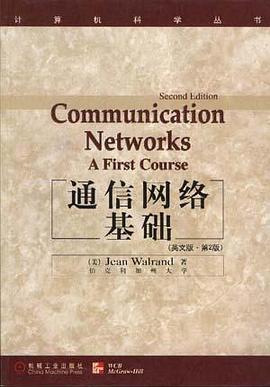
这本书的封面设计得相当朴实,没有太多花哨的图形,主色调是沉稳的深蓝和白色,让人第一眼就觉得它是一本严谨的专业教材。我是在准备一个网络工程师资格考试时偶然发现它的,当时我正在为那些晦涩难懂的协议细节和复杂的物理层概念感到焦头烂额。翻开目录,赫然发现其中对**数据链路层和网络层协议栈的逻辑划分**有非常清晰的图示解析,这立刻吸引了我。特别是关于**ARP和ICMP的工作原理**那几章,作者没有简单地罗列RFC标准,而是用非常贴近实际故障排查的场景来阐述,比如“当主机A尝试通过路由器B访问外部网络时,ARP报文如何在局域网内广播并被正确响应”——这种叙述方式极大地降低了初学者的理解门槛。虽然书中涉及到很多公式推导,但作者总能巧妙地在推导前后穿插一些历史背景或者实际应用中的限制,使得枯燥的数学模型立刻变得生动起来,仿佛在听一位经验丰富的老工程师在分享他的心得。我尤其欣赏它对**路由算法**的讲解,特别是RIPv2和OSPF的收敛过程对比,用动态的流程图模拟了网络拓扑变化时数据包的流向,让人对“路径选择”这个核心概念有了直观的把握。总而言之,这是一本结构严谨、叙述清晰、注重实战应用的入门级佳作,对于打牢基础、构建完整的网络认知框架非常有帮助。