
具体描述
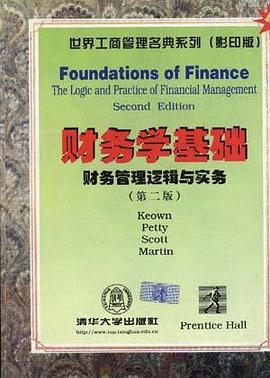
《财务学基础:财务管理逻辑与实务(第2版)》为世界工商管理名典系列之一。
作者简介
目录信息
Chapter 1
An Introduction to the. Foundations of
Financial Management-The Ties That Bind
Goal of the Firm
Legal Forms of Business Organization
Federal Income Taxation
Ten Axioms That Form fhe Foundations of Financial Management
Axiom 1: The Risk-Return Trade-off-We Won't Take On
Additional Risk Unless We Expect to Be Compensated with
Additional Return
Axiom 2: The Time Value of Money--A Dollar Received Today
Is Worth More Than a Dollar Received in the Future
Axiom 3: Cash-Not Profits-Is King
Axiom 4: Incremental Cash Flows--It's Only What Changes
That Counts
Axiom 5: The Curse of Competitive Markets-Why It's Hard to Find
Exceptionaliy Profitable Projects
Axiom 6: Efficient Capital Markets-The Markets Are Quick and the
Prices Are Right
Axiom 7: The Agency Problem--Managers Won't Work for the
Owners Unless It's in Their Best Interest
Axiom 8: Taxes Bias Business Decisions
Axiom 9: All Risk Is Not Equal--Some Risk Can Be Diversified Away,
and Some Cannot
Axiom 10: Ethical Behavior Is Doing the Right Thing, and Ethical
Dilemmas Are Everywhere in Finance
Overview of the Text
Chapter 2
The Financial Markets and Interest Rates
The Mix of Corporate Securities Sold m the Capital Market
Why Financial Markets Exist
Financmg of Business: The Movement of Funds through the
Economy
Components of the U.S. Financial Market System
The Investment Banker
Private Placements
Flotation Costs
Regulation
More Recent Regulatory Developments
Rates of Retum in the Financial Markets
Interest Rate Determinants in a Nutshell
The Term Structure of Interest Rates
Chapter 3
Evaluating a Firm's Financial Performance
and Measuring Cash Flow
Basic Financial Statements
Financial Ratio Analysis
The DuPont Analysis: An Integrative Approach to Ratio Analysis
Chapter 4:
Financial Forecasting, Planning, and Budgeting
Financial Forecasting
Fmancial Planning and Budgeting
Computerized Financial Planning
Chapter 5
The Time Value of Money
Compound Interest
Present Value
Annuities
Annuities Due
Compound Interest with Nonannual Periods
Present Value of an Uneven Stream
Perpetuities
Chapter 6
Valuation and Characteristics of Bonds
Types of Bonds
Terminology and Characteristics of Bonds
Definitions of Value
Valuation: An Overview
Valuation: The Basic Process
Bond Valuation
The Bondholder's Expected Rate of Retum (Yield to Maturity)
Bond Valuation: Three Important Relationships
Chapter 7
Valuation and Characteristics of Stock
Preferred Stock
Common Stock
The Stockholder's Expected Rate of Retum
Chapter 8
The Meaning and Measurement
of Risk and Return
Expected Retum Defmed and Measured
Risk Defined and Measured
Rates of Retum: The Investor's Experience
Risk and Diversification
The Investor's Required Rate of Retum
The Fama and French Attack on the CAPM
Chapter 9
Capital-Budgeting Technlques and Practice
Finding Profitable Projects
Capital-Budgeting Decision Criteria
Capital Rationing
Problems in Project Ranking-Capital Rationing, Mutually
Exclusive Projects, and Problems with the IRR
Ethics in Capital Budgeting
A Glance at Actual Capital-Budgetmg Practices
Chapter 10
Cash Flows and Other Topics in Capital Budge
Guidelines for Capital Budgeting
Measuring a Project's Benefits and Costs
Risk and the Investment Decision
Incorporating Risk into Capital Budgeting
Exammmg a Project's Risk through Simulation
Chapter 11
Cost of Capital
The Cost of Capital: Key Definitions and Concepts
Detennining Individual Costs of Capital
The Weighted Average Cost of Capital
Calculating Divisional Costs of Capital: PepsiCo, Inc.
Using a Firm's Cost of Capital to Evaluate
New Capital Investments
Chapter 12
Determining the Financing Mix
Business and Financial Risk
Breakeven Analysis
Operating Leverage
Financial Leverage
Combination of Operating and Financial Leverage
Planning the Financing Mix
A Quick Look at Capital Structure Theory
Basic Tools of Capital Structure Management
A Glance at Actual Capital Structure Management
Chapter 13
Dividend Policy and Internal Financing
Key Terms
Does Dividend Policy Affect Stock Price?
The Dividend Decision in Practice
Dividend Payment Procedures
Stock Dividends and Stock Splits
Stock Repurchases
Chapter 14
Introduction to Working-Capital Management
Managing Current Assets and Liabilities
Appropriate Level of Working Capital
Estimation of the Cost of Short-Term Credit
Sources of Short-Term Credit
Chapter 15
Liquid Asset Management
Why a Company Holds Cash
Cash Management Objectives and Decisions
Collection and Disbursement Procedures
Evaluation of Costs of Cash Management Services
Composition of Marketable-Securities Portfolio
Accounts-Receivable Management
Inventory Management
Chaprter 16
Internatlonal Business Finance
The Globalization of Product and Financial Markets
Exchange Rates
Interest-Rate Parity Theory
Purchasing-Power Parity Theory
Exposure to Exchange Rate Risk
Multinational Working-Capital Management
Intemational Financing and Capital Structure Decisions
Direct Foreign Investment
Chapter 17
Changes and Challenges in Finance
Recent Innovations in Risk Management
Finance m the '90s: The Consequences of Financial Innovation
in Corporate Restructuring
Recent Innovations in Raising Capital: Hybrid Securities
The Agency Problem: Changes and Challenges
The CAPM and Market Efficiency: The Challenges from
Academia
Appendixes
Appendix A: Using a Calculator
Appendix B: Compound Sum of $1
Appendix C: Present Value of $1
Appendix D: Sum of an Annuity of $1 for n Periods
Appendix E: Present Value of an Annuity of $1 for n periods
Appendix F: Check Figures for Selected
End-of-Chapter Study Problems
Glossary
Index
· · · · · · (收起)
读后感
用户评价
这本书的封面设计简直是一场视觉盛宴,那种深沉的藏蓝色调,配上烫金的字体,瞬间就给我一种庄重而专业的信赖感。我拿到手的时候,那种厚实的手感就让人觉得内容一定扎实。我原本以为这种入门级的教材会显得比较枯燥乏味,但翻开目录,看到那些章节划分得井井有条,从最基础的会计恒等式开始,一步步引导到复杂的财务报表分析,逻辑性非常强。特别是它在介绍概念时,总能用一些贴近生活的例子来做类比,比如将企业的资产比作家庭的储蓄和投资,把负债想象成需要按时偿还的借款,一下子就让那些晦涩的术语变得生动起来。我特别欣赏作者在讲解复式记账法时的耐心,很多教材这里一笔带过,但这本书却用了大量的图示和具体的业务流程来拆解,仿佛手把手教你做账。对于一个财务小白来说,这种循序渐进的学习路径,极大地降低了我的心理门槛。读完前几章,我感觉自己已经不再是那个对“借贷”两字充满困惑的人了,而是建立了一个初步的、清晰的财务认知框架。
这本书在阐述“价值”这个核心概念时,采取了一种非常辩证和宏观的视角,这让我对财务的理解得到了质的飞跃。它不仅仅局限于企业内部的利润核算,而是将财务活动置于更广阔的经济和法律框架下进行审视。例如,在讲解折旧和摊销时,它不仅解释了直线法和加速折旧法的计算差异,更深入探讨了这些会计政策选择对企业税务负担和股东信心预期的影响。更让我印象深刻的是,书中花了大量篇幅来讨论非财务因素(如公司治理结构、品牌价值、知识产权)如何最终通过财务报表得以体现,或者反过来,财务决策如何反作用于这些无形资产的积累。这种全景式的视野,打破了我以往对财务“只是记账算账”的狭隘认知,让我明白了财务是企业战略落地的关键支撑。对于想要成为真正懂管理的人来说,这种全面的视角至关重要。
阅读体验方面,这本书的排版设计功不可没。现在的很多教材为了追求信息量,常常把页面塞得满满当当,让人眼花缭乱,但这本书的留白处理得恰到好处,重点突出。那些关键的定义和公式,都被精心设计成醒目的色块或边框,即便是在长时间阅读后,眼睛也不会感到疲劳。我注意到一个非常人性化的设计,那就是在每章的末尾,都会有一个“自测与反思”的板块。它不像传统的习题那样只是考你是否记住了知识点,而是设计了一些开放性的讨论题,比如“在当前高通胀环境下,你认为XYZ行业的最佳现金管理策略是什么?”这类问题迫使读者跳出书本,结合当前的经济环境进行深度思考。这种互动性的设计,极大地激发了我主动探索的欲望,让我不再是被动地接受信息,而是积极地参与到知识的建构过程中去。可以说,这本书在兼顾学术严谨性的同时,也充分考虑了读者的阅读感受,这一点非常值得称赞。
这本书的语言风格非常独特,它既有学术著作的严谨逻辑,又不失一种娓娓道来的亲和力,阅读起来毫无压力。作者在行文时,善于运用比喻和类推,使得复杂的金融工具概念也变得触手可及。例如,它将期权和期货的对冲作用,比喻成商业保险,清晰地说明了它们在锁定未来不确定性方面的作用。我特别喜欢它在介绍国际财务报告准则(IFRS)时所体现出的那种全球化视野,它不仅仅介绍了规则本身,更探讨了不同会计体系在文化和法律背景下的差异与融合趋势。这对于我们身处全球化商业环境的读者来说,提供了非常宝贵的跨文化财务沟通基础。总而言之,这本书不仅仅是一本教科书,更像是一位经验丰富的财务导师,用清晰、生动且富有洞察力的方式,为我开启了通往现代财务管理世界的金钥匙。
这本书的深度和广度着实让我吃了一惊,它绝对不是那种走马观花式的介绍,而是对财务核心原理进行了深入的挖掘。我尤其喜欢它在风险管理和资本结构决策部分的处理方式。作者没有停留在理论的陈述,而是引入了大量的案例研究,比如某个知名企业在特定经济周期下是如何调整其融资策略的,他们运用了哪些金融工具来对冲风险。这些实战案例的分析极其透彻,展示了理论是如何在现实的商业战场中发挥作用的。我感觉自己不只是在学习财务知识,更是在学习一种商业决策的思维模式。书中的数据分析部分也处理得非常精妙,它没有堆砌大量复杂的数学公式,而是侧重于如何解读这些数字背后的商业含义——比如,当流动比率和速动比率出现较大偏差时,我们应该警惕哪些潜在的运营问题。这种由“术”到“道”的提升,让这本书的价值远超一般的教科书范畴,更像是一本企业管理者案头必备的工具书。