
具体描述
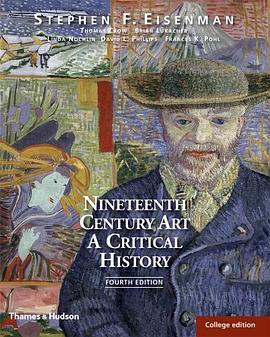
"Nineteenth Century Art: A Critical History", hailed as one of the most engrossing and stimulating art history texts to come along for years by "The Times Higher Education Supplement", embraces many aspects of the so-called new art history attention to issues of class and gender, reception and spectatorship, racism and Eurocentrism, popular and elite culture while at the same time recovering the remarkable vitality, salience and subversiveness of the era's best art. This new fourth edition includes four revised chapters together with a substantially expanded chapter on Photography, Modernity and Art. With 245 illustrations now in colour, including over a dozen brand new images, this rich and diverse volume will interest students, specialists and anyone fascinated by this dynamic period.
作者简介
目录信息
The First Modern Century 11
Art and Emancipation, Art and Reaction 13
The Nineteenth-Century Origins of Critical Art History 16
A Critical Survey of Nineteenth-Century Art 18
Classicism and Romanticism
1. Patriotism and Virtue: David to the Young Ingres / Thomas Crow 22
The Cult of Civic Virtue 22
A Call to Order 23
The Enterprise of Women 26
The Circle of Men 30
A Violent Patrimony 33
Tragedy and the Republic of Equals 34
Figures of Revolutionary Virtue 37
Figures of Revolutionary Death 39
Leaving Terror Behind 42
The Sublime of Authoritarianism 52
Dreams Beyond History 56
2. Classicism In Crisis: Gros to DELACROIX / Thomas Crow 59
Force of Arms 59
An Imperial Antiquity 61
The Artist Hero in the Face of Empire 68
Return from the Wreckage 70
Punishments of the Damned 75
Suicide of the Despot 80
3. The Tensions of Enlightenment: Goya 86
Reason and Madness: Conflicts of the Age 86
The Image of the Pueblo: The Later Art of Goya 94
4. Visionary History Painting: Blake and His Contemporaries / Brian Lukacher 106
Blake's Revolution 106
Body Politics and Religious Mysticism 107
Blake's Public Art 111
Blake and Contemporary English Art of the Sublime 114
Prophecy and Prehistory 118
5. Nature and History In English Romantic Landscape Painting / Brian Lukacher 123
Landscape Instincts and the Picturesque 123
Ruins and Cities 126
Constable's Rustic Naturalism 130
Constable and the Ruin of England 131
Visionary Landscapes of Palmer and Martin 135
Turner's Meaningful Obscurity 139
Turner's Later Work 140
6. Landscape Art and Romantic Nationalism In Germany and America / Brian Lukacher 146
Runge's New Age 146
A Soulful Past: Lukasbund 150
Friedrich and the Mediation of Landscape 154
Progress and its Discontents: Thomas Cole and the American Landscape 155
To Silence or to Reveal Nature's Allegory 160
7. Architecture Unshackled, 1790-1851 / Brian Lukacher 164
A Modern Enlightenment 164
The New Architecture of Social Institutions 167
Architecture and the Gothic Imagination 171
Changing Urban Landscapes 174
Faith or Technology 178
New World Frontiers
8. Old World, New World: The Encounter of Cultures on the American Frontier / Frances K. Pohl 184
The Buckskin Jacket and the Parker Pen 184
The Myth of the Frontier 185
The Stain on a Painter's Palette: Charles Bird King and George Catlin 190
Alternative Representations: Photography and Ledger Art 197
9. Black and White in America / Frances K. Pohl 205
America as an African Invention 205
African Americans and the Civil War 211
Images of Reconstruction: Prisoners From the Front and A Visit From the Old Mistress 218
The African American Artist at Home and Abroad: Edmonia Lewis and Henry Osawa Tanner 222
Realism and Naturalism
10. The Generation of 1830 and the Crisis in the Public Sphere 232
Romanticism and the Burden of Truth 232
The July Monarchy and the Art of the Juste Milieu 235
The Paradox of Patriotism: David d'Angers's Pantheon Pediment 240
Classicism and the Woman Question: Thomas Couture 246
11. The Rhetoric of Realism: Courbet and the Origins of the Avant-Garde 250
Rhetorics of Realist Art and Politics 250
Courbet's Trilogy of 1849-50 260
Courbet's The Studio of the Painter 267
12. Photography, Modernity, and Art / David Llewellyn Phillips 273
Natural Magic 273
Commercial Portraiture and the Industrialization of Photography 281
Photography, Art, and the Debate over Focus 290
Amateurs and Artists 300
13. The Decline of History Painting: Germany, Italy, France, and Russia 309
The Rise of Naturalism in Germany 309
The Italian Macchiaioli 312
Individualism and Naturalism in French Salon Art 316
Challenges to Academic Painting in Russia 323
Modern Art and Life
14. Architecture and Design in the Age of Industry 326
Handcraft and Machine Production 326
Opposition to Mechanization 330
William Morris 331
Arts and Crafts Architecture and Town Planning 335
Reconciliation with the Machine 340
The Architecture of World's Fairs and Capitalist Commerce 344
15. Manet and the Impressionists 350
Edouard Manet and Haussmannization 350
Manet's Olympia 354
Impressionism and the Commodity 357
16. Issues of Gender in Cassatt and Eakins / Linda Nochlin 369
Gender and Difference 369
The Portrait 375
Cassatt and the Gaze 377
Eakins and the American Hero 378
Women and Children 380
Cassatt, Eakins, and the Modern Allegory 383
17. Mass Culture and Utopia: Seurat and Neoimpressionism 388
The Antinomies of Georges Seurat 388
Seurat's Drawings and their Dispersion of Meaning 388
A "Manifesto Painting": A Sunday Afternoon on the Island of the Grande Jatte 391
Mass Culture and the Paradox of Pleasure: Chahut 397
18. The Appeal of Modern Art: Toulouse-Lautrec 402
Novelty and Desire 402
The Crowd 402
Toulouse-Lautrec and Urban Art 403
Modern Form, Popular Content 406
Poster Art 407
The Metropolitan Fetish 408
19. Abstraction and Populism: Van Gogh 410
Seurat and Van Gogh Compared 410
Two Myths about Van Gogh 411
Van Gogh's First Statements of Purpose 413
Early Art in The Hague and Neunen: The Potato Eaters 413
Academic Training and Avant-Garde Education in Antwerp and Paris 417
Van Gogh in Aries 421
Starry Night and Critical Modernism 424
20. Symbolism and the Dialectics of Retreat 426
Modernism versus Symbolism 426
The Rhetoric of Symbolism 428
Gauguin and Symbolism in Brittany 429
Ensor and Populism 432
Symbolist Landscape Painting: Munch, Redon, Monet, and Hodler 439
The Vienna Secession 450
Gauguin and Symbolism in Tahiti 451
21. The Failure and Success of Cezanne 460
Symbolism in Extremis 460
Cezanne: The Cultural Revolutionary 460
Cezanne's Development: The Quest for Totality 462
Cezanne's Artistic Maturity 466
Cezanne and the End of Nineteenth-Century Art 470
Chronology 474
Glossary 485
Select Bibliography 489
List of Illustrations 493
Index 499
· · · · · · (收起)
读后感
用户评价
这本书的版式设计和插图质量,简直是对十九世纪那些视觉震撼作品的一种侮辱。我们谈论的是一个视觉革命的时代,无论是摄影技术的萌芽对绘画构图的冲击,还是新媒介对艺术传播效率的颠覆性改变,这些都应该在书中得到充分的视觉佐证和讨论。但很遗憾,大部分插图模糊不清,色彩失真严重,很多本该是全景展示的宏大叙事场景,却被压缩成了小小的、分辨率可疑的方块。这对于研究造型艺术的人来说,是不可原谅的疏忽。我本来想仔细对比一下巴洛克遗风与新古典主义的建筑装饰细节,看看它们在十九世纪的工业化背景下是如何被重新诠释或简化,但因为插图质量太差,很多细微的纹理和结构上的演变完全无法辨认。此外,书中对新兴的“装饰艺术”和“工艺美术运动”的讨论,也显得非常边缘化,仿佛它们只是正统绘画史之外的“小品”,这种轻视反映出作者在视野上的局限性,未能将艺术的各个分支视为一个整体的文化生态系统来考察。
最让我感到困惑的是,这本书在处理艺术史的“时间性”问题上,处理得非常僵硬。十九世纪的艺术并非泾渭分明地在1900年戛然而止,它与二十世纪初的先锋派运动有着千丝万缕的联系。例如,塞尚的结构性探索,是向立体主义的清晰桥梁,但这本书对塞尚的评价和归类,依然紧紧地捆绑在“后印象派”这个相对静态的标签上,没有清晰地勾勒出他如何从传统中挣脱,并为后续的现代艺术奠定基础。作者似乎更热衷于在每个十年末画上一条清晰的分割线,而不是展现艺术史作为一个连续流动的过程,充满了预示、冲突与过渡。缺乏对这种“未来性”的敏感度,使得全书的叙述缺乏一种动态的、历史性的张力,更像是一系列并置的、相互独立的风格快照,而不是一幅连贯演变的历史长卷。对于渴望理解艺术如何“走向”现代性的读者来说,这本书提供的指导意义非常有限。
我不得不指出,这本书在处理艺术史的地理分布时,存在着根深蒂固的欧洲中心主义倾向。十九世纪是全球性交流开始加速的时期,东方主义(Orientalism)作为一种复杂且充满争议的艺术主题,理应占据重要篇幅,用以探讨权力关系、异域想象与文化挪用。然而,书中对德拉克洛瓦的东方场景的提及,草率得像是脚注一般,完全没有触及到殖民扩张如何直接地喂养和扭曲了欧洲的视觉想象力。更别提对非西方艺术对西方现代主义的潜在影响(如对日本浮世绘的吸收)的探讨了,简直是一片空白。一个严肃的十九世纪艺术史著作,不应仅仅满足于巴黎和伦敦的画廊动态,它需要更广阔的视角,去审视艺术是如何在全球化进程中相互作用、互相建构的。这本书的视角过于狭隘,读起来让人感觉像是停留在维多利亚时代中期的沙龙报告,缺乏二十一世纪全球史观的介入和反思。
这本书,我得说,完全没抓住十九世纪艺术的精髓。翻开扉页,我期待的是那种波澜壮阔的、充满社会变革气息的艺术史叙事,结果呢?它更像是一本过于注重目录编排的教科书的缩影,缺乏灵魂的温度和洞察力。我特别关注的是印象派和后印象派的转向,那是现代性挣扎的核心地带。然而,这本书对于莫奈的光影实验,仅仅停留在了技法层面的描述,对色彩如何与工业革命后的城市生活产生共鸣,几乎是避而不谈。更令人沮丧的是,它对现实主义的讨论,显得过于保守和学院派,像是从一个七十年代的老旧讲义里直接复制粘贴过来的。例如,对库尔贝的介绍,没有深入挖掘其挑战沙龙权威的政治性,只是机械地罗列了他的几幅代表作。我本指望能读到关于艺术赞助人制度瓦解、中产阶级审美兴起这些关键社会背景如何重塑艺术创作的深度分析,但这本书给出的分析深度,只能说勉强够得上高中阶段的入门认知。整体而言,它像是一个乏味的清单,而非一次引人入胜的探索之旅,读完后,我感觉自己对那个时代艺术的理解,没有发生任何实质性的飞跃。
我带着极大的热情投入到这本关于十九世纪艺术的著作中,但很快发现,它在处理艺术史的“张力”和“矛盾”方面,显得力不从心。尤其是在浪漫主义与古典主义的对峙这一关键节点,作者的处理方式极其平庸。浪漫主义那种呼啸的、反理性的激情,似乎被作者用一种冷静得近乎麻木的笔触给“驯化”了。我原以为会看到一场关于情感、自然崇高感与启蒙理性之间激烈交锋的细致描摹,比如德拉克洛瓦的狂热与安格尔的克制是如何互相牵制、共同构筑那个时代的审美图景。然而,书中对这些情感的挖掘,仅停留在表层的风格比较,缺乏对那个时代知识分子内心挣扎的捕捉。更别提后半部分对象征主义的论述,那本该是整个世纪精神内核的最终爆发,却被描绘得如同一次无关痛痒的风格演变。我需要的是那种能让我感受到世纪末颓废、神秘主义的迷人气息的文字,而不是这种干燥的、如同博物馆标签说明一样的文字堆砌。这本书的叙事节奏像是慢性病,缓慢、平淡,完全没有捕捉到十九世纪艺术那股暗流涌动的能量。
A general discussion and critics about French、British、Spanish Academia painters & their famous works ( personal features are also included )
A general discussion and critics about French、British、Spanish Academia painters & their famous works ( personal features are also included )
A general discussion and critics about French、British、Spanish Academia painters & their famous works ( personal features are also included )
A general discussion and critics about French、British、Spanish Academia painters & their famous works ( personal features are also included )
A general discussion and critics about French、British、Spanish Academia painters & their famous works ( personal features are also included )