
具体描述
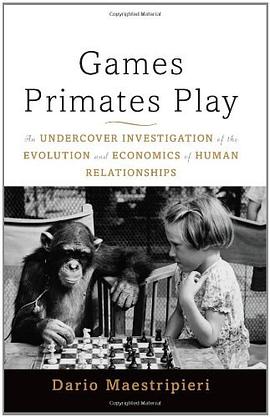
Most humans don’t realize that when they exchange emails with someone, anyone, they are actually exhibiting certain unspoken rules about dominance and hierarchy. The same rules regulate the exchange of grooming behavior in rhesus macaques or chimpanzees. Interestingly, some of the major aspects of human nature have profound commonalities with our ape ancestors: the violence of war, the intensity of love, the need to live together.While we often assume that our behavior in everyday situations reflects our unique personalities, the choices we freely make, or the influences of our environment, we rarely consider that others behave in these situations in almost the exact the same way as we do. In Games Primates Play, primatologist Dario Maestripieri examines the curious unspoken customs that govern our behavior. These patterns and customs appear to be motivated by free will, yet they are so similar from person to person, and across species, that they reveal much more than our selected choices.Games Primates Play uncovers our evolutionary legacy: the subtle codes that govern our behavior are the result of millions of years of evolution, predating the emergence of modern humans. To understand the rules that govern primate games and our social interactions, Maestripieri arms readers with knowledge of the scientific principles that ethologists, psychologists, economists, and other behavioral scientists have discovered in their quest to unravel the complexities of behavior. As he realizes, everything from how we write emails to how we make love is determined by the legacy of our primate roots and the conditions that existed so long ago.An idiosyncratic and witty approach to our deep and complex origins, Games Primates Play reveals the ways in which our primate nature drives so much of our lives.
作者简介
目录信息
读后感
What is power? Is it about controlling other people? What is the difference between having an authority and having power? For authority, it has to be legitimate to earn respect, but you also need power. In chips' world, there're alpha male, beta male, alp...
What is power? Is it about controlling other people? What is the difference between having an authority and having power? For authority, it has to be legitimate to earn respect, but you also need power. In chips' world, there're alpha male, beta male, alp...
What is power? Is it about controlling other people? What is the difference between having an authority and having power? For authority, it has to be legitimate to earn respect, but you also need power. In chips' world, there're alpha male, beta male, alp...
What is power? Is it about controlling other people? What is the difference between having an authority and having power? For authority, it has to be legitimate to earn respect, but you also need power. In chips' world, there're alpha male, beta male, alp...
What is power? Is it about controlling other people? What is the difference between having an authority and having power? For authority, it has to be legitimate to earn respect, but you also need power. In chips' world, there're alpha male, beta male, alp...
用户评价
这本书无疑是一次对“本能”与“教养”边界的深刻探索。我特别喜欢作者对“无目的游戏”的重新定义。过去总觉得玩耍是幼崽为成年后的生存做准备的彩排,但这本书提出,有些游戏本身就是目的,它在建立和维护社会网络中起着至关重要的作用,甚至比直接的资源获取更具长期价值。书中对于社会压力如何塑形游戏行为的论述令人印象深刻。例如,在群体密度过高时,灵长类的“游戏”会变得更加程式化和等级森严,这让我联想到了城市生活中的人际互动,那种无形的约束感如出一辙。它的论证并非单向度,而是充满了辩证的思考。作者毫不避讳地指出当前研究中的局限性,并提出未来可能的研究方向,这种诚实的态度大大增加了文本的可信度。阅读过程中,我时常停下来,反复咀嚼某些关键的论断,比如关于“共享注意力”在灵长类认知发展中的作用。这本书的文字风格是优雅而有力的,它用最精确的词汇来描绘最原始的行为,形成了一种独特的张力,让人在阅读时既感到智力上的满足,又有一种对生命力的敬畏之情油然而生。
这本关于游戏和灵长类的书读起来真是一场视觉与智力的盛宴!作者的笔触细腻而富有洞察力,将复杂的人类行为模式与灵长类动物的习性巧妙地结合在一起。我尤其欣赏它没有采用那种枯燥的学术腔调,而是用一种近乎于讲故事的方式,引导读者进入一个充满好奇与未知的领域。书中对于不同物种在面对资源竞争、社会等级确立时所展现出的“游戏规则”的探讨,简直让人拍案叫绝。比如,对黑猩猩群体中权力斗争的描述,简直就是一堂生动的政治学入门课,只不过主角是那些毛茸茸的“政治家”们。书中大量的案例分析,都配有精美的插图或者场景重现,使得那些抽象的理论变得异常具体和可感。读完后,我对自己日常生活中一些看似随意的互动——比如和同事在茶水间的“交锋”,或者和朋友间的玩笑试探——都有了一种全新的理解。这不再是简单的社交活动,而更像是一种潜意识中遵循的古老法则的现代演绎。这本书成功地搭建了一座桥梁,连接了生物学与社会学,让人在捧腹之余,也不禁对人类自身的起源和行为动机产生更深层次的反思。它绝非那种读完就束之高阁的消遣之作,而是会留在书架上,时不时地被重新翻阅,每次都会有新的感悟涌现。
坦白说,我原本是抱着一种怀疑的态度翻开这本书的,毕竟“游戏”和“灵长类”这两个词汇的组合听起来有点像冷门杂志上的猎奇标题。然而,事实证明我的偏见大错特错了。这本书的深度和广度远超我的预期。它不仅仅是在罗列不同猴子和猿类玩耍的场景,而是深入挖掘了这些行为背后的进化压力和认知基础。作者展现了极高的跨学科素养,将神经科学、生态学甚至博弈论的原理融入其中,构建了一个令人信服的分析框架。最让我震撼的是关于“欺骗”和“合作”的章节。书中详细描述了红毛猩猩如何利用环境中的盲点来偷取食物,以及猕猴群体如何通过复杂的互惠机制来维持长期的联盟。这些行为的复杂性,让我不禁思考,我们自诩为万物之灵的优越感,在面对自然界这些精密的生存策略时,是否显得有些傲慢了。语言风格上,它保持了一种近乎教科书般的严谨,但又在关键时刻插入一些幽默的观察,使得阅读体验非常流畅,像是在听一位经验丰富的教授做一场精彩的讲座,既能学到真知,又不会感到枯燥乏味。这本书无疑为非专业读者打开了一扇通往灵长类行为学殿堂的大门。
这本书给我的感觉,更像是一部精彩的自然历史纪录片被成功地“文字化”了。它没有过多地纠缠于冗长的数据表格或统计学模型的推导,而是将重点放在了“动态过程”的呈现上。我仿佛能亲眼看到那些生活在野外的猿猴,如何在茂密的丛林中为了争夺一块水果而进行心理上的拉锯战。作者对动作的捕捉极其敏锐,无论是金丝猴之间那种微妙的眼神交流,还是大猩猩展示力量时的肢体语言,都被描绘得栩栩如生。读到关于“模仿学习”的部分时,我简直惊呆了——原来灵长类动物不仅会模仿技能,甚至会模仿“错误”的技能,并将其固化为群体传统,这与人类文化传播中的某些现象何其相似!这种类比和映射,让原本遥远的动物世界突然变得非常“亲切”,甚至有点“可怕”。从结构上讲,本书的章节划分非常清晰,逻辑层层递进,从最基础的玩耍行为到复杂的社会博弈,逐步提升难度,确保了即便是初次接触该领域的读者也能跟上思路。这是一种高明的叙事策略,既满足了深度爱好者的求知欲,也照顾到了普通读者的阅读体验。
我必须承认,在读完这本书之前,我对灵长类动物的印象还停留在教科书上的刻板印象。这本书彻底颠覆了我的认知。它成功地将那些生活在遥远生态位上的生物,拉到了我们人类“社会”的语境下来审视。作者对“冲突解决机制”的分析尤其独到。在人类社会中,我们依赖法律和外交,而在许多灵长类群体中,看似随机的“玩闹”或“仪式化打斗”,实际上是维持群体稳定的关键机制。书中对不同族群在面对外部威胁时,内部“游戏”模式的迅速切换,提供了极佳的案例研究。这种适应性和灵活性,远比我们想象的要复杂得多。这本书的排版和设计也值得称赞,它充分利用了留白和章节标题的设置,使得信息密度虽然很高,但阅读起来却不费力。它不是一本速食读物,它需要你慢下来,去品味那些细微的差异和微妙的互动。总而言之,这是一部兼具科学严谨性、哲学思辨性和文学感染力的杰作,它不仅教会了我关于猴子和猿类的知识,更重要的是,它让我以一种更谦卑、更具同理心的视角,重新审视了“我们是谁”这个问题。
意大利学界动用Mafia hit men……话说作者对意大利积怨过深,逮着机会就踹两脚,我好想知道他去美国工作面试怎么说
What is it that makes you different from a chip? :) This is an awesome book.
意大利学界动用Mafia hit men……话说作者对意大利积怨过深,逮着机会就踹两脚,我好想知道他去美国工作面试怎么说
意大利学界动用Mafia hit men……话说作者对意大利积怨过深,逮着机会就踹两脚,我好想知道他去美国工作面试怎么说
意大利学界动用Mafia hit men……话说作者对意大利积怨过深,逮着机会就踹两脚,我好想知道他去美国工作面试怎么说