
具体描述
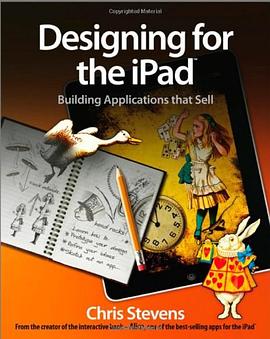
Get in the game of developing successful apps for the iPad Designing for the iPad presents unique challenges for developers and requires an entirely different mindset of elements to consider when creating apps. Written by a highly successful iPad software developer, this book teaches you how to think about the creation process differently when designing iPad apps and escorts you through the process of building applications that have the best chance for success. You'll learn how to take advantage of the iPad's exciting new features and tackle an array of new design challenges so that you can make your app look spectacular, work intuitively, and sell, sell, sell! Bestselling iPad app developer Chris Stevens shares insight and tips for creating a unique and sellable iPad app Walks you through sketching out an app, refining ideas, prototyping designs, organizing a collaborative project, and more Highlights new code frameworks and discusses interface design choices Offers insider advice on using the latest coding options to make your app a surefire success Details iPad design philosophies, the difference between industrial and retail apps, and ways to design for multiple screen orientations Designing for the iPad escorts you through the steps of developing apps for the iPad, from pencil sketch all the way through to the iPad App Store.
From the Author: The Top Three Reasons Why iPad Apps Fail, and How You Can Succeed
Design Apps for Fingers The App Wasn’t Really Designed for Fingers
This is the number one reason why an iPad app will be laid out on the mortuary table. The iPad is operated by fingers, and human fingers are nothing like a mouse and pointer. If you want to ship half-a-million iPad apps, like Alice for the iPad, you must not design your touch interfaces like you design mouse interfaces. Don’t be a Photoshop jockey, get out there and physically test your app designs on the iPad hardware from the point you make your very first pencil sketch. Touch-screens have almost nothing in common with the desktop computer paradigm, but you wouldn’t know it judging by some of the monstrosities on the app store. The mouse and pointer interface that most of us grew up with is a system of “indirect manipulation” -- this means that the user’s hand operates a mouse, which then moves a pointer, which then presses a button, or moves a window etc. However, the iPad uses a system of direct manipulation -- your hand directly touches the object it’s interacting with.
This small shift in interaction from indirect to direct-manipulation raises all kinds of issues for the designer. Now that objects can be manipulated directly, user’s hands can obscure parts of the scene. There is also the need for target areas with greater tolerance because the human finger is a podgy sausage of flesh, not a pixel-specific arrow. While the mouse pointer is pixel-specific, the human finger is amorphous. But this is not to say that the finger is any less powerful. In fact, with good interface design, the finger can be made infinitely more versatile than any mouse pointer. Sadly, many iPad designers have made the mistake of assuming that their knowledge of desktop computer user-interface design will apply to creating iPad apps. If you do this, you’ll end up making apps that aren’t really designed for touch. You can avoid the problem by testing and retesting your designs on actual iPad devices.
It Offers Too Many Options
Don’t offer choices to your users; make decisions for them. There is a popular capitalist mythology that assumes that the more choices you offer a customer, the more they will enjoy their experience. This might be true when you pick toppings in an ice cream parlour, but in the world of iPad apps, too much choice will kill you. Psychologists have found that the more options you present a consumer with, the more time it takes them to make a decision. But you won’t just slow down your users by offering lots of settings and choices, you’ll create a state of doubt in their mind. For every option that is available, you sow in their minds the unsettling possibility that an alternative option was potentially a better choice. Settings and choices are also often an excuse for bad design. If you are tempted to provide an iPad user with an option, consider picking the best choice for them instead and removing the option. The iPad is no place for nested menus or multiple settings -- not only is screen real-estate limited, but you’re probably packing too much functionality into your app if you need lots of buttons and settings.
It’s Hard to Explain
If you can’t explain your app idea less than ten words, then forget it, you’ve already lost. In the trench warfare of the app store only the clear and concise survive. The best iPad apps tend to do one task and do it well. If a customer cannot grasp the purpose of your app almost instantly, then it will spiral down the drain of the App Store, never to be seen again. Make it dangerously obvious what your app does, and shout about it. Before you write a single line of code or make a single sketch, have a long hard think about whether anyone will understand what it is you’re selling. You might have the greatest idea in the world on paper, but if the story of your app is not clear and compelling, nobody will share it and nobody will buy your app. Avoid this by discarding ideas that require a complex story to explain.
Don’t sell features, sell the story of the features: how will people actually use your app? When Apple launched Facetime, they didn’t ramble on about the resolution of the video or the specifications of the VOIP technology behind it, they focused purely on family members calling each other and sharing news in a heartwarming fiesta of emotion. People in real situations make strong, easy-to-explain stories but spec sheets are meaningless to the majority of consumers. To win the iPad goldrush, you need to explain the emotional story to the majority of customers, don’t try and sell the technical story to spec sheet fetishists -- they’re a tiny market. The paradox is that to make an iPad app simple is actually very hard, but you can do it!
作者简介
克里斯·史蒂文森(Chris Stevens)是Alice for the iPad的设计师,这款应用软件曾经冲到过iPad应用商店(App Store)的首位并从那以后都卖得很好。Alice for the iPad在全世界范围内超过50万台iPad上被安装,并且这个数字还在不断增加中。Gizmodo网站(美国科技博客网站)说这款应用是“到目前为止最聪明的iPad图书”,英国BBC广播公司说她是“未来数字阅读的惊鸿一瞥”。Alice for the iPad还曾在《奥普拉·温弗瑞秀》(美国脱口秀女王奥普拉·温弗瑞制作并主持的节目)上亮相,奥普拉对听众说这款软件“将改变孩子们的学习方式”。
克里斯曾经是《每日电讯》报(The Daily Telegraph)的科技专栏作者,后来他为《时代》(The Times)撰稿。他还为CNET出品和导演过颇受欢迎的新鲜小展览——“空间泡泡”(Space Bubble)。除了撰稿之外,克里斯还是一名插画师,一位剧作家。他曾经为华纳兄弟(Warner Bros)、EMAP媒体公司以及《连线》(Wired,美国科技杂志)都工作过。克里斯曾经作为记者获得过“卫报传媒奖”(Guardian Media Award)。
现在,克里斯经营着Atomic Antelope公司,就是创造出了Alice for the iPad的出版公司。他直接和位于伦敦、纽约、东京的作者们一起创作新的图书。
目录信息
读后感
用户评价
老实说,这本书最大的问题在于其“过于自洽”的视角。作者似乎完全生活在一个封闭的苹果生态圈内,对于跨平台设计的挑战、或者当前主流设计工具集(如Figma、Sketch)的工作流程几乎视而不见。它固执地坚持着一种“我们只关心如何完美适配苹果提供的工具集”的态度,这对于希望构建更具商业灵活性的团队来说,是一个严重的局限。我本想学习如何设计一套能够在iOS和Android平板上保持品牌调性一致的设计规范,这本书里提供的建议是“忘记Android吧,我们只谈原生体验”。这种排他性思维,在当今全球化的产品开发环境中是站不住脚的。此外,书中对“无障碍设计”(Accessibility)的讨论,少得可怜,仅仅作为一章的附录匆匆带过,这在现代软件开发中是不可接受的疏忽。一个真正优秀的设计指南,理应将包容性设计置于核心地位,而非边缘位置。因此,这本书更像是一份针对特定历史时期、特定技术栈的内部参考资料,而非一本面向未来的设计圣经。
读完这本书,我有一种强烈的错位感,仿佛我买了一本介绍“如何建造一艘漂亮游艇”的书,结果里面全是关于如何焊接船体钢板和计算吃水深度的工程图纸。我原本希望这本书能够深入探讨“空间感”在平板设计中的重要性,毕竟iPad提供了一个比手机更广阔的画布,这本身就蕴含了极大的设计潜力。我特别关注那些关于如何有效利用分屏多任务、如何设计符合直觉的侧边栏导航,以及如何处理不同方向(横屏与竖屏)界面一致性的章节。然而,这些关键议题都被一带而过,或者仅仅停留在了非常表面的描述上,比如“横屏时,你应该把导航放在左边”。这种‘常识’堆砌的结果是,全书缺乏一个统一的、可遵循的“设计范式”。书中那些所谓的“最佳实践”,与其说是基于用户研究和可用性测试的结论,不如说是作者个人在特定项目中的经验总结,缺乏普遍的指导意义。对于那些寻求建立自己设计原则的新手来说,这本书提供的“知识框架”极其脆弱,很容易在面对真实的项目需求时土崩瓦解。设计是关于权衡和取舍的艺术,但这本书更像是一本僵硬的教条,没有教会我们如何去“权衡”。
这本书给我的感觉是,它试图用一本关于“宏观战略”的书的篇幅,去讲述“微观战术”的每一个细节,结果导致两方面都没有做好。在战略层面,比如如何根据目标用户群体的行为模式来制定差异化的产品路线图,书中几乎没有涉及。它没有探讨如何进行A/B测试来验证设计假设,也没有讨论如何构建一个能够适应不同设备尺寸(比如未来的折叠屏设备)的弹性设计流程。这使得这本书的适用范围被严格限制在了“为当前的iPad做应用”这个狭隘的框架内,缺乏前瞻性。另一方面,在战术细节上,作者的叙述又显得过于碎片化和跳跃。有时会突然插入一段关于字体渲染引擎的复杂解释,紧接着又跳到如何设置应用图标的像素要求。这种叙事的混乱,使得读者很难建立起一个连贯的知识体系。阅读过程中,我需要不断地在脑海中自行搭建逻辑桥梁,把这些零散的知识点串联起来,这无疑增加了学习的认知负荷,完全背离了设计工具应有的易用性原则。
这本书的排版和视觉呈现本身,与其宣扬的“优秀设计”理念形成了强烈的反差。作为一个视觉媒介,平板设计书籍的自身美学至关重要,它应该以身作则,展示清晰的层次结构和和谐的色彩运用。不幸的是,这本书的内页设计显得拥挤不堪,大量的代码片段和低分辨率的截图充斥其中,阅读起来非常费劲。我不得不反复在书页和我的iPad屏幕之间来回对照,试图理解作者想要展示的那个“微妙的动画效果”,但最终往往因为截图的质量问题而功亏一篑。更令人沮丧的是,书中引用的案例大多陈旧不堪,很多都是几年前流行的设计模式,在当前的iOS界面规范下看来,已经完全过时了。这让我不禁怀疑作者的行业敏感度,或者这本书的修订频率实在太低了。设计领域日新月异,新的交互范式层出不穷,一本关于前沿设计的书籍,如果不能跟上最新的设计语言和系统特性,其价值将迅速贬值。我更希望看到对近年来涌现出的创新应用的深度拆解分析,而不是对早已成为历史的设计元素的重复描摹。
这本关于平板电脑设计的手册,我本以为能找到一些关于用户体验的深刻见解,毕竟在移动设备设计领域,苹果的生态系统总是绕不开的话题。然而,阅读体验却像是在翻阅一本详尽的硬件规格说明书,而不是一本指导我们如何创造“引人入胜”体验的指南。作者似乎对技术细节的痴迷远远超过了对人机交互的关注。书中大量的篇幅被用来解析不同代iPad屏幕的像素密度、刷新率的细微差别,以及如何利用Core Animation的底层API来实现某种特定的视觉效果。虽然这些技术点对于追求极致性能的开发者或许有用,但对于我——一个更关注信息架构和交互流畅性的设计师来说,帮助微乎其微。我期待看到的是,如何通过精妙的布局,将复杂的信息有效地呈现在这块美丽的玻璃上,如何利用手势的自然性来简化操作流程。书中关于“设计系统”的构建和维护,几乎是只字未提,这在当前的快速迭代环境中,无疑是一个巨大的疏漏。整体而言,它更像是一本“如何让你的App跑在iPad上”的调试手册,而非“如何设计出优秀的iPad应用”的哲学思辨集。如果你的目标是成为一名高级的底层工程师,或许有所收获;但若想成为一位富有远见的交互设计师,这本书恐怕会让你感到索然无味,甚至有些迷失在技术参数的迷宫里。