
具体描述
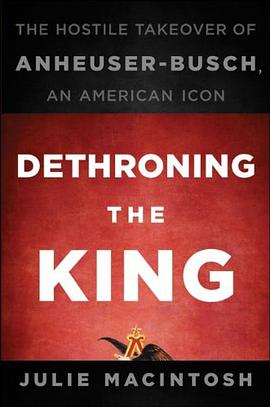
The amazing true story behind the siege of America's favorite beer company How did InBev, a Belgian company controlled by Brazilians, take over one of America's most beloved brands after barely a whimper of a fight? Timing, and some unexpected help from powerful members of the Busch dynasty, the very family that had run the company for more than a century. In Dethroning the King , the award-winning financial journalist who led coverage of the takeover for the Financial Times details how the drama that unfolded at Anheuser-Busch in 2008 went largely unreported as the world tumbled into a global economic crisis second only to the Great Depression. Today, as the dust settles, questions are being asked about how the "King of Beers" was so easily captured by a foreign corporation, and whether the company's fall mirrors America's dwindling financial and political dominance. Discusses how the takeover of Anheuser-Busch will be seen as a defining moment in U.S. business history Reveals the critical missteps taken by the Busch family and the Anheuser-Busch board Argues that Anheuser-Busch had a chance to save itself from InBev's clutches, but strong forces behind the scenes forced it to capitulate From the very heart of America's heartland to the European continent to Brazil, Dethroning the King is the ultimate corporate caper and a fascinating case study that's both wide-reaching and profound.
Amazon.com Exclusive: Q & A with Author Julie MacIntosh
Author Julie MacIntosh What was the most startling piece of information you came across during your interviews and research for Dethroning the King?
Two things shocked me, actually. I had heard about the rough relationship between August Busch III and his son, August Busch IV, but the rumors hadn’t prepared me for the reality of the situation on the ground in St. Louis. They had a huge blowup over whether to buy a top-of-the-line private jet not long after August IV became CEO, when they should have been figuring out how to save Budweiser. The company’s board of directors got stuck trying to mediate their arguments, and I doubt that had been in their job descriptions. I was also surprised at how close Anheuser-Busch came to merging with Modelo to try to save itself, and at how that all ultimately fell apart. I had covered this deal as a journalist and had known the whole time that the two companies were talking, but I hadn’t known they were just inches from the finish line. Did you run into any hurdles as you worked to uncover everything that happened behind the scenes?
I wasn’t worried about getting access to key people on Wall Street who were involved in the takeover. I’d known many of them for years. But I was nervous about the reception I’d get from insiders at Anheuser-Busch. I figured the relationship between August III and August IV would be the toughest thing to explore because people had been so closed-mouthed about it in the past, but that was one of the angles my sources were the most eager to talk about. Those two guys are fascinating characters, and I think the people who had witnessed some of their more outrageous moments felt they deserved to be brought to light as part of the story. I got the sense, in general, that this book was a chance for catharsis for some people. The way it all went down is just too fascinating to sweep under the rug with the rest of the mess from the economic crash. Is this the story of The Busch family dynasty imploding? If so, in what way?
It depends on how you look at it. Adolphus Busch might roll over in his grave if he knew Budweiser was being brewed by Brazilians. But the Busch family hadn’t actually controlled Anheuser-Busch for years – many people just thought they still did. Some family members made hundreds of millions of dollars on this deal. They’re so rich now that it’s almost incomprehensible. That’s not a bad consolation prize. Was the takeover inevitable? And what are the implications now that such a beloved American icon is being run by a foreign company?
If Anheuser-Busch hadn’t arrogantly ignored what was going on in the rest of the world, it wouldn’t have been inevitable. But the company focused far too heavily on America, as if this is the only place where people drink beer. Now, thousands of workers have lost their jobs, beer prices are higher, and you have a bunch of Brazilians running around in Missouri. The company has even started charging for Clydesdale appearances. That Bud Light you drank last weekend was brewed by a Brazilian number-cruncher. The big question is whether that actually matters in a globalized world.
作者简介
目录信息
读后感
罗希特·戴施潘德(Rohit Deshpande)–哈佛商学院Sebastian S. Kresge营销教席教授 我会选择阅读朱莉·麦金托什(Julie MacIntosh)的《废黜国王:敌意收购美国啤酒之王安海斯-布希公司》(Dethroning the King: The Hostile Takeover of Anheuser-Busch, An American King),以及由...
罗希特·戴施潘德(Rohit Deshpande)–哈佛商学院Sebastian S. Kresge营销教席教授 我会选择阅读朱莉·麦金托什(Julie MacIntosh)的《废黜国王:敌意收购美国啤酒之王安海斯-布希公司》(Dethroning the King: The Hostile Takeover of Anheuser-Busch, An American King),以及由...
罗希特·戴施潘德(Rohit Deshpande)–哈佛商学院Sebastian S. Kresge营销教席教授 我会选择阅读朱莉·麦金托什(Julie MacIntosh)的《废黜国王:敌意收购美国啤酒之王安海斯-布希公司》(Dethroning the King: The Hostile Takeover of Anheuser-Busch, An American King),以及由...
本文转自搜狐: 啤酒行业内参 在企业发展史上,每家企业从创立之初,都要经历市场动荡、对手夹击、消费者变化等种种危机和劫难,IBM、GE、三星、强生、GUCCI、同仁堂、上海家化都历经多次涅槃,“啤酒之王”百威(Budweiser)也不例外。 2008年,132岁高龄的百威被英博集团收购,...
本文转自搜狐: 啤酒行业内参 在企业发展史上,每家企业从创立之初,都要经历市场动荡、对手夹击、消费者变化等种种危机和劫难,IBM、GE、三星、强生、GUCCI、同仁堂、上海家化都历经多次涅槃,“啤酒之王”百威(Budweiser)也不例外。 2008年,132岁高龄的百威被英博集团收购,...
用户评价
这本书的开篇就展现出一种令人屏息的叙事力量,作者似乎深谙如何用文字编织出复杂的人性图景。我尤其欣赏它对环境细致入微的刻画,那些文字不仅仅是背景,它们仿佛拥有了自己的生命和呼吸,紧紧包裹着故事中的角色。叙事节奏的把握堪称大师级别,时而如涓涓细流,娓娓道来那些尘封的往事和角色内心深处的挣扎;时而又如同惊涛骇浪,将读者猛地抛入冲突的核心。那些对话的精妙设计,绝非简单的信息传递,而是充满了潜台词和未言明的张力,每一次的交锋都像是一场心理上的角力。读到某些关键转折点时,我甚至需要停下来,回味作者是如何巧妙地埋下伏笔,而这些伏笔在故事后续的展开中,竟能以如此令人拍案叫绝的方式一一兑现。整体而言,它成功地构建了一个宏大而又令人信服的世界观,让人不禁想一头扎进去,跟随主角群一同探索其中的每一个角落,去见证他们的荣耀与失落。
这本书的阅读体验,对我而言,更像是一场漫长而艰苦的徒步旅行,沿途风景壮丽,但每一步都需要付出专注和努力。它的信息密度非常高,每一个段落似乎都蕴含着需要细细品味的细节和暗示。我发现自己不得不时不时地回溯前文,以确保完全捕捉到人物关系网的复杂性以及情节发展的微妙转折。这种需要“用力”去阅读的特性,虽然对追求轻松消遣的读者不太友好,但对于渴望沉浸式体验的文学爱好者来说,无疑是一种极大的满足。我为作者构建的那个社会结构感到震撼,那种严密、近乎窒息的等级制度,以及底层人民在重压下的挣扎与反抗,描绘得真实可触。特别是对仪式感和象征意义的着墨,为整个故事增添了一种近乎宗教般的庄严感,让人对故事中的每一次重大事件都抱持着一种近乎敬畏的心态去面对。
从纯粹的文学技法角度来看,这本书的结构设计堪称精巧的建筑艺术。它不是线性叙事,而是像一个多面体,从不同的角色视角切入,将同一事件展现出截然不同的面貌,每一次的视角切换都像是在黑暗中点亮一盏新的灯,照亮了之前未被察觉的阴影。这种多焦点的叙事策略,极大地增强了故事的悬念和真实感,让你不得不去质疑你所看到的一切。而且,这本书在处理‘希望’与‘绝望’的平衡上,拿捏得极其微妙。它从不吝啬于展示黑暗和残酷,但总能在最深沉的低谷处,留下那么一丝微弱却坚韧的火花,这使得角色的奋斗显得尤为动人,因为你知道他们所面对的阻力是何等巨大。这种对人性的深刻洞察和不动声色的描绘,让我在合上书页后,内心久久无法平静。
这本书最打动我的地方,或许是它对“记忆”和“传承”的探讨。作者似乎在暗示,真正的失败并非肉体的消亡,而是历史的断裂和记忆的扭曲。故事中的许多冲突都源于对过往事实的不同解读和篡改,这使得历史本身成为了最锋利的武器。我欣赏作者对细节的执着,无论是古老的文献描述,还是特定历史事件的官方记载,都被赋予了强烈的质感,仿佛这些文字本身就带有时间的灰尘。它成功地营造了一种宏大的历史宿命感,即便是最微小的个体行为,也被置于一个巨大的历史洪流之中去审视其意义。读完后,我感觉自己不仅仅是读了一个故事,更是被邀请去思考我们自身所处的时代背景和我们所继承的遗产。这种将个人命运与集体记忆紧密编织在一起的处理方式,是这本书最值得称道之处。
老实说,起初我对这类题材有些犹豫,总担心会陷入陈词滥调的窠臼,但这本书彻底颠覆了我的预设。它的独特之处在于对“权力”这一主题进行了极其多维度的解构。它不是简单地歌颂或批判,而是像一个冷峻的解剖师,将权力腐蚀人心的每一个细微环节都暴露在光天化日之下。角色的塑造尤其令人印象深刻,他们身上的道德灰色地带被描绘得淋漓尽致,让人在欣赏其强大能力的同时,又对其深感忧虑和同情。作者的文笔有一种独特的、近乎冷峻的疏离感,但这恰恰服务于故事的严肃性,它使得情感的爆发更加具有冲击力,像是暴风雨来临前压抑的宁静。我特别喜欢作者在处理时间线时的手法,那跳跃和穿插的处理,让历史的重量感和当下的紧迫感交织在一起,读起来有一种史诗般的厚重感。对于那些热衷于深度思考的读者来说,这本书提供的不仅仅是一个故事,更是一系列值得反复咀嚼的哲学命题。
内容详实流畅,颇有点Barbarians at the Gate的感觉,但编辑功力可以高些,另外最终养分还是略微不足,主要受题材限制。
内容详实流畅,颇有点Barbarians at the Gate的感觉,但编辑功力可以高些,另外最终养分还是略微不足,主要受题材限制。
内容详实流畅,颇有点Barbarians at the Gate的感觉,但编辑功力可以高些,另外最终养分还是略微不足,主要受题材限制。
内容详实流畅,颇有点Barbarians at the Gate的感觉,但编辑功力可以高些,另外最终养分还是略微不足,主要受题材限制。
内容详实流畅,颇有点Barbarians at the Gate的感觉,但编辑功力可以高些,另外最终养分还是略微不足,主要受题材限制。