具体描述
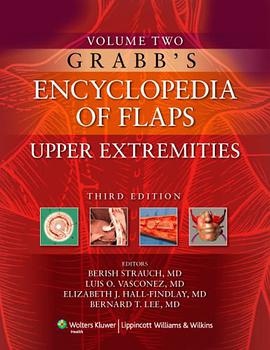
Now in its thoroughly updated Third Edition, this classic work is the most comprehensive reference ever published on surgical flaps for reconstructing defects in the upper extremities. In clearly organized chapters, internationally recognized surgeons describe and illustrate every clinically proven flap option available for repairing every routine and unusual defect. Complementing the text are hundreds of clinical photographs and diagrams of anatomy, blood supply, flap design, and operative procedures. The Third Edition features new chapters by the original experts who have made landmark contributions to the recent literature. Many chapters from the previous edition have been completely revised. Wherever appropriate, the editors have added editorial comments to guide the reader in selection of flaps. The volume is extensively indexed and organized by anatomic region, and chapters follow a uniform format that clearly presents all the information needed on each flap—indications, anatomy, blood supply, surgical techniques, complications, safeguards to keep in mind, and advantages and disadvantages of the flap. From this remarkably complete collection of clinical information, surgeons can select with confidence the best flap for safe, predictable, and aesthetically acceptable results.
The Fabric of Modern Medicine: A Comprehensive Compendium of Surgical Reconstruction A Definitive Guide to Advanced Tissue Transfer Techniques and Principles This expansive volume, The Fabric of Modern Medicine, stands as the definitive, comprehensive treatise on the science, art, and clinical application of advanced surgical flap reconstruction. Moving beyond the foundational principles, this text delves into the intricate physiological, anatomical, and mechanical considerations that underpin successful tissue transfer in contemporary surgical disciplines. It is meticulously structured to serve the needs of seasoned reconstructive surgeons, residents engaged in specialized training, and biomedical engineers seeking a deep understanding of biological material science in a clinical context. Part I: Foundations and Vascular Biology The initial section establishes the bedrock of modern reconstructive surgery, focusing intensely on the microvascular and biological mechanisms that dictate flap viability. We begin with a detailed review of angiogenesis and vasculogenesis, exploring the cellular signaling pathways—including VEGF, PDGF, and FGF families—that govern the recruitment and maturation of new vascular networks. This is followed by an in-depth analysis of endothelial cell biology, examining the role of glycocalyx integrity, nitric oxide bioavailability, and shear stress modulation in maintaining microcirculatory health under ischemic and reperfusion insults. A dedicated chapter addresses the hemodynamic assessment of tissue viability. This covers both invasive (e.g., implantable Doppler monitoring, quantitative angiography) and non-invasive techniques (e.g., near-infrared spectroscopy (NIRS) for tissue oxygen saturation mapping, laser Doppler flowmetry) used for real-time physiological monitoring in the perioperative period. Critical attention is paid to the pathophysiology of flap thrombosis, detailing the coagulation cascade interplay, platelet activation mechanisms within the graft bed, and the pharmacologic strategies employed for thromboprophylaxis and salvage. Part II: Classification and Anatomical Cartography This section provides a rigorous, systematic taxonomy of reconstructive units, moving beyond simple anatomical descriptions to functional and kinematic categorization. The classification system integrates biomechanical properties (elasticity, tensile strength, subcutaneous bulk) with innervation patterns (sensate vs. non-sensate units). Detailed anatomical atlases are presented for every major regional donor site: Fasciocutaneous Units: Comprehensive dissection and functional mapping of the radial forearm, anterolateral thigh (ALT), and medial thigh flaps, emphasizing the identification and preservation of septocutaneous perforators. Specific focus is given to the variations in the septal architecture that influence pedicle length and torsional limits. Muscle and Myocutaneous Units: Exhaustive coverage of latissimus dorsi, rectus abdominis, and gluteal flaps. For muscle-only transfers, the text explores muscle preservation strategies in oncology and trauma, alongside techniques for inducing neovascularization (e.g., recipient site preparation). Mucosal and Specialized Tissue Units: In-depth analysis of oral, pharyngeal, and laryngeal lining reconstruction, including the unique challenges of mucosal graft take and secretory function preservation. Detailed chapters are dedicated to osteomyocutaneous composite units, focusing on bone stock viability assessment (CT perfusion mapping) and fixation methodology. Part III: Perforator Flap Dissection: Precision and Refinement The heart of modern reconstruction lies in the mastery of perforator dissection. This section serves as an advanced surgical manual for the perforator-sparing approach. Preoperative Planning and Imaging Fusion: A thorough exploration of preoperative imaging modalities: Computed Tomography Angiography (CTA), Magnetic Resonance Angiography (MRA), and Doppler ultrasound localization. Emphasis is placed on high-resolution 3D reconstruction and the integration of virtual dissection planes into the surgical navigation strategy. Dissection Techniques Across Donor Sites: Step-by-step photographic and illustrative guides for the meticulous isolation of dominant and accessory perforators for the Deep Inferior Epigastric Artery (DIEA), Superomedial/Inferomedial Genicular Arteries (SMGA/IMGA), and posterior interosseous artery (PIA) systems. Detailed protocols for managing traversing musculature, often involving enzymatic digestion or careful blunt dissection to protect the fragile subdermal plexus. Pedicle Management and Microsurgical Technique: Advanced discourse on pedicle preparation, including pedicle thinning and unveiling—techniques crucial for navigating narrow recipient sites without compromising flow. Comprehensive chapters cover microsurgical anastomosis in challenging environments (e.g., irradiated fields, high tension zones), selection of recipient vessels based on caliber matching, flow dynamics (arterial vs. venous preference), and management of pedicle kinking or torsion post-transfer. Part IV: Functional Restoration and Specialized Applications This volume extends beyond simple coverage to focus on functional restoration in complex defects. Neuromuscular Transfer and Reinnervation: Detailed examination of secondary and tertiary nerve transfers (e.g., thoracodorsal, sural, intercostal nerves) utilized to provide sensory or motor reinnervation to transferred flaps. The kinetics of target reinnervation and the use of targeted muscle reinnervation (TMR) principles in non-limb reconstructions are explored. Head and Neck Reconstruction: Dedicated focus on oncologic resection defects involving the mandible, maxilla, and skull base. Protocols for microvascular free flap transfer in irradiated fields, assessing residual host tissue vascularity via angiography, and methods for achieving functional bolus formation and speech articulation restoration. Limb Salvage and Lower Extremity Trauma: Intensive coverage of techniques for managing massive soft tissue and osseous defects following high-energy trauma or compartment syndrome. This includes the strategic use of staged flap procedures, rotational flap advancement, and the management of chronic wound sequelae, including negative pressure wound therapy integration with flap viability monitoring. Aesthetic and Volume Restoration: Advanced principles of fat grafting as an adjunct to flap reconstruction. Analysis of adipocyte survival in various tissue beds, the role of stromal vascular fraction (SVF) harvesting, and the use of sequential lipofilling protocols to optimize contour and long-term flap volume retention. Part V: Complications and Future Directions The concluding section provides pragmatic guidance on managing the inevitable challenges of complex reconstruction. It features an extensive algorithm for the diagnosis and emergency management of acute flap compromise, differentiating between arterial occlusion, venous congestion, and deep hematoma formation. Protocols for emergency flap revision, thrombolytic administration adjuncts, and the role of hyperbaric oxygen therapy in salvage are delineated. Finally, the text surveys emerging frontiers: inducible tissue expansion using bioengineered scaffolds, the application of 3D bioprinting for custom vascular conduits, and the incorporation of artificial intelligence and machine learning in predicting flap failure based on preoperative physiological data sets. The Fabric of Modern Medicine is an indispensable reference, synthesizing decades of clinical experience with the latest breakthroughs in vascular biology and surgical methodology, presenting a holistic framework for achieving durable, functional, and aesthetically superior reconstructive outcomes.