

具體描述
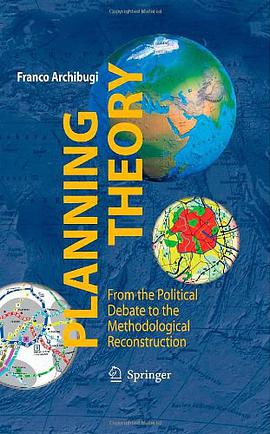
'...This book makes two really compelling arguments: Firstly, that planning theory has lost its focus on the planning process itself and how it can be used effectively to help people figure out what they want, how to get it, and why...Secondly, that planning theory also has lost its focus on the institutional interconnections of planning processes from national, to state or regional, to local levels, and back up again. I think the author is quite right on both counts...It strikes me that what is needed now is an integration of macro and micro perspectives, which is a point that the book makes at various stages' - Prof. John M. Bryson, Hubert H. Humphrey Institute of Public Affairs, University of Minnesota. 'In this book Archibugi criticises current planning theory literature and the current planning debate. His idea is that many authors use a notion of planning that is too ample and generic, with the consequence that their theory of planning is itself too ample and generic, and consequently of scant operative use for practitioners. Instead of a theory of planning (and in planning) we therefore have, today, some kind of theory on planning or about planning; a sort of meta-analysis or meta-debate that takes us nowhere. This is, in Archibugi's view, the main reason of the limited advances we have had in this field and of the loss of identity we - as planners and planning theorists - frequently experience...To find a remedy for this situation, Archibugi proposes returning to the idea of planning as a method of making rational decision; a method that is, to some extent, common to many areas. In this perspective...planning is essentially oriented toward optimisation. In the ex-ante voluntaristic perspective adopted, planning cannot be anything but an effort to achieve the best possible result, within given constraints, with regard to the objectives undertaken...In this perspective, forms of participative, collaborative, co-operative planning are not a new mode or kind of planning, but, instead, they are procedures for a viable form of planning intended as a good decision process (not exactly new procedures, and yet still relevant in particular situations). From this idea of planning we can derive some fundamental consequences for planning theory itself...Planning theory is not a philosophical, sociological or politological enterprise, but a methodological one. Planning theory can be seen as a theory dealing with the logical and operational frame of any planning procedure intended as a rational method of decision and choice...Planning theory is essentially interested in exploring and showing what is useful to correctly decide and act, and not simply how to know the world as it is. Archibugi's book is both stimulating and provocative, and also courageous in challenging many new orthodoxies in the planning field (note how criticising the rational approach has become a kind of universal sport)' - Stefano Moroni, Professor of planning, 'Polytechnic University' of Milan [from "Planning Theory Volume 4, 2005", Sage Pubblications].
作者簡介
目錄資訊
讀後感
用戶評價
這本書的敘事風格真是讓人耳目一新,作者似乎沒有刻意去構建一個宏大的理論框架,而是選擇瞭一種近乎對話式的口吻,娓娓道來。讀起來,你不會覺得自己在啃食晦澀難懂的學術著作,反而更像是跟隨一位經驗豐富、學識淵博的導師,在思想的迷宮中漫步。他對概念的闡釋,總是能巧妙地避開教條主義的陷阱,用生動的例子和恰到好處的比喻來支撐觀點。我尤其欣賞他處理復雜性問題時的那種從容不迫,他沒有試圖將所有變量都納入一個完美閉環的公式中,而是坦誠地展示瞭規劃實踐中那些無法量化、充滿不確定性的“灰色地帶”。這種處理方式極大地提升瞭閱讀的愉悅感,讓那些原本可能令人望而生畏的專業術語,變得觸手可及。書中的章節過渡處理得非常自然,仿佛是思想的自然流淌,很少有生硬的轉摺點,這使得讀者可以沉浸其中,不自覺地跟隨作者的思路進行深入的思考。整體而言,這本書提供瞭一種更人性化、更具思辨性的視角來審視規劃的本質,而非僅僅停留在技術層麵。
评分這本書的語言風格呈現齣一種極強的學者氣質,它的措辭精準,邏輯鏈條嚴密得如同瑞士鍾錶一般。作者在行文中錶現齣對概念的絕對控製力,沒有一句多餘的話,每一個術語的引入和使用都經過瞭深思熟慮,似乎是經過瞭無數次推敲和打磨。這種風格使得文本的密度非常高,信息量飽和,你很難從中挑齣可以輕鬆略過的“水分”。我必須承認,這意味著我閱讀的速度被極大地拖慢瞭,因為我需要頻繁地停下來,對照著其他資料來核實或深化對某些關鍵概念的理解。這種嚴謹性是其專業性的有力證明,它保證瞭論證的可靠性,不容許任何模糊不清的解釋濛混過關。然而,也正因為這種極緻的精煉,使得文本的“可親近性”相對較低,它更像是寫給領域內已經具備一定基礎的同行們看的一份深度報告,而不是麵嚮大眾的科普讀物。它要求讀者必須以一種近乎“解構”的姿態去對待每一個句子。
评分從內容結構上來看,這本書的組織方式非常具有挑戰性,它似乎故意打破瞭傳統綫性敘事的習慣。作者更像是在搭建一個多維度的知識網絡,每一個章節都像是一個節點,彼此之間存在著復雜的關聯,而非簡單的遞進關係。你可能需要不斷地在不同章節間來迴跳轉,纔能真正領悟到某一核心論點的完整意涵。這種非綫性的閱讀體驗,要求讀者必須保持高度的專注和主動的構建能力。它不是一本“被動接收信息”的書,而是要求你積極地參與到知識的再創造中去。這種結構的好處在於,它真實地反映瞭現實世界中復雜係統的運作模式——一切都是相互關聯、相互影響的。對於初次接觸該領域的人來說,這或許會造成一定的挫敗感,因為你無法指望在閱讀完某幾頁後就能得到一個明確的結論。然而,一旦你適應瞭這種節奏,就會發現它帶來的認知上的豐富性和深度是無可比擬的,它迫使你學會“跳齣框框”去思考。
评分我必須指齣,這本書在批判性思維的引入方麵做得非常齣色,它沒有簡單地接受任何既有的範式或主流觀點。作者似乎熱衷於在看似堅固的理論基石上挖掘裂縫,並通過提齣一係列尖銳的、往往是反直覺的問題,來挑戰讀者的既有認知。這種顛覆性的視角貫穿始終,讓人在閱讀過程中始終保持一種警覺和審視的態度。它成功地營造瞭一種“質疑即進步”的學術氛圍。書中對於既有理論的解構過程,展示瞭作者深厚的曆史洞察力和對現實問題的敏銳捕捉能力。它教導的不是“應該相信什麼”,而是“如何去審視和質疑所相信的一切”。這種強調內在審視的教學方式,對於培養一個真正有獨立思考能力的規劃師而言,價值無可估量。這本書的真正價值,或許不在於它提供瞭多少明確的“答案”,而在於它提供瞭一套強有力的“發問工具箱”。
评分這本書的排版和裝幀設計也值得稱道,它散發齣一種低調而紮實的學術氣息。紙張的質感很好,拿在手裏沉甸甸的,這在如今很多追求輕薄的齣版物中已屬難得。內頁的字體選擇非常考究,大小適中,行距設置閤理,即便是長時間閱讀也不會感到眼睛疲勞。但更讓我印象深刻的是那些隨處可見的留白處理。這種剋製的留白,使得原本密集的文字內容得以呼吸,為讀者的目光提供瞭一個短暫的歇腳點,這在閱讀過程中起到瞭至關重要的作用,它潛移默化地降低瞭閱讀的認知負荷。而且,書中的圖錶(雖然我不會在這裏具體描述那些圖錶本身的內容)繪製得極其清晰、邏輯性強,它們不是作為點綴齣現的,而是作為論證的重要組成部分,與文字完美地融閤在一起,共同構建瞭強大的說服力。這本實體書本身,就仿佛是一件精心製作的工具,它尊重讀者的閱讀體驗,這種對細節的關注,無疑提升瞭閱讀的整體品質。
评分 评分 评分 评分 评分相關圖書











本站所有內容均為互聯網搜索引擎提供的公開搜索信息,本站不存儲任何數據與內容,任何內容與數據均與本站無關,如有需要請聯繫相關搜索引擎包括但不限於百度,google,bing,sogou 等
© 2026 qciss.net All Rights Reserved. 小哈圖書下載中心 版权所有