具体描述
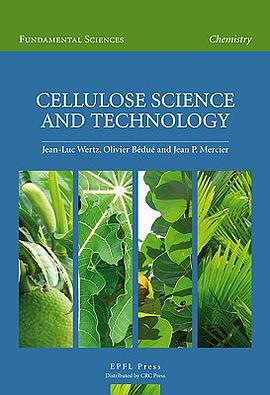
Cellulose Science and Technology: An Introduction to the World of Lignocellulosic Materials This comprehensive volume delves into the multifaceted world of cellulose, the most abundant organic polymer on Earth. Moving beyond a simple description of its chemical structure, this text offers an in-depth exploration of cellulose from its fundamental molecular architecture to its diverse applications in modern industry and emerging bio-technologies. It is designed for advanced undergraduate and graduate students, as well as researchers and professionals seeking a robust understanding of this vital biopolymer. The book begins by meticulously laying the groundwork, establishing a firm grasp of Cellulose Chemistry and Structure. The initial chapters provide an exhaustive review of the primary, secondary, and tertiary structures of cellulose. This includes detailed analysis of the cellulose chains, the role of hydrogen bonding in forming crystalline and amorphous regions, and the impact of polymorphs (Iα, Iβ, II, III, and IV) on material properties. Advanced spectroscopic and diffraction techniques used to probe these structures—such as Solid-State NMR, Raman spectroscopy, and Wide-Angle X-ray Diffraction (WAXD)—are explained with practical examples, highlighting how structural nuances dictate bulk material behavior. A significant portion of the text is dedicated to Isolation, Purification, and Modification of Cellulose. The challenges inherent in isolating pure cellulose from complex lignocellulosic biomass (wood, agricultural residues, and algae) are systematically addressed. This section scrutinizes various pulping and bleaching processes, comparing conventional Kraft and sulfite methods with emerging organosolv and enzymatic approaches. The purification of microcrystalline cellulose (MCC) and nanocellulose—including cellulose nanofibers (CNF) and cellulose nanocrystals (CNC)—receives focused attention. Furthermore, the chemical modification of cellulose is covered extensively. Topics range from classical esterification (e.g., cellulose acetate, nitrate) and etherification (e.g., carboxymethyl cellulose, hydroxyethyl cellulose) to novel grafting techniques used to introduce functional groups for enhanced compatibility in composite materials or tailored solubility profiles. The volume then transitions into The Physics and Rheology of Cellulose Suspensions. Understanding how cellulose fibers interact in aqueous and non-aqueous media is crucial for industrial processing. This section explores the rheological behavior of cellulose slurries and solutions, discussing concepts such as shear-thinning, viscoelasticity, and thixotropy as they relate to high-concentration cellulose systems. The role of solvent selection—from traditional cuprammonium hydroxide and ionic liquids to emerging deep eutectic solvents—in achieving stable, high-concentration cellulose solutions is critically evaluated, emphasizing the thermodynamics of polymer solvation. A substantial segment focuses on Nanocellulose Materials and Their Emerging Applications. This is perhaps the fastest-growing area in cellulose research. The text dissects the fundamental differences between CNF and CNC in terms of aspect ratio, surface charge, and inherent mechanical properties. Detailed methodologies for high-yield production of these nanomaterials are presented, including chemical pre-treatment followed by mechanical disintegration (e.g., homogenization, grinding). The subsequent chapters illustrate how these nanomaterials are leveraged: in the creation of ultra-strong, transparent films for flexible electronics; as superior reinforcing agents in biocomposites; and as highly efficient filtration media due to their high surface area and tunable porosity. Case studies on barrier properties, specifically gas and moisture impermeability of nanocellulose films, are provided. Cellulose in Advanced Materials and Composites forms another core pillar of the book. This section moves beyond pure cellulose processing to examine its role as a structural component. It reviews the principles of fiber-reinforced polymer composites, detailing the interface adhesion mechanisms between cellulose fibers and various polymer matrices (both thermoplastic and thermoset). Special attention is paid to bio-based resins and sustainable composite manufacturing routes, such as resin transfer molding and compression molding utilizing lignocellulosic fillers. Furthermore, the integration of chemically functionalized cellulose into hydrogels and aerogels for applications in tissue engineering scaffolds, supercapacitors, and environmental remediation (e.g., heavy metal adsorption) is thoroughly examined. Finally, the book concludes with Bioconversion and Sustainability Aspects of Cellulose. Recognizing cellulose's role as a second-generation biofuel feedstock, the text explores the enzymatic hydrolysis of cellulose into fermentable sugars. The efficacy and limitations of various cellulase enzyme cocktails, the mechanism of enzymatic action on crystalline substrates, and strategies to overcome enzyme deactivation are discussed in detail. This section also encompasses the broader sustainability narrative—analyzing the life cycle assessment (LCA) of cellulose-derived products compared to petroleum-based alternatives, and highlighting circular economy models for cellulosic waste streams. Throughout, the narrative maintains a rigorous scientific standard, integrating theoretical concepts with practical, real-world industrial relevance. The integration of schematic diagrams, comparative tables of material properties, and discussions of contemporary research challenges ensure that Cellulose Science and Technology serves as an indispensable resource for anyone engaged in the advanced study or industrial application of this essential natural polymer.