
具体描述
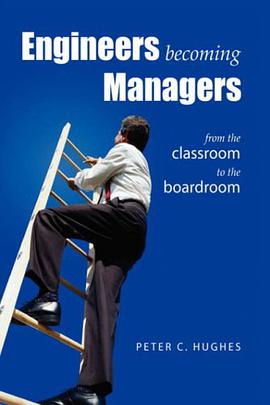
This book rests on three cultures: applied science, engineering, and management. While these plainly overlap to a degree, a person cannot move from success in one to success in another without considerable effort, dedication and talent. Clearly, an understanding of these cultural differences is essential to engineers whose career goal is to evolve into top-level managers. The first step in gaining such understanding is to admit that these three cultures are quite distinct. The applied science culture is typified by the engineering school; the engineering culture is typified by the company engineering design office; and the management culture is typified by the senior management team and the boardroom. The older one gets, the more one realizes the enormous importance of "culture" to almost every important human issue, and the topic of engineers becoming managers is certainly no exception. The culture of a group is the set of all common traits, responses, values, beliefs, priorities, attitudes and behaviors which characterize that group. A group's culture is usually not codified but is passed on, from older group members to younger ones by a thousand subtle messages, most being nonverbal. Part I of This Book Having briefly established in Chapter 1 the inseparability of engineering and management, we then look at the students who enter an engineering school intending to graduate and become employed as young engineers. Although they go to their first classes reasonably expecting that they are now on course to become engineers, as described in Chapter 2 what they usually find on offer, is the culture of applied science. Part I is intended for engineering students and should be read as early as possible in engineering school. Chapter 3 argues that it is the duty of an engineering school to acquaint all of its students not just with careers in civil, chemical and electrical engineering, etc., but about careers in engineering management as well-and to devote an appropriate fraction of its financial and human resources to discharge this duty. Chapter 4 shows, in abridged form, the entire journey from the most abstract of mathematics to the realities of commerce. Also featured in Part I of this book are two subjects (discussed in Chapters 5 and 6) that are crucial for a future in management, yet are rarely considered in a typical undergraduate applied science education: marketing and office politics. Part II of This Book Here, the target readers are functioning engineers in various nonacademic organizations. Part II of this book is intended for young practicing engineers and should be read as early as possible after graduation. One must decide what the future options and opportunities are, what one's strengths and weaknesses are, and what one most enjoys doing-not just over the next year or two, but over the remainder of one's career. Chapter 7 considers risk management. No business can be successful without planning, and planning requires making assumptions about the future. To achieve the desired (well-considered, well-calculated) rewards requires a commitment to the associated (well-considered, well-calculated) risks. The second area examined (Chapter 8) is accountancy. Anyone who does not understand the relation between his activities and the financial needs of the business (or considers this relationship to be someone else's problem) is in a self-limiting career. The third area (Chapter 9) should be a source of excitement for engineers. Their backgrounds and aptitudes prepare them especially well for innovation. The relationship of RandD to innovation and the roles of incubators, technology clusters and university laboratories are also discussed. Finally, in Chapter 10, we examine the important concept of intellectual capital. Knowledge-based companies-the ones that are heavily dependent on what their employees know, how these employees share this knowledge with other employees in the company, and how all this knowledge g
作者简介
目录信息
读后感
用户评价
这本新近出版的关于技术领导力的书,无疑为那些正在从纯粹的技术岗位向管理角色过渡的专业人士提供了一份急需的路线图。我之所以这么说,是因为我亲身经历了那种“被提拔”之后,突然发现自己需要处理的不再是代码或电路图,而是人员冲突、预算分配以及跨部门沟通的窘境。这本书的叙事风格非常贴近实际操作,它没有陷入空泛的管理理论,而是深入探讨了工程师在思维模式上需要进行的“相位转变”。举例来说,书中关于“从解决问题到赋能团队解决问题”这一章的分析尤其犀利,作者用生动的案例展示了“过度干预”对团队士气和长期能力的扼杀作用。它详尽地剖析了技术人员根深蒂固的“完美主义”倾向如何在新角色中成为一种障碍,以及如何通过设定“足够好”的标准和授权,来释放团队的潜力。这本书的价值在于,它直指人性的弱点——即技术专家习惯于掌控一切的冲动,并提供了可立即部署的策略来驯服这种冲动,转而构建一个能够自我驱动的工程部门。它不仅仅是教你如何开会和写邮件,更是一本关于心智重塑的指南,帮助你真正理解,管理者的价值在于杠杆效应,而非单点贡献的叠加。
这本书的结构设计非常巧妙,它采取了一种螺旋上升的学习路径,而不是简单的线性叙事。前三分之一聚焦于“自我认知与身份重塑”,深入剖析了从“做什么”到“让别人做什么”的认知鸿沟;中间部分则转向了“流程与系统构建”,探讨了如何将个人优秀的工程实践抽象化并转化为团队可遵循的、可扩展的SOP(标准操作流程);最后一部分则处理了最棘手的“人际政治与冲突解决”。令我赞叹的是,它并没有避开那些在硅谷文化中常常被美化或掩盖的负面元素。例如,作者坦诚地讨论了如何在保留工程文化精髓的同时,有效应对来自更高层级的、可能与工程价值观相悖的商业压力。书中给出的情景模拟和对话脚本,实用性极强,完全可以拿来当作即时的“战术手册”使用。读完之后,我不再只是被动地应对突发事件,而是开始有意识地设计我的工作周,预留出专门的时间用于高价值的管理活动,而不是被琐碎的“救火”任务所吞噬。
我必须承认,我对于市面上充斥着大量空洞的管理学著作已经有些麻木了,但翻开这本关于技术人员职业进阶的书籍时,我立刻感受到了不同。它的语言极其精炼,几乎没有一句废话,直击核心矛盾。尤其令我印象深刻的是作者对“技术债务与人员债务”之间关系的论述。在传统管理书中,我们常谈论技术债务的清理,但这本书首次将人员发展的停滞或技能的固化提升到与技术债务同等重要的战略高度来对待。作者提出的“知识复利”概念,强调了管理者必须积极地投入时间去指导和培养那些比自己更年轻的技术人才,否则,组织将面临比系统崩溃更隐蔽也更难修复的“人才断层”。这种深度和广度,超越了一般的领导力培训材料。它仿佛是你一位经验丰富的前辈,在午后咖啡时间,毫不留情地指出了你晋升路上最容易绊倒你的那些“看不见的石头”。我强烈推荐给所有那些刚刚从IC(Individual Contributor)晋升上来,感到自己陷入了“夹心层”困境的准高管们,它提供的视角是革命性的,迫使你重新审视“有效性”的定义。
从一个资深工程师的角度来看,这本书提供了极具穿透力的洞察力,它理解我们这种群体的内在驱动力和抗拒点。它没有试图将我们塑造成我们不是的人——例如,它没有要求我们去扮演一个天生的“魅力型领导者”,而是提供了一条基于逻辑、数据和结构化思维的管理路径。书中关于“冲突视为数据点,而非个人攻击”的章节,对我触动极大。作为工程师,我们倾向于将不同意见视为逻辑上的错误,并急于“证明”自己是对的。这本书巧妙地引导读者将这种解决问题的严谨性,转移到理解冲突背后的需求和动机上。它展示了如何使用数据和流程来“去情绪化”团队争论,将注意力重新聚焦于共同的目标。这种方法论,比任何关于“同理心”的空泛描述都更具操作价值,因为它允许我们这些习惯于客观事实的人,找到一个舒适且高效的、与人打交道的支点。这是一本写给那些真正相信“结构优于本能”的技术管理者的教科书。
我习惯于阅读那些聚焦于宏大战略的商业书籍,但这次的阅读体验完全是自下而上的,聚焦于中层管理者的日常磨砺。这本书最吸引我的地方在于其对“沟通的最小可行性单位(MVU of Communication)”的强调。在技术背景的管理层中,信息传递往往要么过于冗长(技术细节塞满),要么过于简略(省略了关键上下文)。这本书提供了一种优雅的平衡点,教会读者如何用最少的、最精确的语言,传递出既能满足高层决策需求,又能确保一线执行团队清晰理解的信息。它甚至提供了一些关于如何撰写“两分钟摘要”和“三分钟深度阐述”的练习。这种对细节的关注,正是技术人员在转型过程中最容易忽略,却也是最致命的环节。它不像那些“鸡汤”式的管理书,而是提供了一套可量化的沟通工具箱。我的团队在应用了书中关于会议纪要和决策追踪的几条建议后,效率立竿见影地提高了,减少了至少20%的重复确认邮件。