
具体描述
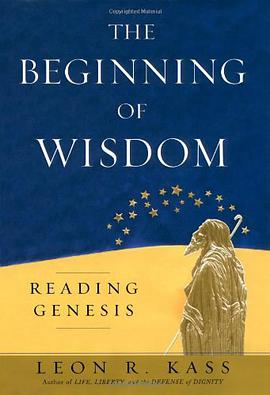
Imagine that you could really understand the Bible...that you could read, analyze, and discuss the book of Genesis not as a compositional mystery, a cultural relic, or a linguistic puzzle palace, or even as religious doctrine, but as a philosophical classic, precisely in the same way that a truth-seeking reader would study Plato or Nietzsche. Imagine that you could be led in your study by one of America's preeminent intellectuals and that he would help you to an understanding of the book that is deeper than you'd ever dreamed possible, that he would reveal line by line, verse by verse the incredible riches of this illuminating text -- one of the very few that actually deserve to be called seminal. Imagine that you could get, from Genesis, the beginning of wisdom. The Beginning of Wisdom is a hugely learned book that, like Genesis itself, falls naturally into two sections. The first shows how the universal history described in the first eleven chapters of Genesis, from creation to the tower of Babel, conveys, in the words of Leon Kass, "a coherent anthropology" -- a general teaching about human nature -- that "rivals anything produced by the great philosophers." Serving also as a mirror for the reader's self-discovery, these stories offer profound insights into the problematic character of human reason, speech, freedom, sexual desire, the love of the beautiful, pride, shame, anger, guilt, and death. Something as seemingly innocuous as the monotonous recounting of the ten generations from Adam to Noah yields a powerful lesson in the way in which humanity encounters its own mortality. In the story of the tower of Babel are deep understandings of the ambiguous power of speech, reason, and the arts; the hazards of unity and aloneness; the meaning of the city and its quest for self-sufficiency; and man's desire for fame, immortality, and apotheosis -- and the disasters these necessarily cause. Against this background of human failure, Part Two of The Beginning of Wisdom explores the struggles to launch a new human way, informed by the special Abrahamic covenant with the divine, that might address the problems and avoid the disasters of humankind's natural propensities. Close, eloquent, and brilliant readings of the lives and educations of Abraham, Isaac, Jacob, and Jacob's sons reveal eternal wisdom about marriage, parenting, brotherhood, education, justice, political and moral leadership, and of course the ultimate question: How to live a good life? Connecting the two "parts" is the book's overarching philosophical and pedagogical structure: how understanding the dangers and accepting the limits of human powers can open the door to a superior way of life, not only for a solitary man of virtue but for an entire community -- a life devoted to righteousness and holiness. This extraordinary book finally shows Genesis as a coherent whole, beginning with the creation of the natural world and ending with the creation of a nation that hearkens to the awe-inspiring summons to godliness. A unique and ambitious commentary, a remarkably readable literary exegesis and philosophical companion, The Beginning of Wisdom is one of the most important books in decades on perhaps the most important -- and surely the most frequently read -- book of all time.
作者简介
目录信息
读后感
用户评价
这本书的封面设计给我留下了极其深刻的印象,那种带着某种古朴气息的排版和选用的纸张质感,让人在翻开扉页之前,就仿佛已经进入了一个充满年代感的知识殿堂。我是一个对书籍的物理体验要求比较高的人,很多时候,一本书的触感和视觉效果,决定了我对它的第一印象,而这本书在这方面无疑是做到了极致。那种略微粗糙却又坚韧的纸张,在指尖摩挲时带来的沙沙声,配合着那深邃的墨色印刷,简直就是一场感官上的盛宴。我花了很长时间仅仅是在欣赏它的装帧,仿佛手里捧着的不是一本普通的书,而是一件精美的艺术品。它的设计理念显然是经过深思熟虑的,不仅仅是为了美观,更是为了营造一种阅读的氛围,一种需要沉下心来,去探索其中奥秘的仪式感。我特别喜欢它字体选择的考究,那种带着古典韵味的衬线字体,在阅读长篇文字时,竟然能带来一种意想不到的舒适感,减少了眼睛的疲劳,让人愿意沉浸其中,久久不愿抽离。这种对外在形式的极致追求,让我对内在的内容也自然而然地产生了极高的期待,期待着文字能与这精美的外壳相匹配,带来同样令人震撼的阅读体验。
从整体的阅读体验来看,这本书的结构呈现出一种螺旋上升的复杂性。它不是简单地从A点到B点线性发展,而是在每一章的结尾,都会巧妙地回扣前文的核心概念,但每一次回扣时,都会引入一个新的维度或更深层次的辩证视角。这使得读者在感到熟悉的同时,又时刻保持着探索的兴奋感。我发现自己会不自觉地回到前面的章节进行重读,不是因为没看懂,而是因为在理解了后文的理论后,再回看前文的论述,会发现之前被忽略掉的那些微妙的暗示和伏笔。这种精密的内在逻辑编织,让我对作者的智识结构感到由衷的敬佩。它拒绝了任何形式的简化或迎合读者的需求,坚持将自己的思想体系完整地呈现出来,即使这意味着需要读者付出额外的耐心和专注力。这是一种对读者智力尊重的体现,它相信读者有能力去攀登,而不是被牵着走。读完之后,我感觉自己像是经历了一场复杂的智力马拉松,身体虽然略感疲惫,但精神上却充满了被充分锻炼后的充实感和清晰感。
这本书的语言风格对我来说,是一种极大的挑战,但也是一种莫名的吸引力所在。它似乎刻意避开了当代流行的那种口语化、快节奏的表达方式,转而采用了某种近乎于散文诗般的句式,辞藻华丽,用词精准,但又极富张力。初读时,我甚至需要频繁地查阅词典,去理解那些被精心雕琢的词汇在特定语境下的确切含义。这让我产生了一种错觉,仿佛我不是在阅读现代出版物,而是正在翻译一份尘封已久的古老手稿。这种阅读上的“阻力”非但没有让我放弃,反而激发了我更深层次的好奇心。我开始放慢速度,仔细品味每一个动词和形容词的选择,体会作者如何通过对语言的精确掌控,来构建他想要传递的情感和思想的深度。这种阅读体验,与其说是“获取信息”,不如说是“参与创作”——读者必须贡献自己的认知努力,才能完全解锁文本的全部魅力。对于那些习惯于轻松阅读的读者来说,这可能是一个门槛,但对于渴望深度思考和语言艺术的探索者来说,这无疑是一座宝库。
我接触过不少哲学或心灵成长类的书籍,但这本书的叙事结构和节奏感,实在是非同凡响。它没有那种生硬的说教腔调,更像是邀请你进行一场深入灵魂的对话。作者巧妙地运用了大量的类比和生活化的场景来阐述那些宏大而抽象的概念,使得即便是初次接触这些思想的人,也能迅速抓住核心要义。我尤其欣赏它对“停顿”的运用,在关键的思想节点,作者会刻意留出大段的空白,或者用一句极简的总结来结束一个章节,这种留白的处理,迫使读者不得不停下来,消化刚刚吸收的信息,而不是像某些书籍那样,一股脑地将信息倾泻而出。这种“呼吸感”极强的写作风格,让阅读过程本身变成了一种冥想练习。有几次我读到深夜,放下书本时,感觉思绪并没有戛然而止,而是随着书中的讨论继续在脑海中回荡、发酵。这种持续的影响力,远超出了我阅读一本普通读物时的体验。它不是提供答案,而是点燃你寻找答案的内在火花,这点非常难得。
这本书给我带来的最直接感受是关于时间观的重塑。在此之前,我总认为“智慧”是一个需要漫长岁月积累才能达成的目标,它意味着阅尽沧桑后的豁达。然而,这本书似乎在探讨一种截然不同的路径,一种更侧重于“当下瞬间”的觉察与把握。作者通过一系列精妙的哲思辩析,将我们对“时间流逝”的线性恐惧解构得支离破碎。我尤其被其中关于“永恒的瞬间”的论述所吸引,它不是否定过去或未来,而是强调了只有在充分意识到当前存在的这一秒时,我们才能真正与宏大的历史进程产生连接。这导致了我在阅读过程中,不断地将书中的理论与我自己的日常行为进行对照反思。比如,当我发现自己在匆忙处理邮件时,脑海中就会浮现出书中的某个段落,提醒我要慢下来,去体会手指敲击键盘的节奏,去感受呼吸的深浅。这种能立即在现实生活中产生回响和校正作用的知识,是极其宝贵的。它不是高悬于理论之上的空中楼阁,而是可以被践行和体会的真理。