
具体描述
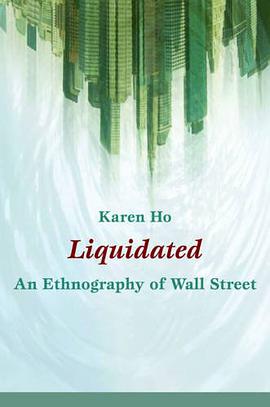
Financial collapses--whether of the junk bond market, the Internet bubble, or the highly leveraged housing market--are often explained as the inevitable results of market cycles: What goes up must come down. In Liquidated, Karen Ho punctures the aura of the abstract, all-powerful market to show how financial markets, and particularly booms and busts, are constructed. Through an in-depth investigation into the everyday experiences and ideologies of Wall Street investment bankers, Ho describes how a financially dominant but highly unstable market system is understood, justified, and produced through the restructuring of corporations and the larger economy. Ho, who worked at an investment bank herself, argues that bankers' approaches to financial markets and corporate America are inseparable from the structures and strategies of their workplaces. Her ethnographic analysis of those workplaces is filled with the voices of stressed first-year associates, overworked and alienated analysts, undergraduates eager to be hired, and seasoned managing directors. Recruited from elite universities as "the best and the brightest," investment bankers are socialized into a world of high risk and high reward. They are paid handsomely, with the understanding that they may be let go at any time. Their workplace culture and networks of privilege create the perception that job insecurity builds character and employee liquidity results in smart, efficient business. Based on this culture of liquidity and compensation practices tied to profligate deal-making, Wall Street investment bankers reshape corporate America in their own image. Their mission is the creation of shareholder value, but Ho demonstrates that their practices and assumptions often produce crises instead. By connecting the values and actions of investment bankers to the construction of markets and the restructuring of U.S. corporations, Liquidated reveals the particular culture of Wall Street often obscured by triumphalist readings of capitalist globalization.
作者简介
何柔宛(Karen Ho),普林斯顿大学人类学博士,明尼苏达大学人类学系教授,研究方向为华尔街制度文化、美国企业裁员现象和新自由主义。
目录信息
读后感
从哈佛毕业后,哈佛毕业生们就要去寻找最能符合哈佛毕业生身份的工作,离开了大学里哈佛,也要生活在各行各业里的哈佛。而唯一能符合哈佛身份的工作,就是华尔街。华尔街因为你的哈佛身份招聘了你,并不在乎你的专业技能,这也就导致了他们招聘来的是一个“哈佛人”的商标,而...
如果曾经在股票等二级市场上侵泡过,都会感受到,交易的核心就是人性的博弈。 此书角度其实很有趣,是一个人类学博士,进入华尔街一段时间后,写出来的对于华尔街的描述。外界对此评价很高,而我却持有不同意见。 首先本书导言部分太差,正式章节采访过多,那种就像中国财经记...
全书算上序言等部分有500多页内容。从整体阅读上,虽然书很厚但是内容相当丰富,涵盖了人类学、经济学、金融知识等多方面的探讨。但是我个人认为这本书的中文书名取得不是很恰当。从英文直译过来应该是“清算:关于华尔街的民族志”。并且如果从全文中心思想的角度来看,本书与...
如下 “For my daughter and son, Mira and August, in the hope that their generation will see greater socioeconomic equality.” P.S. 很有趣 一些部分八卦风气较重外, 讨论比预想中有深度 叙述显得有点絮絮叨叨
用户评价
所以说我可以给。。某些人写作业不是吹牛的。
所以说我可以给。。某些人写作业不是吹牛的。
人类学家,人种学家,来研究华尔街,咋一看,跨界嘛,再一想,啊,华尔街的人和我们已经不是一个人种了!不过这样的混合,确实带来了新的视野和观点,好书!
所以说我可以给。。某些人写作业不是吹牛的。
人类学家,人种学家,来研究华尔街,咋一看,跨界嘛,再一想,啊,华尔街的人和我们已经不是一个人种了!不过这样的混合,确实带来了新的视野和观点,好书!