具体描述
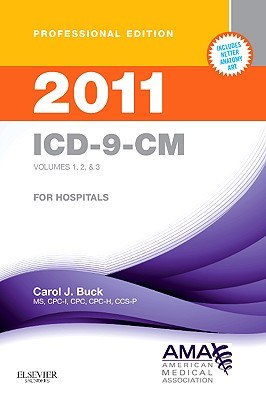
Elsevier and the American Medical Association have partnered to co-publish this ICD-9-CM reference by Carol J. Buck! Code quickly and effectively with the 2010 ICD-9-CM for Hospitals, Vol. 1, 2, and 3, Professional Edition. Combining Netter's Anatomy art and the 2009 Official Guidelines for Coding and Reporting (OCGR) with a format designed by coders for coders, this handy, spiral-bound reference helps you easily access the information you need to stay up to date and ensure the most accurate billing and maximum reimbursement in physician-based and inpatient coding. Plus, you can take this resource into your certification exams for enhanced testing support!
Coverage of all three ICD-9-CM volumes fulfills all of your coding needs with one comprehensive guide. Convenient spiral binding provides easy access in practice settings. Full-color illustrations enhance your comprehension of difficult terminology, diseases/conditions, and specific coding situations. The 2009 Official Guidelines for Coding and Reporting (OGCR) are listed in the front matter of the manual and again by the codes to which they refer for fast, easy access the coding rules. Symbols throughout the text alert you to new, revised, and deleted codes. Symbols and color-coded annotations clearly identify codes that require special consideration before assigning, such as nonspecific codes, includes and excludes, use additional, code first, and codes that cannot be assigned as principal diagnoses. Present on Admission symbol highlights particular diseases that will always be coded as present on admission. CC and MCC symbols help you instantly recognize codes associated with the presence of secondary diagnoses from MS-DRGs. Detailed disease explanations provide more information on common diseases and conditions, helping you code more effectively. Authorized support you can take into your certification exams to enhance your testing experience and help you ensure certification success.
UNIQUE! Full-color Netter anatomy art clarifies complex anatomic information to help you appropriately code related procedures. Use Additional Digit(s) symbol in the index identifies codes that require an additional digit to remind you to check the tabular. New! References to the American Hospital Association's 'Coding Clinic's citations help you find expanded information about specific codes and their usage. New! Age and Sex Edits alert you to codes that are used only with patients of a specific age or sex, helping to ensure accurate reporting. New! Hospital Acquired Condition symbol highlights specific conditions that will always be coded as hospital acquired for easier recognition. New! Complications & Comorbidities (CC) and Major Complications & Comorbidities (MCC) Exclusion lists instantly alert you to CC and MCC exceptions. Manifestation code helps you identify certain conditions where it is important to record both the etiology (cause) and the manifestation (symptom) of the disease. Omit and Code Also codes highlight government text needing special attention. Non OR Procedure symbol help you recognize procedures affected by DRG.
作者简介
目录信息
读后感
用户评价
从纯粹的文献收藏和学术研究的角度来看,这三卷本的《2010 ICD-9-CM for Hospitals, Professional Edition》无疑是具有极高历史价值的文本。考虑到ICD-9-CM体系在随后几年逐步被ICD-10-CM所取代,这套书就成为了一个精确的时间切片,封存了特定年份内美国医疗系统是如何认知和分类疾病与干预措施的官方记录。对于进行回顾性研究的学者而言,想要分析2010年前后特定疾病发病率的变化趋势,或者评估当年某项新技术应用后的编码模式演变,这套书提供了不可或缺的基准数据。它的专业版身份意味着它包含了比普通版本更多的、与医院计费和质量报告紧密相关的细节信息,这对于历史医学社会学或医疗经济学研究者来说,是无可替代的原始资料。收藏这套书,就像收藏了一份时代的医疗档案,其价值将随着时间的推移而愈发凸显。
作为一名资深的住院病案管理师,我需要处理的疑难杂症和罕见病症的编码工作量是巨大的,因此,对于编码手册的准确性和时效性要求达到了近乎苛刻的地步。我必须坦率地说,这套《2010 ICD-9-CM for Hospitals》展现出的专业深度,远远超出了我基于过往经验的预期。它不仅仅是一份代码的简单罗列,更像是对2010年医疗实践诊断和手术过程的一次全面而精细的数字化映射。我发现,在一些特定的并发症或合并症的交叉引用部分,它的注释和指导非常细致入微,准确指出了哪些是需要使用多个编码来完整描述病情的,哪些情况又属于排除项。这种对细节的执着,直接关系到医院的医疗质量数据统计和最终的医保结算准确性。我甚至花了好几个小时专门对比了某些复杂手术操作的编码分支,发现其详尽程度足以支撑最严格的审计要求。这种工具书如果能被一线临床医生和编码员共同珍视和使用,我相信能有效减少因编码错误而产生的沟通成本和后续的追溯麻烦。
我更倾向于将这套书视为一个结构化知识库而非简单的工具书。它的价值体现在其系统性上。它将所有的医学概念,从最基础的感染性疾病到最复杂的神经外科手术,都纳入了一个统一的、可量化的框架之下。这种宏大的系统工程本身就值得称道。特别是在处理那些需要精确界定因果关系的编码时,比如药物不良反应与原有疾病的相互作用,这本书的篇幅和详尽程度保证了研究者或编码员能够追踪到最原始的定义和分类标准。我喜欢偶尔不为查特定代码,而是随机翻阅其中的章节,观察医学知识是如何被“结构化”的。这种对知识体系的整理和标准化工作,是现代循证医学得以建立的基石。这套书不仅服务于日常的编码操作,更重要的是,它为理解和沟通复杂的医疗信息提供了一种跨越不同医疗机构和地域的通用“语言”。
这本书的装帧设计着实让人眼前一亮,那种厚重感和专业气息扑面而来,仿佛握在手中的就是医学编码领域的“圣经”。封面材质的选择很考究,不是那种廉价的塑料覆膜,而是带有一点点磨砂质感的,拿在手里防滑又显档次。内页的纸张质量也相当不错,印刷的字迹清晰锐利,即便是那些密密麻麻的数字和字母组合,也能让人看得清楚明白,长时间查阅眼睛也不会感到疲劳。我特别欣赏它在结构布局上的用心。目录部分的组织逻辑严谨,层次分明,即便是初次接触ICD-9-CM体系的人,也能迅速找到大致的方向。而且,每一卷的索引设计都非常人性化,检索点的覆盖面极广,这对于争分夺秒的临床环境来说,简直是救命稻草。光是翻阅这些实体书,我就能感受到出版方在尊重专业性和易用性之间所做的平衡努力。那种实体书特有的“沙沙”声,以及翻页时指尖与纸张摩擦的触感,是任何电子版本都无法替代的体验,它提供了一种沉浸式的、仪式感的学习和工作氛围,让人不得不对这份严肃的参考资料报以敬意。
我是在一个非常紧张的住院医师轮转期间接触到这套书的,当时我的主要任务是确保所有出院小结中的诊断信息都能被准确地转化为编码用于病案归档。坦白讲,初次面对这么厚重的专业资料,我的第一反应是压力山大,感觉像是在阅读一本天书。然而,这本书的排版设计——尤其是不同层级的代码缩进和斜体、粗体的运用——在视觉上形成了一种清晰的层级结构,这极大地缓解了我的阅读疲劳。更关键的是,它在特定章节提供的“注意事项”或“编码指南”小贴士,简直是雪中送炭。比如,关于如何区分创伤的首次就诊和后续复诊的编码选择,书中给出的情景模拟非常贴切。它不是那种高高在上、只提供规则的冷冰冰的参考书,反而像是一位经验丰富的前辈,在你感到迷茫时,轻声给出最关键的几条口诀。这种润物细无声的引导方式,让我这个编码新手也能快速适应2010年版本的编码逻辑,大大加快了我的学习曲线。