
具体描述
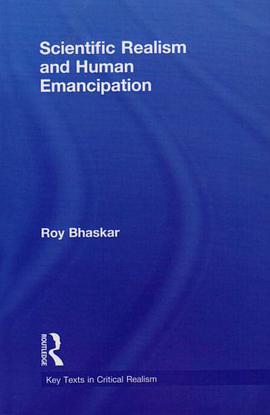
Following on from Roy Bhaskar's first two books, "A Realist Theory of Science" and "The Possibility of Naturalism", "Scientific Realism and Human Emancipation", establishes the conception of social science as explanatory - and thence emancipatory - critique. "Scientific Realism and Human Emancipation" starts from an assessment of the impasse of contemporary accounts of science as stemming from an incomplete critique of positivism. It then proceeds to a systematic exposition of scientific realism in the form of transcendental realism, highlighting a conception of science as explanatory of a structured, differentiated and changing world. Turning to the social domain, the book argues for a view of the social order as conditioned by, and emergent from, nature. Advocating a critical naturalism, the author shows how the transformational model of social activity together with the conception of social science as explanatory critique which it entails, resolves the divisions and dualisms besetting orthodox social and normative theory: between society and the individual, structure and agency, meaning and behavior, mind and body, reason and cause, fact and value, and theory and practice. The book then goes on to discuss the emancipatory implications of social science and sketches the nature of the depth investigation characteristically entailed. In the highly innovative third part of the book, Roy Bhaskar completes his critique of positivism by developing a theory of philosophical discourse and ideology, on the basis of the transcendental realism and critical naturalism already developed, showing how positivism functions as a restrictive ideology of and for science and other social practices.
作者简介
Roy Bhaskar is the originator of the philosophy of critical realism, and the author of many acclaimed and influential works including A Realist Theory of Science, The Possibility of Naturalism, Scientific Realism and Human Emancipation, Reclaiming Reality and Dialectic: The Pulse of Freedom. He is an editor of the recently published Critical Realism: Essential Readings and is currently chair of the Centre for Critical Realism.
目录信息
读后感
用户评价
这本书的整体气质是沉静而有力的,它没有时下流行的那种喧嚣的、试图一鸣惊人的口号式表达,而是采取了一种更为内敛、更具持续影响力的论述方式。在我看来,它成功地将一些看似高高在上的哲学概念,重新置于人类经验和历史发展的广阔背景之下进行考察,使得这些概念不再是书斋里的空谈,而是具有鲜活生命力的思想工具。我尤其关注书中对于“进步”这一概念的微妙处理,它揭示了理解世界方式的演变与人类自我认知的重塑之间存在着怎样一种微妙而深刻的相互作用。读完后,我感觉自己对知识的谦逊态度有了更深层次的理解,这是一种历经思辨洗礼后达到的清明状态。
初读这本书的标题,我便被那种宏大的叙事感所吸引。它似乎在试图搭建一座连接人类经验的深刻理解与更广阔的知识图景之间的桥梁。作者的笔触在处理抽象概念时,展现出一种令人惊叹的细腻与穿透力,绝非寻常的学术论述可以比拟。我尤其欣赏其在构建理论框架时的那种严谨性与创造性的完美结合。不同于许多将哲学思考束之高阁的著作,这本书似乎努力将那些复杂的认识论问题与我们日常感知世界的方式紧密地联系起来,使得原本晦涩的议题变得触手可及,却又不失其应有的深度。阅读过程中,我时常需要停下来,反思自身过往对于“真实”与“理解”的预设,这是一种极具启发性的阅读体验,仿佛作者正在引导我进行一次深层次的智力探险,每一步都充满了发现的乐趣与挑战。它挑战了许多我习以为常的认知盲点,迫使我以一种全新的视角去审视科学知识的建构过程及其潜在的影响力。
阅读此书的过程,对我而言,更像是一次精神上的“长跑”,需要持续的专注力与耐力,但回报是巨大的。作者对细节的关注,体现出一种近乎偏执的学术要求,每一个论据的引入、每一个概念的界定,都经过了千锤百炼。我欣赏作者那种拒绝简单化处理的勇气,他们不回避复杂性,反而选择拥抱复杂性,并展示出如何驾驭这种复杂性以抵达更深刻的真理。书中的某些章节,其论证的密度极高,需要放慢速度,逐句品味,才能真正体会到其中蕴含的深意。这绝不是一本可以轻松消遣的书,它要求读者投入时间、投入思想的能量,但对于那些真正渴望在智力上有所突破的读者来说,它提供的价值远远超出了阅读本身所付出的努力。
这本书的行文风格,在我看来,如同精密乐章的展开,层层递进,逻辑链条的打磨达到了近乎艺术的境界。它巧妙地避开了那种令人昏昏欲睡的纯粹的思辨堆砌,转而采用了一种更具张力的对话模式,仿佛作者正与一位思想深刻的同行者进行一场高水平的智力交锋。我特别留意到作者在论证过程中所使用的那些比喻和类比,它们极其精准地捕捉了那些难以言喻的哲学状态,为复杂的论点提供了坚实的感性支撑。这种叙事的力量,使得即便是初次接触相关领域深层讨论的读者,也能把握住核心的脉络,并被其思辨的广度所折服。它不是那种读完后只需简单归档的读物,而更像是需要被反复咀嚼、在脑海中进行重构的文本,每一次重温,都会从中挖掘出新的层次和更精妙的结构。
这本书在处理宏大主题时,其学术的厚重感丝毫未减,但又奇迹般地保持了一种令人耳目一新的现代感。它似乎捕捉到了当前知识界对于确定性边界的普遍焦虑,并以一种极其克制却有力的笔触去回应这种焦虑。我读到的一些观点,直击了当代社会中信息碎片化与意义失落的痛点,作者并未停留在诊断层面,而是尝试勾勒出一条通往更具批判性洞察的路径。那些关于知识的边界与人类能动性的探讨,其深度和广度令人赞叹,它迫使读者去重新审视,我们所接受的“事实”是如何被编织和维护的。这种对基础信念的审视,是本书最引人入胜之处,它超越了单纯的理论构建,更像是一份对我们认知现状的深刻“体检报告”。