具体描述
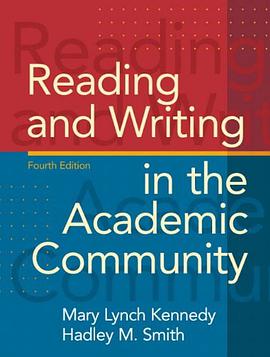
Acclaimed for its compelling readings and provocative images, Reading Culture provides outstanding instruction on how to read and write critically about the culture that surrounds us.
作者简介
目录信息
Visual Resources
Alternate Contents
Preface
Chapter 1: Analyzing Literacy Events
What Is Literacy?
*Sylvia Scribner. “Literacy in Three Metaphors.”
Literacy Campaign Posters
Page to Screen: Print Culture and Digital Media
*Gunther Kress. from Literacy in the New Media Age.
Words, Images, and the Design of the Page
*“Chaos in the Crescent City.”
Literacy Narratives
*Eudora Welty. from One Writer’s Beginnings.
*Malcolm X. from Autobiography of Malcolm X.
Conor Boyland. “Confessions of an Instant Messenger.”
Analyzing Literacy Events
*Shirley Brice Heath. “Talk is the thing.”
*Margaret J. Finders. “Note-Passing: Struggles for Status.”
The Assignment: Writing an Analysis of a Literacy Event
Sample Student Papers
*Russell Kim. “Petitioning the Powers.”
*Valery Sheridan. “’Please, order whatever you want. I insist’: Ordering Meals at the Burning Spear Country Club as a Literacy Event.”
Chapter 2: Generations
Arlie Russell Hochschild, “Gen (Fill in the Blank): Coming of Age and Seeking an Identity”
Thomas Hine, “Goths in Tomorrowland”
*Pew Research Report, “A Portrait of ‘Generation Next’: How Young People View their Lives, Future, and Politics”
*Wyatt Mason, “My Satirical Self”
Making Connections: Where Generations Meet
*E.B. White, “Once More to the Lake”
Gloria Naylor, “Kiswana Brown”
*Courtney E. Martin, “The Problem with Youth Activism”
Margaret Mead, “We Are All Third Generation”
VISUAL CULTURE–Representations of Youth Culture in Movies
James Gilbert, “Juvenile Delinquency Films”
FILM CLIP–Hollywood Stars: Brando, Dean, and Monroe
FIELDWORK–Ethnographic Interviews
Susan D. Craft, Daniel Cavicchi, and Charles Keil, “My Music”
MINING THE ARCHIVE–Life Magazine
Chapter 3: Schooling
Theodore Sizer. “What High School Is.”
*Jean Anyon. “Social Class and the Hidden Curriculum of Work.”
*Visual Essay: Analyzing College Viewbooks.
Making Connections: Memories of Home and School.
*Richard Rodriguez. “The Achievement of Desire.”
Min-Zhan Lu. “From Silence to Words: Writing as Struggle.”
*Jane Jacobs. “Credentialing vs. Educating.”
June Jordan. “Nobody Mean More to Me Than You and the Future Life of Willie Jordan.”
Visual Culture: Picturing Schooldays.
Film Clip: Reading and Writing about Film: Reviews, Histories, Criticism.
Fieldwork: Classroom Observations
“Cross-Curricular Underlife”
Mining the Archive: Textbooks from the Past
Chapter 4: Images
Stuart Ewen and Elizabeth Ewen, “In the Shadow of the Image”
Vertamae Smart-Grosvenor, “When You Meet Estella Smart, You Been Met!”
Suggestions for Reading Advertising
MAKING CONNECTIONS: Images of Gender
*John Berger, “Ways of Seeing”
*Richard Leppert, “The Female Nude: Surfaces of Desire”
Visual Essay: Reading the Gaze: Gender Roles in Advertising *(new visuals)
Visual Essay: Public Health Messages
*Suggestions for Creating Print Ads from Adbusters
*Philip Gefter, “Icons: Fact, Fiction, or Metaphor?”
Visual Essay: Rewriting the Image
*Film Clip: Camera Work: Optical Point-of-View
Camera Work and Editing: Some Useful Terms
Fieldwork: Taking Inventory
Mining the Archive: Advertising Through the Ages
Chapter 5: Style
Dick Hebdige. “Style in Revolt: Revolting Style.”
Visual Essay: Graphic Design in Rock Culture
*Ariel Levy. “Women and the Rise of Raunch Culture.”
Making Connections: Theme Parties
Mark Lawson. “The Very Nasty Party.”
Shana Pearlman. “Mistaken Identity: The Peril of Theme Parties.”
*Visual Essay: Street Fashion(Lolo Veleko)
*Making Connections: Geek Culture
*David Brooks. “The Alpha Geeks.”
*Benjamin Nugent. “Who’s a Nerd, Anyway?”
*Adam Rogers. “Geek Love.”
Rob Walker. “Aura.”
*Visual Essay: Reading Labels, Selling Water.
Film Clip: Makeup and Costumes: Monsters and the Middle Ages.
Mining the Archive: Race and Branding.
Chapter 6: Public Space
Tina McElroy Ansa, “The Center of the Universe”
*Barry Lopez, “Caring for the Woods”
John Fiske, “Shopping for Pleasure: Malls, Power, and Resistance”
*Mike Davis, “Fortress Los Angeles”
Eva Sperling Cockroft and Holly Barnet-Sánchez, “Signs from the Heart: California Chicano Murals”
*Visual Essay: Graffiti Politics–Claiming Interpretive Space
Banksy, “Wall and Piece”
MAKING CONNECTIONS: Public Roadsides, Private Grief
L. Anne Newell, “Roadside Crosses: Centuries-Old Tradition Can Stir Controversy”
Jeff Burlew, “Memorials Cause Controversy”
Visual Culture: The Troubled Landscape
Jason Berry and Richard Misrach, “Cancer Alley: The Poisoning of the American South”
Film Clip: Analyzing Set Design: Cities in Decay
Fieldwork: Observing the Uses of Public Space
Mining the Archive: Take a Walking Tour
Chapter 7: Storytelling
Patricia Hampl, “Red Sky in the Morning”
MAKING CONNECTIONS: Urban Legends
Jan Harold Brunvand, “’The Hook’ and Other Teenage Horrors”
Patricia A. Turner, “I Heard It Through the Grapevine
*Henry Jenkins, “Why Heather Can Write”
*David Itzkoff, “The Shootout Over Hidden Meanings in Video Games”
Robert Warshow, The Gangster as Tragic Hero
MAKING CONNECTIONS: Film Reviews: The Case of Hancock
*Manohla Dargis, “Able to Leap Tall Buildings, Even if Hungover”
*David Denby, “Desperate Men”
Visual Culture: The Graphic Novel: Reader Participation
Marjane Satrapi, “The Veil”
Film Clip: The Art of Adaptation
Fieldwork: Writing a Questionnaire
Mining the Archive: Comic Strips and Comic Books
Chapter 8: Work
Sandra Cisneros, “The First Job”
Tillie Olson, “I Stand Here Ironing”
*Stacy Schiff, “Our Little Women Problem”
Martín Espada, “Alabanza”
*Visual Essay: Working Class Heroes
*Dulce Pinzón, “The Real Story of the Superheroes”
MAKING CONNECTIONS: Offshoring the Great American Dream
Thomas L. Friedman, “The Great Indian Dream”
David Moberg, “High Tech Hi-Jack”
*Steven Greenhouse, “Worked and Overworked”
Visual Culture: Reading Documentary Photography
Charles Bowden, “Camera of Dirt”
Film Clip: Film Documentary and the Role of the Narrator
Fieldwork: Restructuring the Network of a Workplace
James P. Spradley and Brenda J. Mann, “The Cocktail Waitress”
Mining the Archive: Lewis Hine and the Social Uses of Photography
Chapter 9: History
Mary Gordon. “More Than Just a Shrine: Paying Homage to the Ghosts of Ellis Island.”
*Kristen Ann Hass. “Making a Memory of War: Building the Vietnam Veterans Memorial.”
Alan Trachtenberg. “Reading American Photographs.”
*Visual Essay: American Photographs.
Jane Tompkins. “’Indians’: Textualism, Morality, and the Problem of History.”
Christopher Phillips. “Necessary Fictions: Warren Neidach’s Early American Cover-Ups.”
Visual Essay: Warren Neidach, Contra Curtis: Early American Cover-Ups.
*Making Connections: Two Speeches on Race and Racism in the United States.
*Frederick Douglass. “What to the Slave Is the Fourth of July?”
*Barack Obama. “A More Perfect Union.”
Visual Culture: Representations of War.
Marita Sturken. “The Television Image: The Immediate and the Virtual.”
Visual Essay: The Iraq War and Occupation.”
Film Clips: Film Genres: The Western.
Fieldwork: Oral History
Studs Terkel. “The Good War: An Oral History of World War Two.”
Mining the Archive: Local Museum and Historical Societies.
Chapter 10: Living in a Transnational World
Amitava Kumar. Passport Photos.
Making Connections: Colonized and Colonizer
Jamaica Kincaid. “Columbus in Chains.”
*George Orwell. “Shooting an Elephant.”
Gloria Anzaldua. “How to Tame a Wild Tongue.”
*Mary Louise Pratt. “Arts of the Contact Zone”
Photos: Coco Fusco and Guillermo Gomez-Pena, “Two Undiscovered Amerindians Visit the West”
Samuel Fosso, “Le chef qui a vendu l’Afrique aux colons.”
Laura Auricchio. “Works in Translation: Ghada Amer’s Hybrid Pleasures.”
*Inderpal Gerwal. “Traveling Barbie.”
Visual Culture: Transnational Solidarity.
Film Clips: Bollywood.
Mining the Archive: 19th-Century Orientalism.
Credits
Index
· · · · · · (收起)
读后感
用户评价
这本书带给我的,是一种潜移默化的影响,它不是那种看完之后就能立刻感受到立竿见影效果的书,而是需要时间去沉淀,去消化。我发现,自从读了这本书,我似乎对周围的世界有了更敏锐的观察力。一些我以前从未留意过的细节,现在却能引起我的注意。我开始更多地去思考“为什么”,而不是仅仅停留在“是什么”。这种观察力的提升,体现在生活的方方面面,无论是与人交流,还是面对工作中的问题,我都能从中找到新的视角和切入点。而且,这本书也让我对“知识”的理解有了更深的层次。我不再把知识仅仅看作是零散的信息集合,而是开始将其视为一个相互关联的整体。它让我明白,真正的智慧,不仅仅在于知道多少,更在于如何将这些知识融会贯通,并运用到实际生活中。这种“内化”的过程,虽然缓慢,但却是最持久、最有效的学习方式。这本书就像一颗种子,在我心中悄悄地播下,等待着它生根发芽,开花结果。我期待着在未来的日子里,它能继续滋养我的思想,引领我走向更广阔的知识天地。
不得不说,这本书在结构安排上,给我留下了相当深刻的印象。它不是那种一成不变的章节顺序,也不是简单的线性叙述。我注意到,作者似乎有意地在章节之间设置了一些巧妙的“跳跃”和“关联”,仿佛在编织一张巨大的网,将分散的知识点一一串联起来。有时候,读着一个章节,会突然想起前几章提到的某个概念,但细想之下,又发现它与当前讨论的内容有着意想不到的联系。这种“迂回”的叙述方式,反而激发了我更强的探索欲。我不禁开始猜测作者的用意,是在考验读者的逻辑思维能力,还是在引导我们以更宏观的视角去理解整体?我猜是后者,因为随着阅读的深入,我越来越能感受到这种结构所带来的整体感。就像是看一幅画,一开始你可能只注意到局部,但当你看得越多,越能感受到整幅画的构图和意境。而且,书中在不同主题之间转换时,衔接也做得非常自然,不会让人觉得突兀。有时候,一个看似不相关的议题,在作者的妙笔下,又能巧妙地与之前的内容呼应,形成一种“无心插柳柳成荫”的效果。这种对结构精妙的把握,让我由衷地佩服作者的功力。这不仅仅是一本书,更像是一场精心设计的思想旅程,每一步都充满了惊喜和启迪。
说实话,我读过不少书,但这本书在语言风格上的独特性,还是让我眼前一亮。它没有那种刻意卖弄学问的辞藻,也没有故弄玄虚的生僻词汇。相反,它的语言非常朴实,甚至可以说是“接地气”。但是,正是这种朴实的语言,却蕴含着惊人的力量。我常常觉得,作者仿佛就在我身边,用一种最真诚、最直接的方式,与我进行着思想的交流。它没有使用过多的华丽修饰,而是用最精炼的语言,勾勒出最深刻的意象。有时候,一句话就能触动我内心最柔软的地方,或者点醒我某个长期困扰的难题。我发现,这种“大道至简”的语言风格,反而更能传递思想的深度。它不会因为过于复杂的词句而分散我的注意力,而是让我能够集中精力去理解作者想要表达的核心内容。而且,书中在描述一些复杂的情感或抽象的概念时,也运用了一些非常巧妙的比喻,让这些内容变得易于理解,又富有诗意。这是一种将理性与感性完美结合的语言艺术,让我深刻体会到文字的魅力。
这本书,老早就听闻其名,一直想找机会翻翻,最近终于如愿以偿。打开扉页,扑面而来的不是海量的信息,也不是枯燥的说教,而是一种……嗯,怎么说呢,一种熟悉的亲切感。我平时就喜欢钻研些杂七杂八的书籍,从古老的哲学思想,到现代的科普读物,再到一些边缘化的历史故事,我都来者不拒。这本书给我的感觉,就像是一个经验老到的向导,它不直接把你抛入知识的海洋,而是先带你走到岸边,让你感受海风的微拂,观察潮汐的涨落,然后循序渐进地引导你潜入更深的海域。我尤其喜欢它在介绍某些概念时,那种不落俗套的引入方式。不像有些书,上来就是一大段理论框架,读得人昏头转向。这本书的叙述更像是娓娓道来,用一个个生动的小故事,或者一些富有启发性的类比,来解释那些看似晦涩的道理。读着读着,我常常会停下来,陷入沉思,然后不自觉地回想起自己过往的一些经历,将书中的观点与自己的生活经验进行对照。这种“共鸣”的感觉,是阅读的最大乐趣之一,也是这本书带给我的最直接的触动。而且,书中对一些细微之处的观察,也着实令人拍案叫绝。很多我们习以为常的现象,在作者的笔下,却焕发出了新的光彩,让我们重新审视那些被忽略的角落。总的来说,这本书没有给我一种“被灌输”的感觉,反而更像是一次与一位智者精神上的对话,一次思想的深度交流。
从另一个角度来看,这本书最吸引我的地方在于它对“思考”本身的探讨。它不只是简单地提供信息,更重要的是,它教会我如何去思考,如何去分析问题。很多时候,我们读书,只是为了获取知识,但这本书,更像是在打磨我的思维工具。我发现,书中很多篇章都在引导我质疑既定的观念,挑战那些我曾经深信不疑的“事实”。它鼓励我从不同的角度去看待同一个问题,去寻找隐藏在表象之下的更深层次的原因。这种“批判性思维”的训练,对我来说是极其宝贵的。我以前读书,往往容易被作者的观点所影响,甚至全盘接受。但这本书,就像一位严谨的导师,不断地提醒我:“不要轻易下结论,要证据,要逻辑。” 我甚至会在阅读过程中,主动地去反驳书中的某些观点,然后努力去寻找支持或反对的理由。这种“主动参与”式的阅读,让我觉得这本书不再是单向的输出,而是双向的互动。我不再是被动地接收者,而是主动的探索者。这种感觉,让阅读变得更加有趣,也更加有价值。它让我意识到,阅读的真正目的,不仅仅是“知道”,更是“理解”和“思考”。