
具体描述
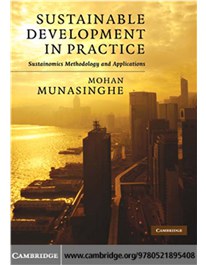
This book provides a rigorous and practical analysis of sustainable development prospects today by applying the innovative sustainomics framework. Developed by the eminent environmental scientist Mohan Munasinghe, sustainomics explores the practical steps in making the transition from the risky business-as-usual scenario to a safe and sustainable future. Its main message is optimistic - although the problems are serious, an effective response can be mounted to make development more sustainable if initiated immediately. The book explains the key principles underlying sustainomics cogently, concisely and with minimum technical jargon. It illustrates the methodology with empirical case studies that are practical and policy-relevant over a wide range of time and geographic scales, countries, sectors, ecosystems and circumstances. The extensive bibliography is useful to researchers of specific issues within sustainable development. This book appeals to a wide audience, including students, researchers from many disciplines, policy analysts, public and private-sector decision makers, and development practitioners.
作者简介
Born in Sri Lanka, Prof. Mohan Munasinghe shared the 2007 Nobel Prize for Peace, as Vice Chairman of the United Nations Intergovernmental Panel on Climate Change (IPCC-AR4), for work on global warming and sustainable development. Currently, he is also Chairman of the Munasinghe Inst. of Development (MIND), Colombo; Professor of Sustainable Development at the University of Manchester, UK; and Honorary Senior Advisor to the Sri Lanka Govt.
He has earned post-graduate degrees in engineering, physics and development economics from Cambridge University (UK), Massachusetts Institute of Technology (USA), and McGill University and Concordia University (Canada). Prof. Munasinghe has also received several honorary doctorates (honoris causa). Highlights from 40 years of distinguished public service include working as Senior Energy Advisor to the President of Sri Lanka, Advisor to the United States Presidents Council on Environmental Quality, and Senior Advisor/Manager, World Bank.
He has taught as Visiting Professor at a number of leading universities worldwide, and won many international prizes and medals for his research and its applications. Prof. Munasinghe has authored 92 books and over three hundred technical papers on economics, sustainable development, climate change, power, energy, water resources, transport, environment, disasters, and information technology. He is a Fellow of several internationally recognized Academies of Science, and serves on the editorial boards of a dozen academic journals
目录信息
Prologue
Part I. Framework and fundamentals: 1. Overview and summary
2. Sustainomics framework
3. Economics of the environment
4. Ecological and social aspects
Part II. Global and transnational applications: 5. Global analytical applications
6. International process applications: multi-level, multi-stakeholder, trans-disciplinary dialogues
Part III. National and macroeconomic applications: 7. National economywide applications
8. Mathematical macro-model applications
9. Computable general-equilibrium (CGE) modelling
Part IV. Sub-National sectoral and system applications:
10. Energy sector applications
· · · · · · (收起)
读后感
用户评价
这本书给我的整体感受是——它是一份充满挑战但极其鼓舞人心的蓝图。它最成功的地方在于,它成功地将晦涩的理论概念“去魅”,用生动的叙事将可持续发展转变成了一场人人可以参与的、关于创造更优未来的集体行动。书中关于“社会创新”的章节尤其触动我。作者展示了草根社区如何通过非正式的网络和文化适应性,孵化出比自上而下的政府项目更具生命力的解决方案。它描绘了一幅未来工作图景,强调了软技能——如同理心、跨文化沟通和系统性思维——在可持续转型中的核心地位,远比单纯的技术知识重要。这本书不是告诉你如何“修复”世界,而是教你如何“设计”一个更好的世界。它激励我开始重新审视自己的职业选择和社会参与方式,不再满足于旁观者的角色,而是渴望成为变革的积极驱动力。这本书,与其说是阅读材料,不如说是一份行动宣言。
读完这本书,我感觉自己像进行了一次深度思维的洗礼,它挑战了我过去对“发展”二字的固有认知。这本书的叙事节奏非常引人入胜,它不像传统学术著作那样枯燥乏味,反而更像是一部跨学科的调查报告,每一章都在揭示隐藏在日常决策背后的深层结构性问题。我印象最深的是它对城市基础设施韧性建设的探讨。作者没有仅仅罗列技术方案,而是深入分析了地方政府在应对气候变化冲击时所展现出的治理能力差异。通过对比几个不同文化背景城市的应对策略,这本书揭示了社区参与度、跨部门协作机制在决定项目成败中的关键作用。它非常坦诚地指出了许多可持续发展倡议失败的原因,往往不是因为技术不成熟,而是因为政治意愿不足或利益集团的阻挠。这本书就像一个放大镜,把那些试图掩盖在繁复报告下的真实挑战赤裸裸地呈现在我们面前,让人不得不正视变革的艰巨性,但也因此让人对那些成功案例更加肃然起敬。
这本书简直是为我这种既关心地球未来又想在现实世界中有所作为的人量身定做的!我一直都在寻找那种既有宏大理论框架,又能提供切实可行操作指南的读物,而《可持续发展实践》完美地填补了这个空白。它并没有停留在空泛地谈论“绿色”和“未来”,而是深入剖析了当前社会、经济和环境系统之间错综复杂的关系。特别是关于供应链透明度和循环经济模式的章节,简直是教科书级别的解析。作者没有回避企业在实现可持续发展过程中面临的利益冲突和短期盈利压力,而是提供了一系列基于案例研究的、经过时间检验的解决方案。比如,书中详细介绍了某跨国服装品牌如何通过技术创新彻底改变了其原材料采购流程,不仅降低了环境足迹,还意外地提升了品牌忠诚度。这种将理想主义目标与务实商业逻辑相结合的叙事方式,让人读起来充满了动力,感觉可持续发展不再是遥不可及的乌托邦,而是触手可及的商业机遇。我尤其欣赏它对“共同利益”的定义,强调了社会公平与环境健康必须是相互依存的,而不是此消彼长的权衡。
这本书的语言风格极其精炼,几乎没有一句废话,信息密度高到需要反复研读才能完全消化。它似乎预设了读者有一定的基础知识,但这恰恰是它的优点所在——它直奔核心,毫不拖泥带水地探讨了可持续发展目标(SDGs)在不同尺度上的量化与评估难题。我发现它在方法论上的贡献尤其突出,特别是关于生命周期评估(LCA)在决策支持系统中的应用部分,提供了非常清晰的数学模型和逻辑框架。对于从事政策分析或者环境工程领域的专业人士来说,这本书无疑是一本必备的工具书。它没有提供简单的“是或否”的答案,而是教我们如何提出更好的问题,如何设计更稳健的指标体系来衡量我们是否真正朝着可持续的方向迈进。那些关于能源转型路径的对比分析,逻辑严密到让人无法反驳,它详细拆解了不同能源技术从实验室到大规模商业化过程中必须跨越的政策、经济和技术障碍,读完之后对全球能源格局的理解提升了好几个层次。
这部作品的独特之处在于其强烈的全球化视角,它超越了单一国家或地区的发展困境,将可持续性置于地缘政治和全球治理的宏大背景下进行审视。我特别欣赏作者对“代际公平”的深刻阐释,这不仅仅是简单的资源分配问题,更涉及知识产权、技术转移和全球责任的划分。书中对全球南方国家在气候适应性建设中面临的融资困境和技术鸿沟的描述,充满了人文关怀和深刻的洞察力。它没有采用居高临下的姿态,而是以平等的姿态探讨合作机制的构建。我注意到,在讨论国际气候谈判的僵局时,作者巧妙地引入了博弈论的分析工具,使得那些看似无解的僵局有了新的解读角度。这种跨学科的融合,让这本书的阅读体验非常丰富,它既有关于人类命运共同体的哲学思辨,又不失对具体国际条约条款的严谨解读,是少有的能兼顾理论高度和实践深度的著作。
Sustainability in the Twenty-FirstCentury Applying Sustainomics to Implement the Sustainable DevelopmentGoals 20190909 Mann Library
Sustainability in the Twenty-FirstCentury Applying Sustainomics to Implement the Sustainable DevelopmentGoals 20190909 Mann Library
Sustainability in the Twenty-FirstCentury Applying Sustainomics to Implement the Sustainable DevelopmentGoals 20190909 Mann Library
Sustainability in the Twenty-FirstCentury Applying Sustainomics to Implement the Sustainable DevelopmentGoals 20190909 Mann Library
Sustainability in the Twenty-FirstCentury Applying Sustainomics to Implement the Sustainable DevelopmentGoals 20190909 Mann Library