
具体描述
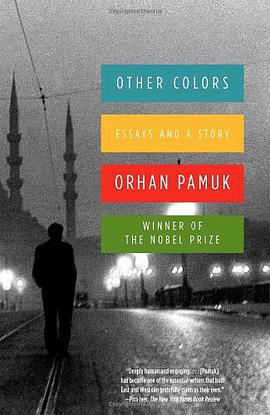
Orhan Pamuk’s first book since winning the Nobel Prize, Other Colors is a dazzling collection of essays on his life, his city, his work, and the example of other writers.
Over the last three decades, Pamuk has written, in addition to his seven novels, scores of pieces—personal, critical, and meditative—the finest of which he has brilliantly woven together here. He opens a window on his private life, from his boyhood dislike of school to his daughter’s precocious melancholy, from his successful struggle to quit smoking to his anxiety at the prospect of testifying against some clumsy muggers who fell upon him during a visit to New York City. From ordinary obligations such as applying for a passport or sharing a holiday meal with relatives, he takes extraordinary flights of imagination; in extreme moments, such as the terrifying days following a cataclysmic earthquake in Istanbul, he lays bare our most basic hopes and fears. Again and again Pamuk declares his faith in fiction, engaging the work of such predecessors as Laurence Sterne and Fyodor Dostoyevsky, sharing fragments from his notebooks, and commenting on his own novels. He contemplates his mysterious compulsion to sit alone at a desk and dream, always returning to the rich deliverance that is reading and writing.
By turns witty, moving, playful, and provocative, Other Colors glows with the energy of a master at work and gives us the world through his eyes, assigning every radiant theme and shifting mood its precise shade in the spectrum of significance.
作者简介
Orhan Pamuk is the winner of the Nobel Prize in Literature for 2006. His novel My Name Is Red won the 2003 IMPAC Dublin Literary Award. His work has been translated into more than fifty languages. He lives in Istanbul.
目录信息
LIVING AND WORRYING
1. The Implied Author
2. My Father
3. Notes on April 29, 1994
4. Spring Afternoons
5. Dead Tired in the Evening
6. Out of Bed, in the Silence of Night
7. When the Furniture Is Talking, How Can You Sleep?
8. Giving Up Smoking
9. Seagull in the Rain
10. A Seagull Lies Dying on the Shore
11. To Be Happy
12. My Wristwatches
13. I’m Not Going to School
14. Rüya and Us
15. When Rüya Is Sad
16. The View
17. What I Know About Dogs
18. A Note on Poetic Justice
19. After the Storm
20. In This Place Long Ago
21. The House of the Man Who Has No One
22. Barbers
23. Fires and Ruins
24. Frankfurter
25. Bosphorus Ferries
26. The Islands
27. Earthquake
28. Earthquake Angst in Istanbul
BOOKS AND READING
29. How I Got Rid of Some of My Books
30. On Reading: Words or Images
31. The Pleasures of Reading
32. Nine Notes on Book Covers
33. To Read or Not to Read: The Thousand and One Nights
34. Foreword to Tristram Shandy:
Everyone Should Have an Uncle Like This
35. Victor Hugo’s Passion for Greatness
36. Dostoyevsky’s Notes from Underground: The Joys of Degradation
37. Dostoyevsky’s Fearsome Demons
38. The Brothers Karamazov
39. Cruelty, Beauty, and Time: On Nabokov’s Ada and Lolita
40. Albert Camus
41. Reading Thomas Bernhard in a Time of Unhappiness
42. The World of Thomas Bernhard’s Novels
43. Mario Vargas Llosa and Third World Literature
44. Salman Rushdie: The Satanic Verses and the Freedom of the Writer
POLITICS, EUROPE, AND OTHER PROBLEMS OF BEING ONESELF
45. PEN Arthur Miller Speech
46. No Entry
47. Where Is Europe?
48. A Guide to Being Mediterranean
49. My First Passport and Other European Journeys
50. André Gide
51. Family Meals and Politics on Religious Holidays
52. The Anger of the Damned
53. Traffic and Religion
54. In Kars and Frankfurt
55. On Trial
56. Who Do You Write For?
MY BOOKS ARE MY LIFE
57. The White Castle Afterword
58. The Black Book: Ten Years On
59. A Selection from Interviews on The New Life
60. A Selection from Interviews on My Name Is Red
61. On My Name Is Red
62. From the Snow in Kars Notebooks
PICTURES AND TEXTS
63. Sirin’s Surprise
64. In the Forest and as Old as the World
65. Murders by Unknown Assailants and Detective Novels
66. Entr’acte; or, Ah, Cleopatra!
67. Why Didn’t I Become an Architect?
68. Selimiye Mosque
69. Bellini and the East
70. Black Pen
71. Meaning
OTHER CITIES, OTHER CIVILIZATIONS
72. My First Encounters with Americans
73. Views from the Capital of the World
THE PARIS REVIEW INTERVIEW
TO LOOK OUT THE WINDOW
MY FATHER’S SUITCASE
Index
· · · · · · (收起)
读后感
用户评价
这本书给我的感觉,就像是走进了一个极其古老但维护得很好的博物馆。每一件展品——也就是每一个章节或每一段文字——都带着厚重的历史感和独特的质地。作者的词汇量和对意象的驾驭能力令人咋舌,他能将一些非常日常的物体,赋予一种近乎神谕般的分量。我特别注意到了书中对光影的描写,那不是简单的明暗对比,而是复杂的光谱分析。比如,描述清晨的雾气时,用的词汇可以精准地划分出虹膜的不同波长,这种对细节的偏执,构建了一个无比真实又略带超现实感的文学世界。读完之后,我发现自己对日常生活中那些被忽略的细节,比如光线穿过树叶的方式、雨滴落在不同材质上的声音,都开始有了全新的感知。这不仅仅是一次阅读,更是一次对感官世界的重新校准和升级。
这本《Other Colors》真是让人眼前一亮,它不像我预想中的那样拘泥于某种固定的叙事框架,反而像是一幅流动的、不断变化的色彩图景。作者的笔触极其细腻,对于人物内心世界的描摹简直是入木三分。我尤其喜欢其中对于“灰色地带”的探讨,那种介于黑白之间的模糊感,被描绘得既真实又富有诗意。书中很多场景的切换都处理得非常巧妙,仿佛电影镜头一样,一帧一帧地在脑海中构建起复杂的情感空间。我常常在阅读的时候,会不自觉地停下来,回味某一个段落,因为它触及到了我过去从未曾留意到的情感角落。比如主人公在面对重大抉择时的那种犹豫和挣扎,那不仅仅是简单的对错选择,而是关于自我认同的深刻拷问。而且,这本书的语言风格非常独特,时而古典凝练,时而又充满了现代的跳跃感,这种混搭反而带来了一种奇妙的和谐,让人在阅读时始终保持着高度的专注。
坦白说,初读这本书时,我差点被那些层出不多的象征意义给绕晕了。这不是一本可以让你轻松翻阅的书,它需要你投入精力去解码。书中的“色彩”显然不仅仅是视觉上的概念,它们代表着不同的情绪状态、社会阶层,甚至是对既定秩序的反叛。有那么几章,情节发展得异常缓慢,几乎像是在进行一场深刻的哲学思辨,读起来确实有些吃力,需要反复咀嚼。但一旦你抓住了作者埋下的线索,那种豁然开朗的感觉是无与伦比的。我特别欣赏作者在构建世界观上的野心,它似乎在探讨一个宏大的主题——关于身份的流动性和不可固化性。我花了整整一个下午的时间去研究其中关于“蓝调”与“赤红”碰撞的那部分,那种张力写得惊心动魄,仿佛能听到文字在纸面上摩擦的声音。这本书更像是一件需要被细细品味的艺术品,而不是快消品,非常适合那些喜欢深度挖掘文本内涵的读者。
如果说市面上大部分小说都在追求快速的感官刺激,那么《Other Colors》则完全反其道而行之,它像一位耐心的织工,用极其微小的针脚,编织出一张巨大而复杂的网。我最欣赏的一点是,作者似乎对“不完美”抱有一种近乎偏执的赞美。书中的角色没有一个是完美的英雄,他们都带着各自的缺陷、阴影和难以启齿的秘密。正是这些“杂色”的存在,才使得整个故事充满了生命力和真实感。我记得有一段描写一个配角如何默默地处理自己失败的人生,那种克制而又汹涌的悲伤,简直让人心碎。这种对人性幽暗面的坦诚揭示,让这本书的厚度远远超过了它的页数。阅读它的时候,我时常会感到一种强烈的共鸣,仿佛作者偷窥了我的日记本,把那些我羞于承认的念头,用如此优美的文字呈现了出来。
从结构上来说,这本书简直是个迷宫。叙事视角不断地在不同人物和时间线上跳跃,有时候我需要停下来,在脑子里重新梳理一下“谁在什么时候说了什么”。这种碎片化的处理方式,虽然增加了阅读的难度,但同时也极大地增强了故事的张力——你永远不知道下一秒会从哪个角落冒出一个关键信息。这种手法,在我读过的当代文学作品中,算是处理得最为大胆和成功的一个。它要求读者从被动的接受者转变为主动的建构者,我们必须自己去填补那些留白的、未言明的联系。特别是关于“遗忘”这一主题的探讨,作者没有给出任何明确的结论,只是将各种色彩的碎片抛给我们,让我们自己去拼凑出记忆的残骸。这种互动性,让阅读体验变得异常个人化和深刻。