
具体描述
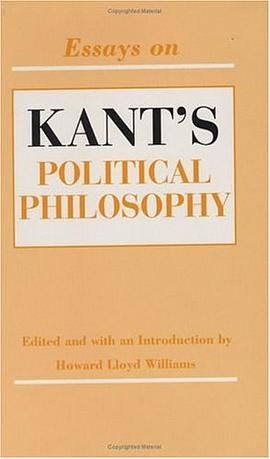
As a political philosopher, Kant has until recently been
overshadowed by his compatriots Hegel and Marx. With his
strong defense of the rights of the person and his deep
insight into the strengths and weaknesses of modern society
Kant, possibly more than any other political thinker,
anticipated the problems of the late twentieth century.
Kant's political philosophy, wedded as it is to rights,
reform and gradual progress, is emerging from the shadows
cast by Hegelian and Marxist thinking about the state.
In this volume, thirteen distinguished contributors from the
United States, Canada, Britain, and Germany cast light on
important aspects of Kant's liberal thinking. Key topics
covered include Kant's liberal reformism, his relation with
Hegel, his attitude to women, the use of reason, revolution,
Kant's optimism and his moral and legal rigorism.
作者简介
Howard Williams is a reader in political theory in the
Department of International Politics, University College of
Wales, Aberystwyth. His previous publications include
Kant's Political Philosophy, Concepts of
Ideology, and Hegel, Heraclitus, and Marx's
Dialectic.
目录信息
读后感
用户评价
This exceptional collection, "Essays on Kant's Political Philosophy," offers a profound and multifaceted engagement with the philosophical underpinnings of political life. The contributors demonstrate a remarkable ability to elucidate Kant’s complex arguments, making them accessible yet retaining their intellectual rigor. I found the exploration of Kant's distinction between juridical (legal) and moral duties particularly illuminating. The essays here meticulously unpack how Kant believed that even if a law is morally objectionable, there remains a juridical duty to obey it, provided it does not directly violate fundamental rights. This nuanced understanding of obedience and resistance is crucial for comprehending the stability of political order. The discussion on the concept of the "state of nature" and its role in Kant's social contract theory is another area where this book truly shines. The authors skillfully explain how Kant viewed this hypothetical state not as a historical reality, but as a conceptual tool to justify the necessity of civil society and the establishment of a public legal order. The book also provides a thorough examination of Kant's arguments for the separation of powers within a republic, emphasizing his belief that this division is essential for preventing the abuse of power and safeguarding individual liberties. The critical perspectives offered within the collection, addressing potential critiques and alternative readings of Kant's work, enhance its value by fostering a more comprehensive and balanced understanding. This is a collection that not only illuminates Kant's ideas but also prompts critical reflection on the enduring challenges of political philosophy and the foundations of a just society.
Navigating the complexities of Kant's political philosophy can be an arduous task, but "Essays on Kant's Political Philosophy" makes this journey significantly more rewarding. The contributors have a remarkable ability to distill Kant’s often-abstract arguments into digestible and thought-provoking analyses. I was particularly struck by the essay that delves into Kant's concept of "public right" and its relationship to the state's authority to enforce laws. The authors explore the intricate balance Kant strikes between individual liberty and the need for a sovereign power to maintain order, a tension that remains central to political discourse today. The discussion of the "social contract" in Kant’s thought is also a highlight. It’s not simply a historical agreement, but a regulative idea that provides the justification for legitimate political authority. The essays here explore this concept from various angles, revealing its profound implications for our understanding of consent and obligation. The book also offers a fresh perspective on Kant’s pacifism, moving beyond simplistic interpretations to examine the nuanced arguments that underpin his vision for perpetual peace. The concept of a federation of free states, guided by international law, is presented not as a utopian dream, but as a rationally grounded aspiration. The intellectual generosity of the authors is evident in their willingness to engage with each other’s interpretations, creating a dynamic and intellectually stimulating collection. This is a book that will undoubtedly provoke debate and encourage further scholarship. It’s a testament to the enduring vitality of Kant’s political thought that such a sophisticated and comprehensive collection can be assembled, offering new avenues for understanding his profound influence on the modern world.
The intellectual rigor displayed in "Essays on Kant's Political Philosophy" is nothing short of astonishing. Each essay feels like a meticulously crafted argument, building upon established scholarship while simultaneously pushing the boundaries of our understanding. I was particularly captivated by the essay that examines Kant's concept of the "kingdom of ends" and its application to international relations. The author masterfully illustrates how this seemingly abstract notion of treating humanity always as an end and never merely as a means can serve as a powerful framework for understanding the moral imperatives that should guide our interactions with other nations. The exploration of the tension between republicanism and cosmopolitanism within Kant's work is another area where this collection truly shines. It’s a delicate balancing act, and the contributors here navigate it with impressive skill, revealing the complexities and potential contradictions inherent in Kant's thought. The discussions surrounding property rights and their justification within a Kantian framework also provided significant food for thought. It’s easy to take our modern understanding of property for granted, but the essays delve into the philosophical underpinnings of this concept, demonstrating how Kant's emphasis on individual autonomy and the social contract provides a robust defense. What’s more, the book doesn’t shy away from the critical perspectives on Kant’s political philosophy. There are insightful critiques that challenge certain interpretations and offer alternative readings, which is crucial for any balanced intellectual engagement. This willingness to engage with criticism makes the collection feel more dynamic and intellectually honest. The breadth of topics covered, from the nature of obligation to the limits of state power, ensures that readers will find something that sparks their curiosity and deepens their appreciation for the multifaceted nature of Kant's political legacy. It's a book that rewards careful reading and thoughtful reflection, offering new insights with each chapter.
"Essays on Kant's Political Philosophy" presents a masterclass in engaging with one of history's most profoundly influential thinkers. The contributors demonstrate an exceptional ability to unpack Kant’s often-challenging prose and present his political ideas with clarity and intellectual rigor. I was particularly captivated by the essay that examines Kant's critique of the "right of resistance." The author meticulously explores Kant's arguments against rebellion, highlighting his preference for gradual reform and his commitment to legal continuity as essential for maintaining social order and preventing greater injustices. This nuanced understanding of Kant's conservatism is vital for a balanced appreciation of his political philosophy. The discussion on the concept of "autonomy" as the foundation of Kant's political thought is another area where this collection truly shines. It’s not just political freedom, but the capacity of individuals to be self-legislating, to be governed by laws they have, in a sense, given to themselves. The essays here explore the implications of this concept for our understanding of rights, responsibilities, and the very nature of a just political community. The collection also provides a thorough examination of Kant's teleological view of history, particularly as it relates to the eventual triumph of reason and the establishment of perpetual peace. The contributors skillfully connect Kant's philosophical insights to his practical political proposals, offering a comprehensive and insightful overview of his thought. This is a deeply rewarding read for anyone seeking a sophisticated and comprehensive understanding of Kant's political legacy and its ongoing significance.
The intricate nuances of Immanuel Kant's political philosophy are brought to vivid life in this outstanding collection, "Essays on Kant's Political Philosophy." The contributors showcase a remarkable command of Kant's writings, meticulously dissecting his arguments and revealing their enduring relevance to our modern political landscape. I found the section dedicated to Kant's concept of civic duty particularly illuminating. The authors explore the Kantian understanding of the citizen's obligation to obey laws, even those they may disagree with, while simultaneously upholding the right to criticize and advocate for reform. This delicate balance between obedience and dissent is a cornerstone of liberal democracy, and the essays here provide a profound philosophical grounding for this principle. The exploration of the "public use of reason" is another highlight. It’s not simply about expressing opinions, but about engaging in rational discourse that can contribute to the common good. The essays delve into the conditions under which such public discourse is possible and its crucial role in a well-functioning republic. The book also addresses the complexities of Kant's views on colonialism and his critiques of arbitrary power, offering a more complete and critical understanding of his thought. The sophisticated analysis presented in each essay fosters a deeper appreciation for the philosophical underpinnings of our political systems and the moral responsibilities that come with citizenship. This is a collection that encourages active engagement with Kant’s ideas, prompting reflection on how these historical arguments continue to shape our contemporary political debates and aspirations for a just society.
The depth and breadth of philosophical inquiry found within "Essays on Kant's Political Philosophy" are truly exceptional. This isn't a casual read; it's an intellectual journey that rewards careful attention and contemplation. I was particularly engrossed by the essay that meticulously dissects Kant's conception of the "general will" and its role in establishing a legitimate political order. The author artfully illustrates how Kant, while valuing individual autonomy, also recognized the necessity of a collective agreement for the functioning of a just society. The exploration of property rights and their philosophical justification within Kant's system provided a profound understanding of the foundations of individual ownership and its limits. The essays here delve into the intricate arguments that connect our moral duties to our political obligations, offering a robust defense of private property that goes beyond mere historical possession. Furthermore, the book offers a compelling analysis of Kant's commitment to "perpetual peace." It's not just a utopian ideal, but a reasoned pursuit of a global order based on international law and cooperation between sovereign states. The contributors effectively convey the practical implications of this vision for contemporary international relations. The scholarly rigor of the essays is balanced by an accessible prose style, making complex ideas understandable without sacrificing their philosophical integrity. This collection serves as an invaluable resource for scholars and students alike, providing a nuanced and comprehensive understanding of Kant's seminal contributions to political thought and their lasting impact.
This collection, "Essays on Kant's Political Philosophy," serves as a remarkable testament to the enduring power and complexity of Kant's political thought. The essays presented here offer a rich tapestry of interpretations, each shedding new light on different facets of his influential theories. I found the deep dive into Kant's republicanism particularly insightful. The authors meticulously unpack his arguments for a government based on the separation of powers and the rule of law, emphasizing his conviction that such a system is essential for safeguarding individual freedom and promoting public good. The discussion on the nature of freedom within Kant's political framework is another area where this book truly excels. It's not merely freedom from external constraints, but a more profound, self-legislating freedom, and the essays here explore this concept with impressive depth and clarity. The collection also provides a valuable historical context, demonstrating how Kant's ideas were shaped by the Enlightenment and how they, in turn, contributed to the development of modern political thought. The exploration of his engagement with the French Revolution, for instance, reveals his complex and often ambivalent relationship with revolutionary change. What distinguishes this collection is its intellectual honesty; the authors are not afraid to grapple with the challenges and criticisms leveled against Kant's philosophy, offering balanced and nuanced responses. This critical engagement makes the book all the more valuable, encouraging readers to form their own informed opinions. It’s a sophisticated scholarly work that will appeal to those with a serious interest in political philosophy, offering a comprehensive and engaging exploration of one of its most pivotal figures.
The intellectual depth and scholarly precision evident in "Essays on Kant's Political Philosophy" are truly commendable. This collection offers a compelling exploration of Kant's enduring contributions to political thought, with each essay providing a unique and insightful perspective. I was particularly struck by the essay that delves into Kant's theory of distributive justice and its relationship to property rights. The author meticulously unpacks Kant's arguments for the just acquisition and transfer of property, emphasizing his belief that such principles are essential for ensuring individual freedom and the harmonious functioning of society. The exploration of Kant's concept of cosmopolitanism is another area where this book truly excels. It goes beyond a superficial understanding to reveal the profound ethical and political implications of his vision for a global community bound by universal principles of right and mutual respect. The essays here offer a nuanced examination of how Kant's commitment to universalism shapes his views on international law and the possibility of lasting peace. The collection also provides valuable historical context, illustrating how Kant's ideas were shaped by the intellectual currents of the Enlightenment and how they, in turn, influenced the development of subsequent political theories. The critical engagement with Kant's work, including discussions of potential limitations or alternative interpretations, makes this a thoroughly balanced and intellectually stimulating read. This is a vital resource for anyone seeking a comprehensive and nuanced understanding of Kant's profound and lasting impact on political philosophy.
This collection, "Essays on Kant's Political Philosophy," acts as an indispensable guide for anyone seeking to grapple with the enduring relevance of Kant’s ideas in the political sphere. The contributors demonstrate a profound engagement with Kant’s texts, unearthing subtle yet crucial arguments that have shaped centuries of political thought. I found the exploration of Kant’s stance on revolution particularly compelling. The book meticulously dissects his reasoning, highlighting his commitment to legal continuity while acknowledging the potential, albeit problematic, role of radical change in rectifying extreme injustices. This nuanced perspective is vital for understanding the conservative elements within Kant’s liberalism, a point that is often overlooked in broader discussions. Furthermore, the essays’ focus on the philosophical underpinnings of justice and legality provides a powerful lens through which to examine contemporary legal and political systems. The authors skillfully connect Kant’s abstract principles to practical concerns, offering readers a clearer understanding of how these ideas can inform our understanding of law, punishment, and the very nature of a just society. The discussion on the "categorical imperative" and its translation into political action is particularly illuminating. It’s not just an ethical command; it’s a call to build political structures that respect the inherent dignity and autonomy of every individual. The book’s structure, with essays that build upon each other thematically, allows for a progressive understanding of Kant’s political project. The editor’s careful selection of essays ensures a comprehensive yet focused examination, avoiding repetition and instead fostering a rich dialogue between different interpretations. This is not a superficial overview; it’s a deep dive that requires and rewards sustained attention, offering a profound understanding of how Kant’s philosophy continues to inform and challenge our political world.
Immanuel Kant's political philosophy has long been a cornerstone of Western thought, and this collection of essays, "Essays on Kant's Political Philosophy," offers a deep dive into its intricate workings. The sheer scope of the analysis is impressive, with contributors tackling everything from Kant's foundational concepts of individual rights and the rule of law to his more complex theories on perpetual peace and the international order. What immediately struck me was the clarity with which these often-dense philosophical arguments are presented. The authors don't shy away from the nuances, but they manage to unpack them in a way that is accessible even to those who might not have a background in Kantian scholarship. For instance, the exploration of Kant's distinction between the "private" and "public" use of reason is particularly illuminating. It’s a concept that has profound implications for how we think about freedom of speech and the role of the citizen in a republic, and the essays here meticulously trace its development and its enduring relevance. I found myself repeatedly pausing to consider how these historical arguments resonate with contemporary debates about political engagement and the responsibilities of individuals within society. The collection also does an excellent job of situating Kant's thought within its historical context, showing how his ideas were shaped by the Enlightenment and how they, in turn, influenced the trajectory of political thought. The discussion on the critique of existing political structures and the proposed ideal of a republic based on universal principles is a testament to Kant's revolutionary thinking. The book is not just an academic exercise; it feels like a vital conversation with one of history's most influential thinkers, urging us to reconsider the very foundations of our political lives and the aspirations we hold for a just and peaceful world. The editors have clearly curated a selection that provides both breadth and depth, making this an indispensable resource for anyone interested in understanding the enduring power of Kant's vision for politics.