
具体描述
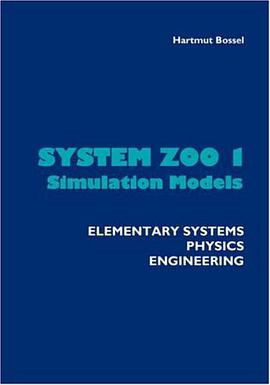
About the book: Mathematical modeling and computer simulation make it possible to understand and control the dynamic processes taking place in complex systems. Simulation provides insights into the often surprising diversity of possible behaviors, and allows identifying possibilities for intervention and options for alternative development. About one hundred simulation models from all areas of life are fully documented in the three volumes of the 'System Zoo'. They can be quickly implemented and easily operated using freely available system dynamics software. Volume 1 of the System Zoo contains simulation models of elementary processes, and of complex systems from physics and engineering, among them: exponential and logistic growth, oscillations, delays, and storage; phenomena of infection, transition, and overload; complex systems with limit cycles, multiple equilibrium points and chaotic attractors; and applications from control engineering, flight dynamics, fluid flow and heat conduction. The System Zoo collection of simulation models is particularly well-suited for teaching, training, and research projects at all levels from high school to university, and for individual study. Volume 2 of the System Zoo contains simulation models related to climate, vegetation, ecosystems and resources. Volume 3 deals with systems and processes found in economy and society, and with long-term global development. About the author: Hartmut Bossel is Professor Emeritus of environmental systems analysis. He taught for many years at the University of California in Santa Barbara and the University of Kassel, Germany, where he was director of the Center for Environmental Systems Research until hisretirement. He holds an engineering degree from the Technical University of Darmstadt, and a Ph.D. degree from the University of California at Berkeley. With a background in engineering, systems science, and mathematical modeling, he has led many research projects and future studies in different countries, developing computer simulation models and decision support systems in the areas of energy supply policy, global dynamics, orientation of behavior, agricultural policy, and forest dynamics and management. He has written numerous books on modeling and simulation of dynamic systems, social change and future paths, and has published widely in the scientific literature in several fields.
作者简介
目录信息
读后感
用户评价
《System Zoo 1 Simulation Models - Elementary Systems, Physics, Engineering》这个书名,仿佛打开了一个奇妙的科学世界的大门。我脑海中浮现出的是一个充满活力的“系统动物园”,里面不仅仅是静止的理论模型,而是活生生的、动态的模拟。我个人非常喜欢通过实际操作和观察来学习,而“Simulation Models”这个词恰恰满足了我的这一需求。想象一下,能够亲手构建一个简单的物理系统,比如一个摆锤,然后通过模拟去观察它的运动轨迹,研究阻力对其影响,或者在工程领域,搭建一个简单的电路模型,观察电流如何流动,电阻如何影响电路性能。这种“动手”的乐趣,远比死记硬背公式来得更加深刻和持久。特别是“Elementary Systems”这个词,让我相信这本书能够以一种易于理解的方式,引导我进入物理和工程的初级阶段,建立起扎实的科学基础。我希望这本书能够提供一些简单易懂的示例,让我能够快速上手,在玩乐中学习,体验模拟带来的无限可能。
坦白说,看到“System Zoo 1 Simulation Models - Elementary Systems, Physics, Engineering”这个书名,我的第一反应是:这名字有点“高大上”,但同时又带着一种亲切感。虽然我不是科班出身的物理或工程专业的学生,但我一直对这两个领域充满了浓厚的兴趣。特别是“Elementary Systems”这个词,给了我很大的信心,这表明这本书可能不是那种让人望而生畏的专业性极强的教材,而是更偏向于科普性质,或者为那些想要跨界了解相关知识的读者设计的。我特别期待的是书中的“Simulation Models”部分,因为我总觉得,很多复杂的科学原理,如果能通过可视化、可交互的模拟来呈现,会比单纯的文字描述更能激发人的理解和兴趣。比如,我一直对牛顿定律在不同场景下的应用感到好奇,如果能看到一个模拟,直观地展示力、质量和加速度之间的关系,那该是多么棒的学习体验!这本书的名字让我觉得,它可能就是我探索物理和工程世界的一扇窗口,让我能够以一种轻松有趣的方式,窥探其中的奥秘。
单凭“System Zoo 1 Simulation Models - Elementary Systems, Physics, Engineering”这个书名,我就对接下来的内容充满了期待。它给我一种感觉,作者像是为我们构建了一个丰富的“系统模型库”,就像一个精心设计的动物园,里面汇集了各种各样有趣且重要的系统。我尤其对“Physics”和“Engineering”这两个关键词感到兴奋,因为它们涵盖了我一直以来渴望深入了解的科学领域。我总是觉得,科学的魅力不仅在于理解理论,更在于如何将这些理论应用到实际中,或者说,如何通过模拟来“预演”和“验证”这些理论。《Simulation Models》这一部分,更是让我看到了学习的“实践性”。我期待书中能够提供清晰的指导,让我能够利用这些模型来探索物理现象,比如观察不同材料的受力特性,或者在工程设计中,模拟结构的稳定性。而“Elementary Systems”的定位,则让我觉得这本书不会过于晦涩难懂,反而会以一种循序渐进的方式,带领我走进这个“系统动物园”,让我能够从最基础的概念开始,逐步深入,最终能够对复杂的系统有更深刻的理解和认识。
这本书的书名听起来就很有意思,"System Zoo 1 Simulation Models - Elementary Systems, Physics, Engineering"。光是“System Zoo”这个名字就勾起了我的好奇心,仿佛里面收藏了各种各样的系统模型,就像动物园里有各种各样的动物一样。我脑海里不禁浮现出各种奇妙的模拟场景:也许是关于基础物理现象的微观粒子碰撞,又或者是工程领域里复杂的机械臂运动,甚至是生物系统中微妙的生态平衡。想象一下,能够通过模拟来观察这些复杂系统的行为,了解它们是如何运作的,这是多么令人兴奋的事情!而且“Elementary Systems”这个词说明这本书可能适合那些初学者,或者想要对基本系统概念有一个扎实理解的读者。我期待着书中能够通过生动形象的例子,将抽象的理论变得易于理解。毕竟,对于很多复杂科学领域,直观的模拟往往比枯燥的公式更能触及本质。我希望这本书能成为我探索这些“系统动物园”的绝佳向导,让我能够沉浸其中,发现科学的魅力。
这本书的书名《System Zoo 1 Simulation Models - Elementary Systems, Physics, Engineering》让我立刻联想到了一种系统性的学习方法,似乎作者试图构建一个平台,让读者能够像观察动物一样,去“观察”和“理解”各种基础系统。这其中包含了物理和工程两个大类,这正是我一直以来希望能够更深入了解的领域。我尤其对“Simulation Models”这个部分感到好奇,因为我一直认为,理论知识的掌握固然重要,但能够通过模拟来验证和深化理解,才是真正掌握知识的关键。我设想这本书可能会提供一些易于操作的模拟工具或者指导,让我在实践中学习。想象一下,我可以亲手去调整参数,观察物理定律如何在不同的条件下显现,或者在工程设计中,通过模拟来测试不同方案的可行性,这无疑会大大提高学习的效率和趣味性。我很希望这本书能够帮助我建立起一种“模拟思维”,让我能够更主动地去探究和发现科学规律,而不仅仅是被动地接受知识。