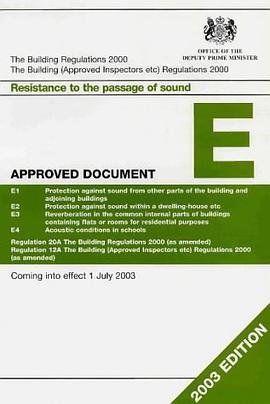

具体描述
Modern Acoustic Design: Principles and Practice This comprehensive guide delves into the contemporary principles and practical applications of acoustic design across various building typologies. Moving beyond prescriptive standards, this book explores the fundamental science behind sound propagation and perception, equipping architects, engineers, and builders with the knowledge to create acoustically comfortable and functional spaces. Part I: Understanding Sound in the Built Environment The initial section lays a robust theoretical foundation, dissecting the nature of sound itself. It examines the physical properties of sound waves, including frequency, amplitude, and timbre, and their subjective perception by the human ear. Readers will gain a deep understanding of how sound travels, the mechanisms of reflection, absorption, and transmission, and the critical role these phenomena play in shaping the acoustic character of a building. Key concepts such as reverberation, masking, and loudness are explained in detail, providing context for subsequent design strategies. Part II: Airborne Sound Control Strategies This segment focuses specifically on mitigating airborne sound transmission, a prevalent concern in multi-occupancy buildings. It meticulously details a range of proven techniques for enhancing sound insulation in walls, floors, and ceilings. Wall Construction: The book explores the acoustic performance of various wall systems, from traditional masonry and timber frame constructions to advanced composite and prefabricated solutions. It analyzes the impact of material choices, mass, stiffness, and damping on airborne sound reduction. Specific attention is given to detailing critical junctions and penetrations, such as those around doors, windows, and service conduits, which often represent acoustic weak points. Strategies for achieving high levels of sound insulation, including the use of resiliently mounted linings, cavity construction, and specialized acoustic membranes, are discussed with practical examples. The influence of flanking paths – sound travelling indirectly through structural elements – is also thoroughly investigated, with guidance on how to minimize their impact. Floor and Ceiling Systems: The complexities of floor and ceiling acoustics are addressed in depth. The guide examines the acoustic behavior of different floor constructions, including concrete slabs, timber joist floors, and floating floors. It details the principles of impact sound insulation, explaining how reducing the transmission of sound generated by footsteps, dropped objects, and moving furniture can significantly improve occupant comfort. Techniques such as resilient underlays, decoupling of floor finishes, and the use of acoustic battens are explored. For ceilings, the book discusses the role of suspended ceilings, acoustic ceiling tiles, and the importance of sealing gaps to prevent sound leakage. The interplay between floor and ceiling performance is highlighted, emphasizing the need for a holistic approach to sound control in multi-level dwellings. Staircases: Recognizing staircases as significant potential pathways for sound transmission, this section offers specific design considerations. It covers strategies for minimizing airborne and impact sound transfer through stair enclosures and between adjacent units. This includes advice on staircase construction materials, riser and tread design, and the effectiveness of acoustic treatments within the stairwell. Part III: Practical Design and Performance Verification The final part of the book shifts to the practical implementation of acoustic design principles. It provides guidance on selecting appropriate acoustic materials and systems based on performance requirements and budget constraints. The importance of accurate specification and quality control during the construction phase is stressed. The book also delves into methods for verifying acoustic performance. It explains the principles behind acoustic testing and measurement, including sound insulation and sound absorption measurements. Readers will learn how to interpret test results and how to address common acoustic issues that may arise during the life of a building. Case studies from diverse building projects, showcasing successful acoustic design solutions and lessons learned, are included to illustrate the practical application of the concepts discussed. This section aims to empower practitioners to not only design for excellent acoustic performance but also to ensure that the intended performance is achieved in the built reality.