
具体描述
作者简介
Swatantryaveer Vināyak Dāmodar Sāvarkar (Marathi: स्वातंत्र्यवीर विनायक दामोदर सावरकर)
byname Vir, or Veer
born May 28, 1883, Bhagur, India
died Feb. 26, 1966, Bombay [now Mumbai]
militant Hindu and Indian nationalist and leading figure in the Hindu Mahasabha (“Great Society of Hindus”), a Hindu nationalist organization and political party.
While a student of law in London (1906–10), Savarkar helped to instruct a group of Indian revolutionaries in methods of sabotage and assassination that associates of his had apparently learned from expatriate Russian revolutionaries in Paris. During this period he wrote The Indian War of Independence, 1857 (1909), in which he took the view that the Indian Mutiny of 1857 was the first expression of Indian mass rebellion against British colonial rule.
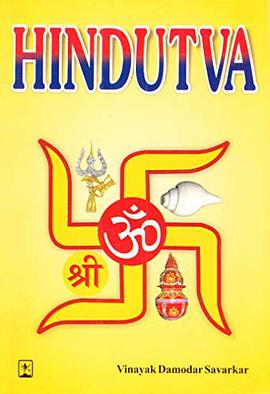
In March 1910 Savarkar was arrested on various charges relating to subversion and incitement to war and was sent to India for trial and convicted. In a second trial he was convicted of his alleged complicity in the assassination of a British district magistrate in India, and, after sentencing, he was transported to the Andaman Islands for detention “for life.” He was brought back to India in 1921 and released from detention in 1924. While imprisoned he wrote Hinditva: Who Is a Hindu? (1923), coining the term Hindutva (“Hinduness”), which sought to define Indian culture as a manifestation of Hindu values; this concept grew to become a major tenent of Hindu nationalist ideology.
Savarkar resided in Ratnagiri until 1937, when he joined the Hindu Mahasabha, which militantly defended the Hindus' claims of religious and cultural supremacy over Indian Muslims. He served as president of the Mahasabha for seven years. In 1943 he retired to Bombay. When Mohandas K. Gandhi was assassinated in 1948 by a former member of the Mahasabha, Savarkar was implicated, but he was aquitted in his subsequent trial because of insufficient evidence.
目录信息
读后感
用户评价
"Who can be precisely called a Hindu?"
"Who can be precisely called a Hindu?"
"Who can be precisely called a Hindu?"
"Who can be precisely called a Hindu?"
"Who can be precisely called a Hindu?"