
具体描述
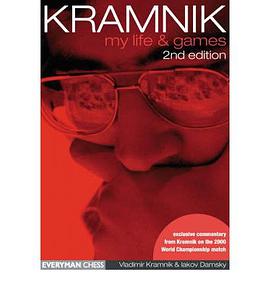
In this, his first book, Kramnik annotates 100 of his best games, and talk about himselk, beginning with his unusual childhood. Features previously unpublished photos.
Amazon.com Review
Vladimir Kramnik is something of an anomaly in the chess world, a top-seeded grandmaster who has refused to devote all his energy to the game. "By nature, I am not ambitious," he says. Nevertheless, the Russian-born prodigy has managed to float to the top of the chess world, ranked just behind champion Garry Kasparov at the turn of the millennium.
The subtitle to Kramnik's book is "My Life and Games," but there is, in fact, little distinction between the two; the game has dominated Kramnik's life from the age of 5. By age 16, he was playing on the world chess scene, and at age 25, in 2000, he is one of the few players who can regularly hold his own against Kasparov.
Kramnik reads less like a traditional autobiography than a transcript of 50-plus games from his career. They include key matches with Kasparov, Karpov, Anand, Topalov, Ivanchuk, Shirov, and other greats, stretching back to 1984. Colorful biographical tidbits appear between games, offering glimpses of Kramnik's life outside chess--we learn he's a lousy cook, suffers insomnia from the pressure of the game, and tries to stay philosophical about winning and losing. But most revealing are the interior dialogues that accompany his matches; they are deeply annotated. Kramnik explains exactly what was running through his head as he pushed a pawn or sacrificed a queen at key points, and it's a marvel to watch his mind at work. His comments are never boastful and even betray a self-effacing wit--a refreshing change in a profession known for its outsize egos. Chess enthusiasts should find plenty to occupy them in Kramnik and would do well to take a page from his playbook. --Demian McLean
From the Back Cover
Since he first burst onto the world chess scene in 1992, displaying a maturity of play far beyond his sixteen years, Vladimir Kramnik has been tipped as a future World Champion. Still only in his mid-twenties, he is now firmly consolidated in the world's top three. He has won numerous tournaments in many countries, and is one of the very few players regularly to hold his own with Kasparov. This book, Kramnik's first, describes his life and chess career, beginning with his unusual childhood. It features more than 50 of his best games, deeply annotated, plus numerous additional games and game extracts, including some from quickplay and blindfold events. (7 x 9 3/4, 240 pages, illustrations)
作者简介
About the Author
Since he burst onto the world chess scene in 1992, displaying a maturity of play far beyond his sixteen years, Vladimir Kramnik had been tipped as a future World Champion. This forecast was proven accurate when in October 2000 he defeated Garry Kasparov in the Brain Games World Championship. Lakov Damsky is an experienced radio and TV commentator and author of several books for Everyman - The Art of Defence in Chess (with Lev Polugayevsky 1996), Attack with Mikhail Tal (with Mikhail Tal 1994), The Heavy Pieces in Action (1997)
目录信息
读后感
用户评价
读完这本关于某位伟人的记录,我最大的感触是关于“创新”与“传统”之间的永恒张力。书中主人公似乎是一个坚定的传统主义者,他尊重历史留下的宝贵遗产,并在此基础上进行精雕细琢。这种做法与那些热衷于激进理论、试图推翻一切既有范式的年轻一代形成了有趣的对比。这本书详细阐述了他是如何看待那些新兴的、基于计算机引擎得出的“客观真理”的。他的坚持,即棋局的最终裁决权在于人类的直觉和对美的追求,而非冷冰冰的引擎评估,这对我产生了强烈的共鸣。它提出了一个深刻的问题:在技术日益强大的今天,我们是否正在失去对棋艺的某种人文关怀?这种对“艺术性”的捍卫,使得这本书的价值超越了单纯的棋艺记录,成为了一份关于如何保持独立思考、不被潮流裹挟的宣言。
这本传记的叙事节奏非常引人入胜,它成功地将枯燥的记录转化为一部充满张力的史诗。作者似乎运用了一种非常现代的、碎片化的叙事手法,将早年的挣扎、中期的辉煌与后期的反思交织在一起,使得人物形象立体饱满,绝非脸谱化的英雄。我尤其喜欢其中对“对手关系”的处理。它没有将对手描绘成单纯的敌人,而是看作互相成就的催化剂。书中对几场关键性对抗的描述,充满了戏剧张力,仿佛读者能感受到棋盘两边空气的流动与温度的变化。我过去总是倾向于从技术层面去分析对局,但这本书记载的幕后故事,揭示了许多关键时刻的非技术性因素——比如时机的把握、对手的身体状况,甚至是裁判的一个手势。这种对宏大背景的关注,让整个阅读体验从一场技术研讨会升华为对一个时代文化侧影的捕捉。
令人惊叹的是,这本书如何细致地勾勒出一位顶尖棋手在职业生涯高峰期的心理侧写。它没有过多纠缠于具体的棋盘走法,而是深入探讨了那种常人难以企及的、将“思考”本身视为日常工作的状态。我被其中描述的巨大压力和自我怀疑所震撼。想象一下,在世界冠军的舞台上,每一次思考都可能价值数百万,那种心理负担是常人无法体会的。书中有一段文字,关于某位大师如何通过冥想或某种特定的日常习惯来管理他的焦虑,这让我联想到我们自己的日常工作——其实,顶级竞技的本质都是相似的,都是对心智的极限测试。这本书让我更关注“人”本身,而不是“棋手”这个标签。它探讨了成功背后需要付出的代价,以及如何在高强度的竞争中保持心智的纯净。这种对人类精神韧性的描摹,远比单纯的棋谱分析来得更有感染力。
这本书对于理解现代象棋战术思维的演变有着巨大的启发作用,尽管它聚焦于另一位时代的巨擘。我印象最深的是其中对“动态平衡”概念的探讨,这与我过去对那些偏向结构性优势的棋手所持的看法形成了鲜明对比。那位书中的主角似乎更擅长在看似均势的局面中,通过细微的、几乎难以察觉的调度,积累起时间优势和空间优势。这种“磨”的艺术,与我先前接触的那些偏爱激进开局、追求速胜的棋手截然不同。我感觉作者在字里行间都在强调,胜利往往属于那些更能忍受不确定性,并且能够持续监控全局微妙变化的人。读完之后,我仿佛被拉入了一个更注重策略纵深而非战术亮点的领域。我开始重新审视自己过去对某些开局的理解,特别是那些被认为“平淡无奇”的变例,现在看来,也许那正是通往更深层次理解的阶梯。这本传记提供了一个观察点,让我得以从一个全新的角度去欣赏棋艺的内在美。
这位棋手,他的对局充满了那种令人窒息的、古典的重量感,仿佛每一着棋都承载着沙皇俄国时代的严谨与深刻。我最近读了一本关于某位世界冠军的传记,虽然这本书本身没有涉及这位具体的棋王,但它唤起了我对那个黄金时代棋局的无限遐想。书中的文字描绘了棋手们在昏暗的灯光下,面对着木质棋盘,那种纯粹的、不含杂质的智力较量。他们的开局选择往往保守而扎实,但中局的复杂性却如同迷宫一般,需要极高的计算精度和对局势的哲学性理解。读到那些描写如何一步步将对手逼入绝境的段落时,我能想象出那种胜利的冷静与不易。这本书让我重新审视了“伟大”这个词在国际象棋中的定义——它不仅关乎头衔,更关乎你留给后世的思维遗产。特别是当提到某些经典对局时,那种对精确性的追求,简直就像是在进行一场无声的、精神层面的决斗,让人屏息凝神。它让我意识到,真正的棋艺大师,他们的伟大在于能够将复杂性转化为看似简单、实则深不可测的结构。