
具体描述
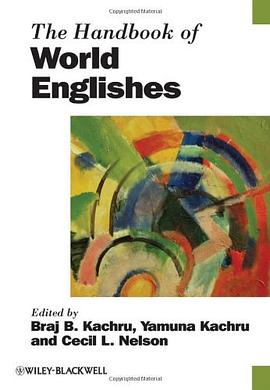
The Handbook of World Englishes is a collection of newly commissioned articles focusing on selected critical dimensions and case studies of the theoretical, ideological, applied and pedagogical issues related to English as it is spoken around the world.
•Represents the cross-cultural and international contextualization of the English language
•Articulates the visions of scholars from major varieties of world Englishes – African, Asian, European, and North and South American
•Discusses topics including the sociolinguistic contexts of varieties of English in the inner, outer, and expanding circles of its users; the ranges of functional domains in which these varieties are used; the place of English in language policies and language planning; and debates about English as a cause of language death, murder and suicide.
作者简介
Braj B. Kachru is Centre for Advanced Study Emeritus Professor of Linguistics and Jubilee Professor of Liberal Arts and Sciences at the University of Illinois at Urbana-Champaign. He is co-founder and co-editor of the journal World Englishes, published by Wiley-Blackwell.
Yamuna Kachru is Professor Emerita in the Department of Linguistics at the University of Illinois at Urbana-Champaign. She has authored and edited over a dozen books and monographs and published over a hundred papers and reviews on South Asian languages, cross-cultural discourse, and communicative styles in world Englishes.
Cecil L. Nelson is Professor of Linguistics in the Department of Languages, Literatures and Linguistics at Indiana State University, Terre Haute. He is the review editor of the journal World Englishes and co-authored, with Yamuna Kachru, World Englishes in Asian Contexts (2006).
目录信息
List of Contributors.
Preface.
Introduction: The World of World Englishes: Braj B. Kachru (University of Illinois, Urbana-Champaign), Yamuna Kachru (University of Illinois, Urbana-Champaign), and Cecil L. Nelson (Indiana State University).
Part I: The Historical Context:.
1. The Beginnings: Robert D. King (University of Texas, Austin).
First Diaspora.
2. First Steps: Wales and Ireland: Robert D. King (University of Texas, Austin).
3. English in Scotland: Fiona Douglas (University of Leeds).
Second Diaspora.
4. English in North America: Edgar W. Schneider (University of Regensburg).
5. English in Australia and New Zealand: Scott F. Kiesling (University of Pittsburgh).
Third Diaspora.
6. South Asian Englishes: Ravinder Gargesh (University of Delhi).
7. East Asian Englishes: Nobuyuki Honna (Aoyama Gakuin University).
8. Southeast Asian Englishes: Maria Lourdes S. Bautista and Andrew B. Gonzalez (both De La Salle University).
9. South American Englishes: Kanavillil Rajagopalan (State University at Campinas, Brazil).
10. South African Englishes: Nkonko M. Kamwangamalu (Howard University).
11. West African Englishes: Tope Omoniyi (Roehampton University).
12. East African Englishes: Josef Schmied (Chemnitz University of Technology, Germany).
13. Caribbean Englishes: Michael Aceto (East Carolina University).
14. Euro-Englishes: Marko Modiano (Stokholm, Sweden).
Fourth Diaspora.
15. World Englishes Today: Kingsley Bolton (Stockholm University).
Part II: Variational Contexts:.
16. Contact Linguistics and World Englishes: Rajend Mesthrie (University of Cape Town).
17. Varieties of World Englishes: Kingsley Bolton (Stockholm University).
18. Pidgins and Creoles: Salikoko S. Mufwene (University of Chicago).
19. African American Englishes: Walt Wolfram (North Carolina State University).
Part III: Acculturation:.
20. Written Language, Standard Language, Global Language: M. A. K. Halliday (Fairlight, Australia).
21. Speaking and Writing in World Englishes: Yamuna Kachru (University of Illinois, Urbana-Champaign).
22. Genres and Styles in World Englishes: Vijay K. Bhatia (City University of Hong Kong).
Part IV: Crossing Borders:.
23. Literary Creativity in World Englishes: Edwin Thumboo (National University of Singapore).
24. World Englishes and Issues of Intelligibility: Larry E. Smith (Christopher, Smith & Associates) and Cecil L. Nelson (Indiana State University).
25. World Englishes and Culture Wars: Braj B. Kachru (University of Illinois, Urbana-Champaign).
Part V: Grammar Wars and Standards:.
26. Grammar Wars: 17th and 18th Century England: Linda C. Mitchell (San Jose State University).
27. Grammar Wars: The United States: John Algeo (University of Georgia).
28. World Englishes and Descriptive Grammars: Daniel R. Davis (University of Michigan, Dearborn).
Part VI: Ideology, Identity and Constructs:.
29. Colonial/Postcolonial Critique: The Challenge from World Englishes: Pradeep A. Dhillon (University of Illinois, Urbana-Champaign).
30. Cultural Studies and Discursive Constructions of World Englishes: Wimal Dissanayake (Kailua, Hawaii).
31. World Englishes and Gender Identities: Tamara M. Valentine (University of Nevada, Reno).
Part VII: World Englishes and Globalization:.
32. World Englishes in the Media: Elizabeth A. Martin (University of Illinois, Urbana-Champaign).
33. World Englishes in Global Advertising: Tej K. Bhatia (Syracuse University).
34. World Englishes and Global Commerce: Stanley Yunick Van Horn (University of Illinois, Urbana-Champaign).
Part VIII: World Englishes and Applied Theory:.
35. A Recurring Decimal: English in Language Policy and Planning: Ayo Bamgbose (University of Ibadan, Nigeria).
36. Teaching World Englishes: Robert J. Baumgardner (Texas A&M University, Commerce).
37. Models, Methods, and Curriculum for ELT Preparation: Kimberley Brown (Portland State University).
38. World Englishes and Lexicography: Fredric Dolezal (University of Georgia).
39. World Englishes and Test Construction: Fred Davidson (University of Illinois, Urbana-Champaign).
40. World Englishes and Communicative Competence: Margie Berns (Purdue University).
Part IX: Resources on World Englishes:.
41. World Englishes and Corpora Studies: Gerald Nelson (University College London).
42. Comparing World Englishes: A Research Guide: Helen Fallon (National University of Ireland, Maynooth).
Author Index.
Subject Index.
· · · · · · (收起)
读后感
用户评价
这本书的叙事节奏把握得极其精准,它有着史诗般的宏大视野,却又不失对微观细节的敏锐捕捉。我感觉作者像一位技艺高超的织工,将来自五湖四海的语言片段小心翼翼地编织在一起,最终呈现出一幅色彩斑斓、结构复杂的挂毯。最让我感到惊喜的是,它并没有仅仅停留在描述“有什么”的不同,而是深入挖掘了“为什么”会产生这些差异。那种对社会、政治乃至历史变迁如何形塑语言形态的探讨,展现了作者深厚的跨学科洞察力。读起来,我常常会产生一种“豁然开朗”的感觉,原本在其他地方读到的一些含糊不清的概念,在这本书里得到了清晰有力的阐释。而且,这本书的论证过程极富说服力,作者似乎总能预判读者可能产生的疑问,并在恰当的时机给出令人信服的反驳或补充说明。这使得阅读体验非常沉浸,几乎没有让人感到拖沓或冗余的部分。它像一部精密的仪器,每一个齿轮都在准确地转动,共同推动着整个知识体系的运行,为理解全球化背景下的语言生态提供了一种全新的、极具洞察力的视角。
坦白说,我最初对这本书抱持着一种既期待又有点畏惧的心态,毕竟“世界英语”这个主题的广度和深度是众所周知的。然而,这本书却以一种出乎意料的、近乎散文诗般的笔触,化解了这种学术的沉重感。作者的文字功力非常深厚,他/她似乎非常擅长运用比喻和类比,将那些原本枯燥的语言学概念转化为生动的意象。比如,描述某一特定地区发音特征的那一段,读起来就像在聆听一段悠扬的异国音乐,充满了画面感和情感共鸣。这种风格的转变,极大地降低了阅读门槛,让那些对语言学有兴趣但又害怕被专业术语淹没的普通读者也能轻松进入。更难能可贵的是,即使在如此流畅的文风下,作者对事实的准确性和引用的权威性也丝毫不打折扣。这本书的价值就在于它成功地架设了一座桥梁,连接了严肃的学术研究与广泛的公众理解,让那些关于“英语在世界各地如何演变”的讨论,不再局限于象牙塔内,而是成为了可以被更多人欣赏和讨论的文化现象。
这本书的封面设计简直太吸引人了,那种带着微微泛黄的纸张质感和深邃的蓝色调,一下子就让人联想到跨越时空的知识探索。我打开这本书的时候,首先被它那严谨的排版和清晰的字体所折服。每一章节的过渡都处理得非常流畅,仿佛作者在领着你进行一场精心策划的学术漫步。尽管我不是专业的语言学家,但这本书在介绍那些复杂的语言现象时,却能用一种令人意外的亲切感将我代入。它不像某些教科书那样干巴巴地堆砌术语,而是通过大量生动的案例和历史背景的穿插,让那些抽象的理论变得触手可及。阅读过程中,我特别欣赏作者在处理不同地域语言变体时的那种平衡感,既尊重了学术的严谨性,又没有陷入故步自封的窠臼。每读完一个部分,我都会忍不住合上书本,花上几分钟时间消化刚才吸收的新知,思考这些语言现象背后蕴含的文化张力。这本书的引文格式也做得非常专业,如果你是一个需要进行严肃研究的读者,这本书的参考价值无疑是巨大的,它提供了一个坚实可靠的知识基石,让人感觉手握的不是一本普通的书籍,而是一张通往广阔语言世界的地图。
我必须承认,我被这本书在处理复杂案例时的那种精妙的平衡艺术所折服。作者似乎拥有将极度细碎的语言数据组织成一个宏大叙事的能力,同时又不牺牲任何一个细节的真实性。书中关于特定词汇在不同文化语境下含义漂移的分析,简直是精彩绝伦。他/她不仅仅是在罗列词义的变化,更是在剖析这些词义背后的权力关系、社会阶层的微妙流动,甚至是微妙的幽默感。这种层层递进的解读,迫使我不得不放慢速度,反复琢磨作者的措辞,生怕遗漏了任何一层含义。这本书的行文风格非常注重内在的张力,它在肯定英语作为全球通用语的地位的同时,也毫不留情地指出了其扩张过程中带来的文化同质化风险。这种批判性的审视是这本书最有价值的部分之一,它提供了一种清醒的视角,让我们在享受语言交流便利的同时,也能警惕潜在的文化失语。这本书的知识密度极高,但由于其卓越的组织能力,阅读过程反而是一种智力上的愉悦而非负担,让人感受到知识的重量和轻盈可以完美共存。
这本书的编排结构简直是教科书级别的范本,每一个部分的逻辑递进都体现了作者对学科脉络的了如指掌。当我翻阅到关于不同“圈层”英语的讨论时,我立刻被作者对于历史语境的细致梳理所震撼。他/她并没有简单地将这些变体贴上标签,而是耐心地回溯了每一支语言“分支”是如何从共同的源头中分化出来,并在这个过程中吸收了当地文化的养分。这种历史的纵深感,让阅读体验变得异常充实。我尤其欣赏作者在论述不同英语使用者之间的相互理解和潜在的沟通障碍时所展现出的那种审慎和同理心。全书贯穿着一种强烈的“描述而非评判”的立场,这在处理文化敏感性议题时尤为重要。阅读这本书,就像是跟随一位经验丰富的向导,走过语言演变的复杂迷宫,最终抵达一个更加开阔的视野——那里没有绝对的标准,只有不断变化的、充满生命力的适应性。这本书对任何想要深入了解当代全球交流复杂性的读者来说,都是一份不可或缺的指南。
这本书的厚度吓到我了
这本书的厚度吓到我了
这本书的厚度吓到我了
这本书的厚度吓到我了
这本书的厚度吓到我了